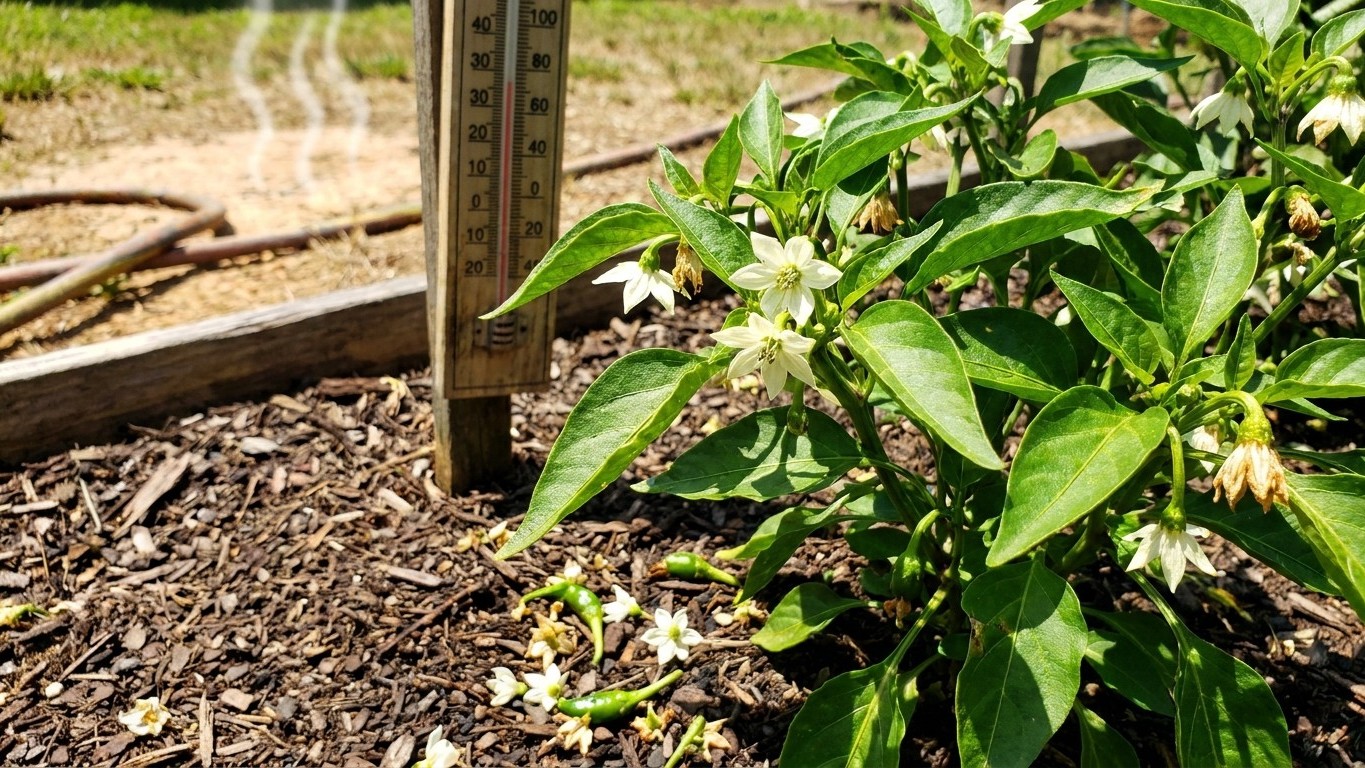

Pepper plants in Ohio drop their blossoms or simply refuse to set fruit for one main reason: temperature swings, not soil or fertilizer. Columbus-area summers log an average of 15.3 days a year at or above 90°F, and that heat load is enough to stall pollen and abort flowers. On the cool side, nights below 55°F cause the identical failure. This site doesn’t carry summer night-low data for Ohio, so during bloom season the reader has to watch their own thermometer, not a map.
The short answer
Fifteen point three days a year at or above 90°F sounds like a short list, but it’s rarely spread evenly across the season. Heat tends to arrive in blocks, a week here, ten days there, usually landing right in mid-to-late July when pepper plants are pushing their heaviest flush of blossoms. That timing matters more than the raw count. A single 95°F afternoon barely dents fruit set. A run of four or five days above 90°F, especially with high humidity holding overnight temperatures up too, is what causes pollen to turn sterile and flowers to drop at the stem.
The mechanism is straightforward once you see it: pepper pollen is fine dust, and heat above roughly 90°F degrades it before it can fertilize the flower. No fertilization, no pepper. The plant senses the wasted flower and sheds it rather than feed a bloom that isn’t going to become fruit. That’s why growers sometimes watch perfectly healthy-looking plants covered in white flowers, then watch every one of those flowers fall off within a week, with nothing to show for it.
The other failure point gets far less attention from home gardeners, and it’s just as absolute. Nights that drop below 55°F cause the same blossom drop, through a different channel: cool night air slows pollen tube growth and can leave the flower unable to complete fertilization before it closes. Ohio springs and early falls both carry stretches where nighttime lows can slip into that range, particularly away from cities and in low-lying gardens where cold air settles.
Here’s the catch worth sitting with: this site tracks daytime heat extremes by location, but it does not carry summer night minimum temperatures for Ohio. There’s no shortcut here, no rule of thumb tied to latitude or to how cold the coldest month runs. Night lows in bloom season depend on local terrain, elevation, and whether a garden sits in a frost pocket, and none of that shows up in a regional average. The only reliable move is a min-max thermometer in the garden itself, checked through the weeks the plants are flowering. If nights are consistently reading below 55°F, that’s the answer to the blossom drop, not disease, not a lack of pollinators, not the wrong fertilizer.
When to start seed here
Working backward from the calendar is the only way to land a pepper seed-start date that actually fits Ohio’s spring, and the math is simple enough to redo for any county once you know the local numbers.
- Find the last spring frost window. Ohio State University Extension’s Ohio Gardening Calendar puts the last spring frost, for zone 6a, between May 5 and May 15. That’s the earliest transplants should go outside, not the date to start seed.
- Wait for 60°F soil, not just frost-free air. Pepper transplants need soil at 60°F to root and grow rather than sit stalled. In a cool, wet spring that can push the actual planting date a week or two past the last frost date itself, so a soil thermometer pushed a few inches into the bed is worth more than trusting the calendar alone.
- Count back 8 to 10 weeks for the indoor start. If the target transplant date lands around May 15, counting back 8 weeks lands seed-starting around March 20; counting back the full 10 weeks pushes it to roughly March 6. Anywhere in that window is workable, with the longer lead time favoring gardeners who want larger, more established transplants going into the ground.
- Adjust for a colder or warmer microclimate. A garden in a valley or low spot that tends to frost later than the county average should shift the whole schedule later; a warm, sheltered city lot can sometimes edge earlier. The arithmetic stays the same, only the anchor date moves.
None of this is about racing the calendar for the earliest possible pepper. Seed started too early just means leggy, root-bound transplants sitting in small pots for weeks longer than they should, waiting on soil that isn’t warm enough yet. Getting the 60°F soil threshold right matters more than shaving a week off the indoor start.
What goes wrong here
- Blossom drop from a heat spell. A run of days at or above 90°F during flowering degrades pollen and the plant sheds the affected blooms. There’s no fix mid-heat-wave beyond patience: keep the plant watered evenly, avoid heavy nitrogen feeding that pushes leafy growth instead of recovery, and expect the next flush of flowers, once temperatures ease, to set normally.
- Blossom drop from a cool night. Nights below 55°F during bloom cause the identical symptom through the opposite cause: slowed pollen tube growth. Since this site doesn’t carry night-low data for Ohio, the only remedy is watching a garden thermometer directly through flowering and, where a cold snap is forecast, covering plants overnight with row cover or a bed sheet to hold in a few extra degrees.
- Sunscald on exposed fruit. Ohio summer sun can scorch pepper fruit left uncovered by foliage, especially after aggressive pruning or when a plant has lost leaves to disease. The fruit develops a pale, papery, sunken patch on the side facing direct sun. Leaving more foliage intact through summer, and avoiding heavy leaf removal during a heat spell, keeps fruit shaded enough to prevent it.
- Blossom-end rot. A leathery, sunken dark spot forms on the blossom end of the fruit, caused by uneven water delivery interrupting calcium uptake rather than a soil calcium shortage in most cases. Consistent, even watering, especially through dry spells that often coincide with the hottest stretch of days above 90°F, prevents the swings that trigger it.
Common questions
Can I still get peppers if my nights stay above 55°F but days keep hitting 90°F?
Yes, but expect flowering to slow to a crawl during the hottest stretch and pick back up once temperatures ease. Plants that stay healthy and watered through the heat will usually resume setting fruit as soon as conditions moderate.
Does a shade cloth fix hot-weather blossom drop?
It can help by lowering leaf and flower temperature a few degrees during peak afternoon heat, which sometimes keeps pollen viable through a borderline hot spell. It won’t offset a sustained run of days well above 90°F.
Why do my peppers flower heavily but set almost no fruit?
That pattern points straight at temperature, either a hot stretch at or above 90°F or nights below 55°F during the same window, degrading pollen at one end or slowing its growth at the other. Since flowering-to-fruit failure runs on a 35 to 45 day cycle from the flower itself, a bad stretch of weather during bloom shows up as empty branches weeks later, long after the weather has already changed.
Should I Start Pepper Seed earlier than 8 to 10 weeks before transplanting to beat the heat?
Starting earlier doesn’t move the transplant date, which is still tied to frost and 60°F soil, so an earlier start just means older, stressed transplants waiting longer indoors. The 8 to 10 week window from Utah State University Extension already accounts for a properly sized, ready-to-plant seedling.