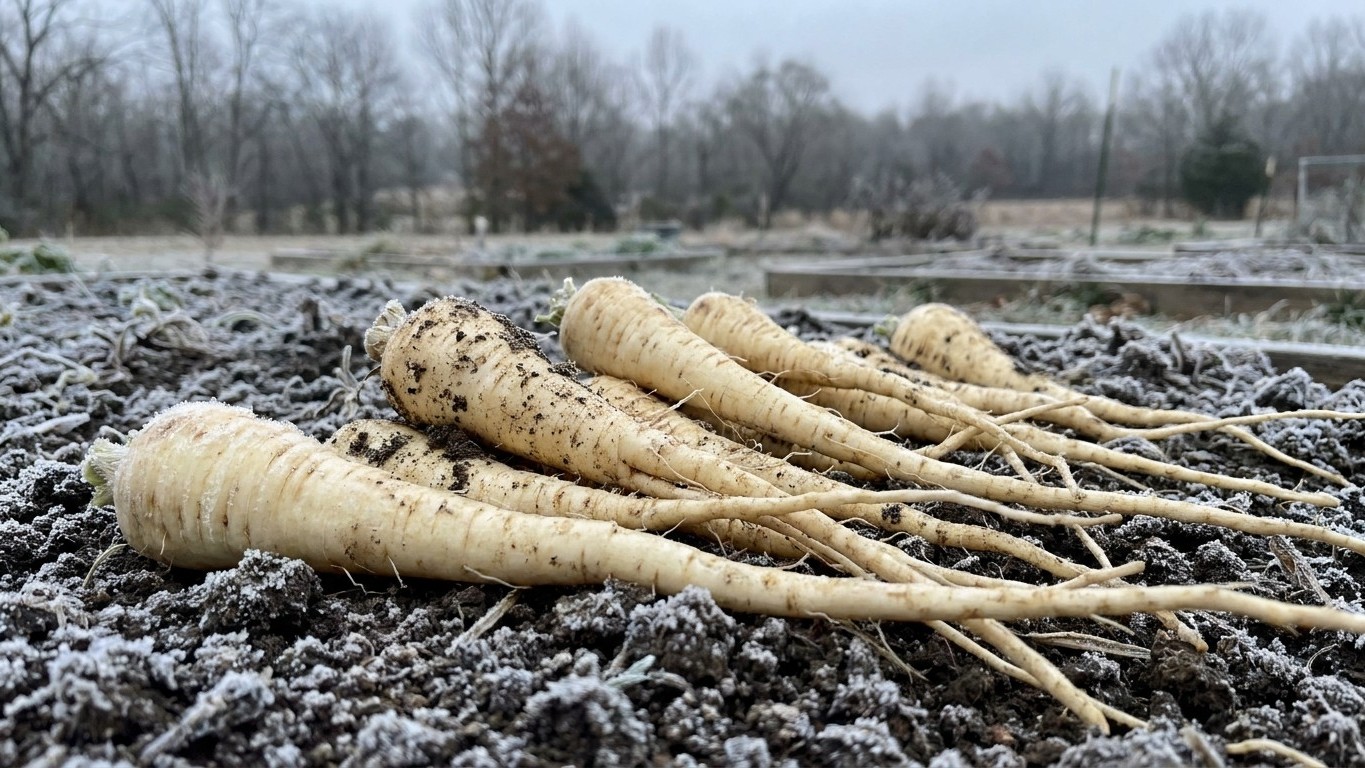

Illinois growers get a clear yes on both counts. The reference climate data for Chicago shows a cold season that reliably dips into hard-frost territory, and the standard 100 to 120 day timeline fits comfortably inside the state’s frost-free window. Sow correctly, wait for a real cold snap before you dig, and the sweetness the crop is known for should show up on schedule.
The short answer
Here’s the question that actually decides whether parsnips sweeten: does this place deliver several weeks of real frost, or does winter stay soft and mild? That distinction matters more than any hardiness zone label, because sweetening in parsnips comes from prolonged exposure to cold, not from surviving winter in general.
For the Chicago reference station, NOAA NCEI 1991-2020 Climate Normals put the mean daily minimum of the coldest month at 18.8°F. That is not a record low and not some rare cold snap. It is the average low temperature across the coldest month of the year, and it sits well below freezing by a wide margin.
A number like that tells you something specific: this is not a one-frost-and-done climate. Illinois winters bring repeated stretches of freezing and near-freezing nights, week after week, which is exactly the mechanism that converts stored starch in the parsnip root into sugar. The plant reads sustained cold as a signal, and it responds by changing its own chemistry.
So the plain answer is that parsnips grown in Illinois should sweeten, not just size up. A gardener who leaves the roots in the ground through several hard frosts, then harvests, is working with a climate built for exactly that outcome. Contrast that with a mild coastal or Deep South climate where the coldest month barely brushes freezing. There, parsnips can grow into fine, healthy roots that never get the cold exposure needed to taste sweet. They stay starchy and a little flat no matter how long they sit in the ground.
Illinois does not have that problem. The 18.8°F average minimum is a strong signal of a real winter, one that arrives with enough regularity to do the conversion work parsnips depend on. The remaining variable is not climate but timing: sowing early enough and leaving the crop in place long enough to actually receive that cold before pulling it. Get the calendar right, and the climate itself is not the obstacle here.
One caution worth repeating: this 18.8°F figure describes the reference station near Chicago. A garden in a colder pocket downstate, at higher ground, or away from the moderating effect of a city and its buildings, can run colder still, which if anything helps the sweetening process. A garden right along Lake Michigan may run slightly milder. Either way, the state as a whole clears the bar for a genuinely frosty season.
Does the season fit?
Parsnips are sown directly into the garden bed, not started indoors and transplanted, and the clock starts the day the seed goes into the soil. Utah State University Extension puts the full timeline at 100 to 120 days from seeding to harvest-ready roots, with sowing recommended 2 to 3 weeks before the last expected frost. Here is how that timeline lines up against Illinois conditions, using the Chicago reference station’s 1991-2020 frost normals.
- Find the sowing window. The reference station’s last spring frost falls between April 11 and April 22. Sowing 2 to 3 weeks ahead of that puts seed in the ground somewhere between roughly late March and early April, depending on how conservative you want to be.
- Account for slow germination. Parsnip seed is notoriously slow to sprout, typically taking 14 to 21 days. That means visible seedlings might not show until nearly three weeks after sowing, so resist the urge to assume a bare patch of soil means a failed planting and re-sow too early.
- Add the growing period. From the point seed goes into the ground, figure 100 to 120 days before roots are harvest-ready. Starting near the end of March or in early April puts a harvest-ready crop somewhere in the second half of July through early August, well before any fall frost risk.
- Compare against the first fall frost. The reference station’s first fall frost lands between October 24 and November 3. Even a later, more cautious sowing date leaves months of open frost-free growing time before that fall frost date arrives.
- Decide how it fits. The arithmetic favors Illinois comfortably. There is no tight squeeze here, no risk of the season running out before the roots mature. The bigger opportunity is actually using the extra time: many gardeners deliberately leave parsnips in the ground well past the 120-day mark, right through the first fall frosts, because that lingering exposure is what triggers the sweetening.
The season fits with room to spare, which gives Illinois gardeners flexibility that tighter-season states don’t have. You can sow on the later side of the window, still finish well before the first fall frost, and then extend the harvest into the cold months for flavor rather than racing against a closing season.
What goes wrong here
- Forked roots from heavy or stony ground. Illinois soil runs from rich prairie loam to dense clay depending on the county, and parsnip roots pushing through compacted or rocky ground split into forked, misshapen roots instead of growing straight down. Utah State University Extension recommends deep sandy soil, and where the native soil is heavy, double digging the bed to loosen and de-stone it well below the root zone before sowing.
- Forked roots from overwatering. This is a separate cause from soil texture. Even in loose, well-prepared ground, roots that get inconsistent heavy watering, wet then dry then wet again, can fork or branch as they grow. The fix is steady, moderate moisture rather than deep soaking followed by long dry spells.
- Sowing too late and running the season short. Illinois has a generous frost-free window, but a gardener who sows in late May or June instead of the recommended late March to early April slot compresses the 100 to 120 day timeline against the fall frost date. Sow within the recommended 2 to 3 week pre-frost window to keep the full runway available.
- Pulling roots before real cold arrives. Parsnips harvested straight off summer growth, before any frost exposure, will be fully grown but starchy rather than sweet. Leave the roots in the ground through at least a few hard freezes once they’re mature, since that cold exposure is the actual mechanism behind the sweetness, not the calendar date on the seed packet.
Parsnips carry a hazard almost no garden guide mentions, and it has nothing to do with eating the root. North Carolina Extension Gardener Plant Toolbox states it directly: “All parts of this plant contain furocoumarins which can make skin sensitive to light causing burns so be sure to wear gloves, long sleeves and long pants when dealing with it.” Not the leaves alone. All parts, root included.
The mechanism is what makes this catch people off guard. Furocoumarins don’t burn skin on contact by themselves. The reaction needs sap on the skin and sunlight hitting that same skin. That combination is exactly what happens on a bright afternoon spent pulling tops, trimming foliage, or digging roots out of the garden bed, hands and forearms exposed, sap smeared across skin, sun overhead. The burn often doesn’t show up right away either. It can develop hours after the exposure, well after the gardening is done and the sap has dried, which is part of why people don’t connect the dots.
Because the reaction depends on sunlight, washing the sap off after the fact doesn’t undo damage that’s already reacting with UV exposure. The actual protection is preventing skin contact in the first place: gloves, long sleeves, and long pants whenever handling any part of the plant, harvest day included.
Checking this against your own county
The figures here describe the Chicago reference weather station, and Illinois stretches a long way north to south with real differences in soil, elevation, and frost timing along the way. A garden in the northern part of the state can see a later last spring frost and an earlier first fall frost than what’s cited here, while southern Illinois often runs milder in both directions.
For numbers specific to your own ground, the University of Illinois Extension is the resource built for exactly that question. Reach them at extension.illinois.edu, where county-level offices can walk through local frost dates, soil conditions, and planting timing for your specific address rather than a statewide average.
Common questions
Can I start parsnip seed indoors and transplant it in Illinois?
No. Parsnips are sown directly into the garden bed where they’ll grow. The long taproot doesn’t tolerate transplanting well, and disturbing it typically causes the forking and stunting gardeners are already trying to avoid with proper soil prep.
How long can parsnips stay in the ground over an Illinois winter?
The sources here don’t give a specific end date for winter storage in the ground, only that several weeks of frosty weather trigger the sweetening. Many gardeners leave roots in place through multiple frosts before harvesting, but check with your local extension office for guidance specific to how hard your area’s ground actually freezes.
Does a mild winter in southern Illinois mean parsnips won’t sweeten there?
The reference figures on this page come from the Chicago station, and southern Illinois typically runs milder. If a particular location doesn’t get several weeks of sustained frost, the sweetening mechanism has less to work with. Checking local frost data through your county extension office is the way to confirm conditions for a specific southern Illinois location.
Why does my parsnip taste bland even though it grew well?
A well-grown root that tastes bland or starchy instead of sweet was most likely harvested before enough cold exposure. Size and shape depend on soil and watering, but sweetness specifically depends on time spent in the ground through frosty weather after the root has matured.