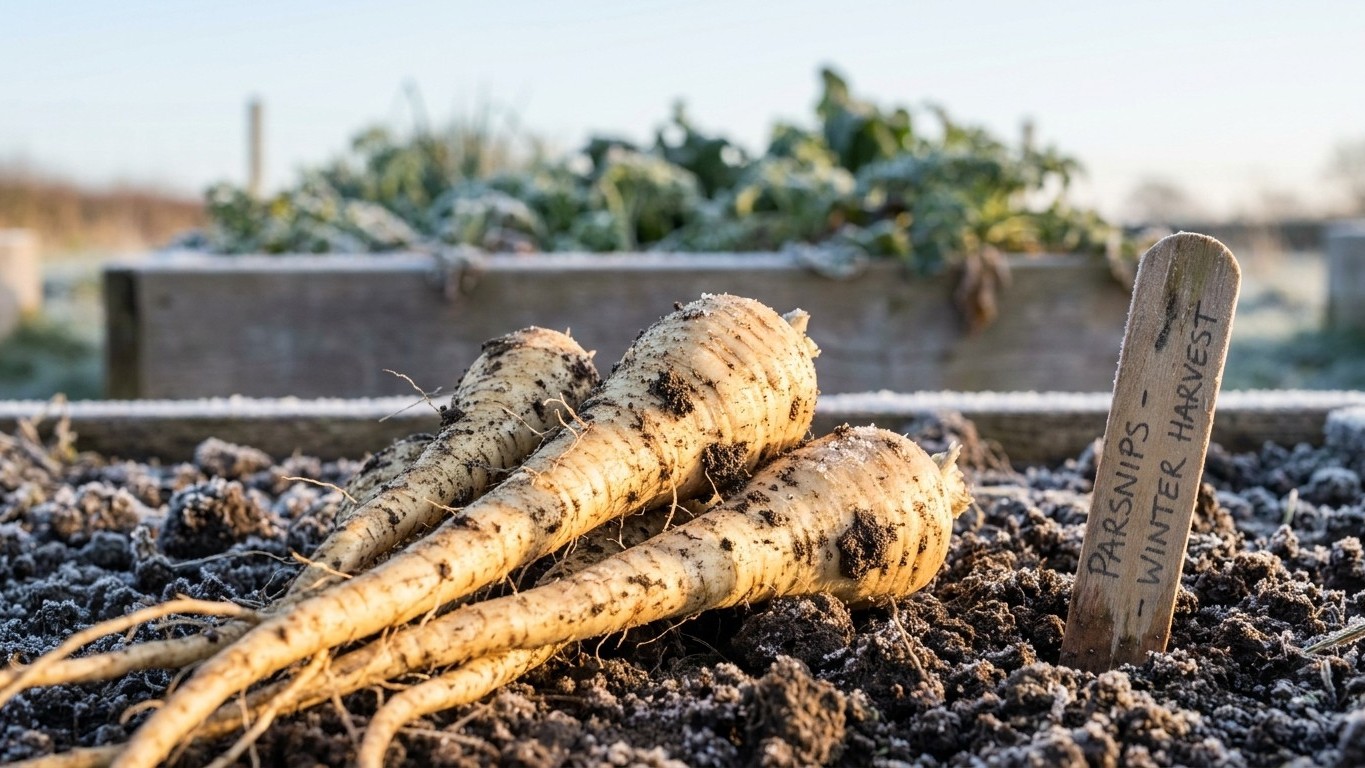

Parsnips need several weeks of cool, frosty weather because that cold exposure converts the root’s stored starch into sugar, according to Utah State University Extension. Skip the frost and you get a parsnip that tastes like a bland, woody carrot. Roots left in the ground and lifted in early spring come out “especially tender and sweet”, but only after the cold has done its work first.
The short answer
Utah State University Extension states it plainly: parsnips taste best when plants have been exposed to several weeks of cool, frosty weather, because that stretch of cold is what triggers the starch-to-sugar conversion inside the root. No frost, no conversion. The root can be the right size, the right color, dug at the right depth, and it will still taste flat if it never sat through those cold weeks in the ground.
This is the detail that trips up a lot of home gardeners who treat parsnips like carrots or potatoes, something you pull as soon as it looks ready. A parsnip pulled in September, before any hard cold has settled in, is edible but underwhelming. The same root, left alone through several weeks of frosty weather and then lifted, is a different vegetable on the plate. Extension guidance describes roots left in the ground and lifted in early spring as especially tender and sweet, which tells you the timing window stretches well past the first frost of autumn.
The practical takeaway is that parsnip flavor is not fixed at harvest, it is built by weather exposure after the plant has otherwise finished growing. That is why recipes and how-to guides for parsnips almost always mention frost before they mention harvest date. The size of the root tells you it is mature. The frost tells you it is going to taste like anything.
Where this matters for planning: a gardener who digs parsnips early because they are impatient, or because they want to clear the bed for something else, is giving up the exact step that makes the crop worth growing in the first place. The root itself does not change size much after frost hits. What changes is what’s happening chemically inside it, and that only happens with sustained cold, not a single light frost overnight.
What actually decides it
Starch converting to sugar
The mechanism Utah State University Extension describes is a straightforward one: cold weather triggers the plant’s stored starch to convert into sugar. This is a defense response common in root vegetables, but parsnips lean on it more than most because so much of their eating quality depends on it. A parsnip harvested warm is mostly starch, which reads as bland and slightly fibrous. The same root, held in cold soil through several weeks of frosty conditions, has converted a meaningful share of that starch into sugar, and the flavor shifts from flat to genuinely sweet.
This is a slow process, not a switch that flips overnight. A single frosty night does not do it. The extension guidance specifies several weeks of exposure, which means the root needs sustained cold weather, not one cold snap followed by a warm stretch. Gardeners in regions where autumn temperatures bounce around, warm one week, frosty the next, may find their parsnips need longer in the ground than expected before the sugar conversion catches up.
Frost exposure versus hardiness zone
It’s worth separating two things that sound similar but are not: living in a cold hardiness zone, and actually getting several weeks of frosty weather. A garden can sit in a chilly zone on paper and still have a mild, short winter with only a handful of frost events. Hardiness zone describes the coldest temperature a region typically reaches. It says nothing about how many weeks of sustained frosty weather the soil and the crop actually experience.
A parsnip grown in a region with a comfortable zone rating but a short, mild winter can come out of the ground perfectly formed and still taste like almost nothing, because the root never got the sustained cold exposure that triggers sugar conversion. The zone number tells you whether the plant will survive. It does not tell you whether the plant will taste good. Those are two separate questions, and conflating them is the single most common misunderstanding about growing parsnips well.
How to do it
- Sow parsnip seed directly in place. Parsnips do not transplant well, so seed goes straight into the bed where the crop will grow through to harvest.
- Expect germination to take 14 to 21 days. Parsnip seed is slow and can be uneven. Mark the row and be patient rather than assuming a bare patch of soil after a week means the seed failed.
- Count 100 to 120 days to maturity from the seeding date. That full stretch, not the germination date, is what determines when the root reaches full size.
- Leave mature roots in the ground once the growing season winds down. Do not lift them the moment they hit size. The next stage of flavor development happens in the ground, not in storage.
- Let the roots sit through several weeks of cool, frosty weather. This is the stage where stored starch converts to sugar. Cutting it short undercuts the entire point of growing parsnips at home.
- Harvest through the cold season as needed, or wait for an early spring lift. Roots lifted in early spring, after the ground has held them through the coldest stretch, come out especially tender and sweet.
- Wear gloves when lifting and handling the roots. Parsnip foliage and sap can irritate skin, so protect your hands during harvest, not just during any trimming afterward.
- Use the root while it’s still from a first-year plant. The fleshy sweet taproot from first-year plants is edible, raw or baked, boiled, pureed, roasted, fried, grilled, or steamed. A root left into a second year sends up a flower stalk and turns woody, losing the quality you grew it for.
What goes wrong
- The root tastes bland despite looking fully grown. This almost always means it was harvested before several weeks of frosty weather had a chance to convert stored starch to sugar. The fix is patience: leave the roots in the ground longer, through the cold stretch, rather than harvesting on a calendar date.
- The root has forked into two or more legs instead of growing straight. This has two separate possible causes, and they call for different fixes. Heavy or stony ground can physically deflect the taproot as it grows downward, so loosening and clearing the bed deeply before sowing is the remedy. Overwatering is a separate cause, encouraging shallow, divided root growth instead of one strong taproot, so cutting back on watering frequency once the plant is established is the fix for that version of the problem.
- The root turns woody and unpleasant instead of tender. This points to a plant that has moved into its second year and sent up a flower stalk. The root’s energy has shifted from storage to reproduction, and the fleshy sweet taproot quality is gone. Harvest first-year plants before this happens rather than leaving them to overwinter a second time.
- Skin irritation after handling the harvest. Parsnip foliage and sap can cause a reaction on bare skin, particularly in sunlight. Wear gloves during lifting, trimming, and cleaning, not just when the job looks messy.
- Germination looks like it failed after a week or two. Parsnip seed genuinely takes 14 to 21 days to come up, longer than most root crops. Resist the urge to re-sow or till the row early; give the row the full window before assuming anything went wrong.
Common questions
Can parsnips be eaten without any frost exposure at all?
Yes, the root is edible either way, but Utah State University Extension notes flavor is best after several weeks of cool, frosty weather. Without that exposure, expect a blander, more starchy result rather than a food-safety issue.
Does one hard freeze count as enough frost exposure?
The guidance specifies several weeks of frosty weather, not a single freeze event. A one-night frost is unlikely to deliver the same sugar conversion as a sustained cold stretch.
Is it fine to eat a parsnip that overwintered into a second year?
The edible, sweet taproot quality is described for first-year plants specifically. A plant that pushes into a second year and flowers develops a woody root, which is not the same eating experience.
How should parsnips be prepared once harvested?
NC State Extension lists the root as edible raw or baked, boiled, pureed, roasted, fried, grilled, or steamed, covering the range of common preparations without singling one out as best.