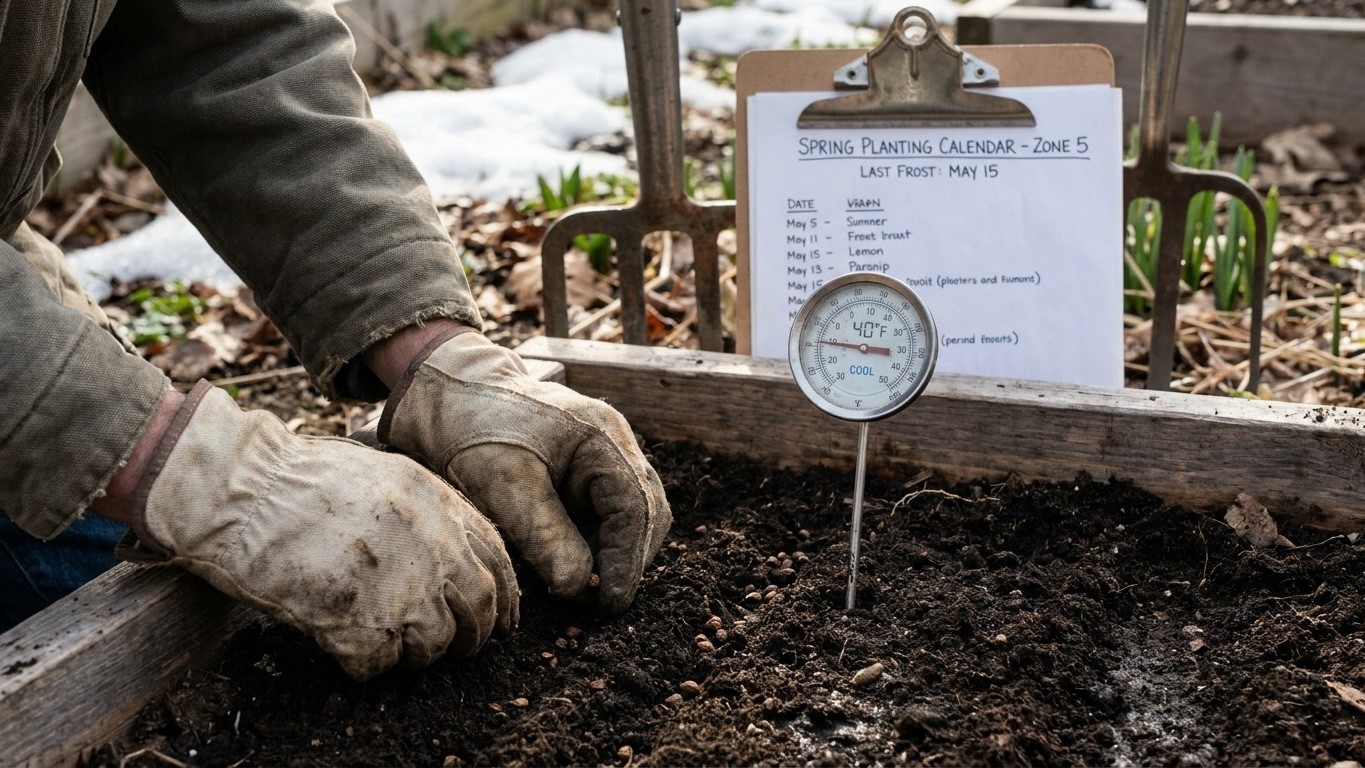

Sow parsnip seeds two to three weeks before the last frost, once soil hits at least 40°F, and then wait. Utah State University Extension pegs parsnips at 100 to 120 days from seeding to harvest, the longest of the root crops it tracks. Germination alone eats up 14 to 21 days. That combination, a slow start and a long finish, is exactly why so many gardeners pull the plug before the crop ever gets going.
The short answer
Parsnips take 100 to 120 days from seeding, according to Utah State University Extension. That figure covers the entire run: from the moment seed touches soil to the day you lift a mature root. No other common root crop on the Extension’s list runs that long, which is the first thing to accept before you even open the seed packet.
The clock starts at seeding, not at germination and not at transplant, because parsnips are sown directly where they’ll grow. They don’t take well to being started elsewhere and moved, so there’s no shortcut through indoor starts the way there is with tomatoes or peppers. Whatever calendar math you do, it begins the day seed goes into the ground.
Timing that seeding matters as much as the total length. Utah State University Extension recommends sowing two to three weeks before the last frost date, but only once soil temperature has reached at least 40°F. Cold, wet soil in early spring will simply sit on the seed without triggering germination, so the 40°F floor isn’t a suggestion, it’s the threshold below which nothing happens at all.
Even once that threshold is cleared, parsnips are in no hurry. Germination is best at 55°F to 65°F, and even under those favorable conditions it takes 14 to 21 days for seedlings to break the surface. That’s nearly three weeks of looking at bare dirt while other crops in the same bed are already up and growing. It’s the single biggest reason parsnip rows get dug up and re-sown out of frustration, when the seed was doing exactly what it was supposed to do the whole time.
Put the two numbers together and the picture is clear: a slow, unglamorous three-week wait just to see a sprout, followed by a season-long haul of three to four months before harvest. Nothing about parsnips rewards impatience. But nothing about them requires skill, either. The plant does the work; the gardener’s job is mostly to leave it alone and keep the soil moist while it does.
What actually decides it
Why germination takes so long
Parsnip seed is notoriously slow to sprout compared with other garden vegetables, and soil temperature is the lever that controls how slow. Utah State University Extension sets 40°F as the minimum for germination to begin at all, and 55°F to 65°F as the range where it happens most reliably. Below that window, seed can sit dormant for weeks without rotting, but it also won’t sprout. Sow too early into cold soil and you’re not saving time, you’re just extending the wait. The 14- to 21-day germination period assumes soil is already in that favorable range; colder soil stretches it further.
Why the harvest window runs so long
The 100- to 120-day total isn’t a growing-degree calculation the same way germination is. It’s simply how long the plant needs to build a full-size taproot from seed. There’s no way to compress that by starting seedlings indoors, since parsnips resent transplanting and are sown in place from the start. The only variable a gardener controls is the sowing date itself, and that’s dictated by soil temperature and frost timing, not by ambition.
Why roots fork instead of growing straight
A forked or split root has two separate causes, and they call for different fixes. The first is physical: heavy, compacted, or stony ground blocks the taproot from driving straight down, so it splits around the obstruction. The second is unrelated to soil texture entirely: overwatering. Excess moisture around the developing root can cause forking even in soil that’s loose and stone-free. Because the causes are different, so is the response, one calls for working the bed deeper before sowing, the other for backing off the watering can once the plants are established.
Why sweetness depends on frost, not on climate zone
Parsnip flavor is often described as improving after cold weather, and that improvement comes from actual exposure to frost, not simply from gardening in a colder hardiness zone. A garden that sits in a chilly zone but avoids a hard frost that season won’t see the same effect as one that gets several weeks of genuinely cold weather. The two aren’t interchangeable, and treating zone as a stand-in for frost exposure is a mistake.
How to do it
- Check soil temperature before sowing. Utah State University Extension sets 40°F as the minimum for germination; don’t sow into soil colder than that.
- Time the sowing date to two to three weeks before your last frost, once that soil temperature threshold is met.
- Sow seed directly into the bed where it will grow. Parsnips are not started elsewhere and transplanted.
- Keep the soil consistently moist through the germination period, which runs 14 to 21 days. Mark the row so you don’t mistake bare soil for a failed sowing and dig it up early.
- Watch for seedlings once the germination window is underway, remembering that soil in the 55°F to 65°F range germinates seed most reliably.
- Thin seedlings once they’re up, since crowded roots compete for the same straight run of soil.
- Continue routine care through the growing season, tracking toward the full 100 to 120 days from the original seeding date to harvest.
- If sweeter flavor is the goal, leave mature roots in the ground long enough to be exposed to frost before pulling them.
- Harvest first-year roots, since this is when they’re at their best. NC State Extension notes that “the fleshy sweet taproot from first-year plants is edible, either raw or baked, boiled, pureed, roasted, fried, grilled, or steamed.” Wear gloves when handling the foliage while lifting roots, since parsnip sap is known to irritate skin.
What goes wrong
- No seedlings after two weeks, so the row gets dug up. Germination legitimately takes 14 to 21 days even in good conditions. Mark the row at sowing and wait out the full window before assuming failure.
- Seed sown but nothing happens for the entire season. Soil was likely below the 40°F minimum Utah State University Extension sets for germination. Test soil temperature before sowing rather than going by the calendar alone.
- Roots come up forked or split. This has two separate causes. Heavy, compacted, or stony soil blocks the taproot and splits it; loosen and clear the bed deeply before sowing. Overwatering is the other cause, independent of soil texture; ease off watering once plants are established.
- Roots taste bland or starchy. They likely weren’t exposed to frost before harvest. Sweetness comes from actual cold exposure, not from the general hardiness zone, so leave roots in the ground through a frost if flavor is the priority.
- Roots turn woody and unpalatable. This happens when parsnips are left into their second year, when the plant sends up a flower stalk and the root toughens. NC State Extension specifies the edible root comes from first-year plants; harvest before that second season begins.
- Skin irritation after handling the plants. Parsnip foliage sap can cause skin reactions, particularly in sunlight. Wear gloves and long sleeves when lifting roots or handling the tops.
If you follow the almanac, here is when to plant parsnips by the moon. It is a tradition, not a proven method.
Common questions
How long do parsnip seeds take to germinate?
Fourteen to twenty-one days under favorable conditions, according to Utah State University Extension. That’s a long stretch of bare-looking soil before any sprout appears, and it’s normal, not a sign the seed failed.
When should I sow parsnip seeds?
Two to three weeks before the last frost, but only once soil temperature has reached at least 40°F. Germination is best when soil sits between 55°F and 65°F.
Why did my parsnip roots come out forked?
Two separate causes can produce forking: heavy, compacted, or stony soil that blocks the taproot, and overwatering, which can cause splitting even in loose soil. Identify which condition applies to your bed before adjusting.
Can I eat parsnips left in the ground into a second year?
No. NC State Extension specifies that the edible taproot comes from first-year plants. A parsnip left to its second year sends up a flower stalk and the root turns woody.