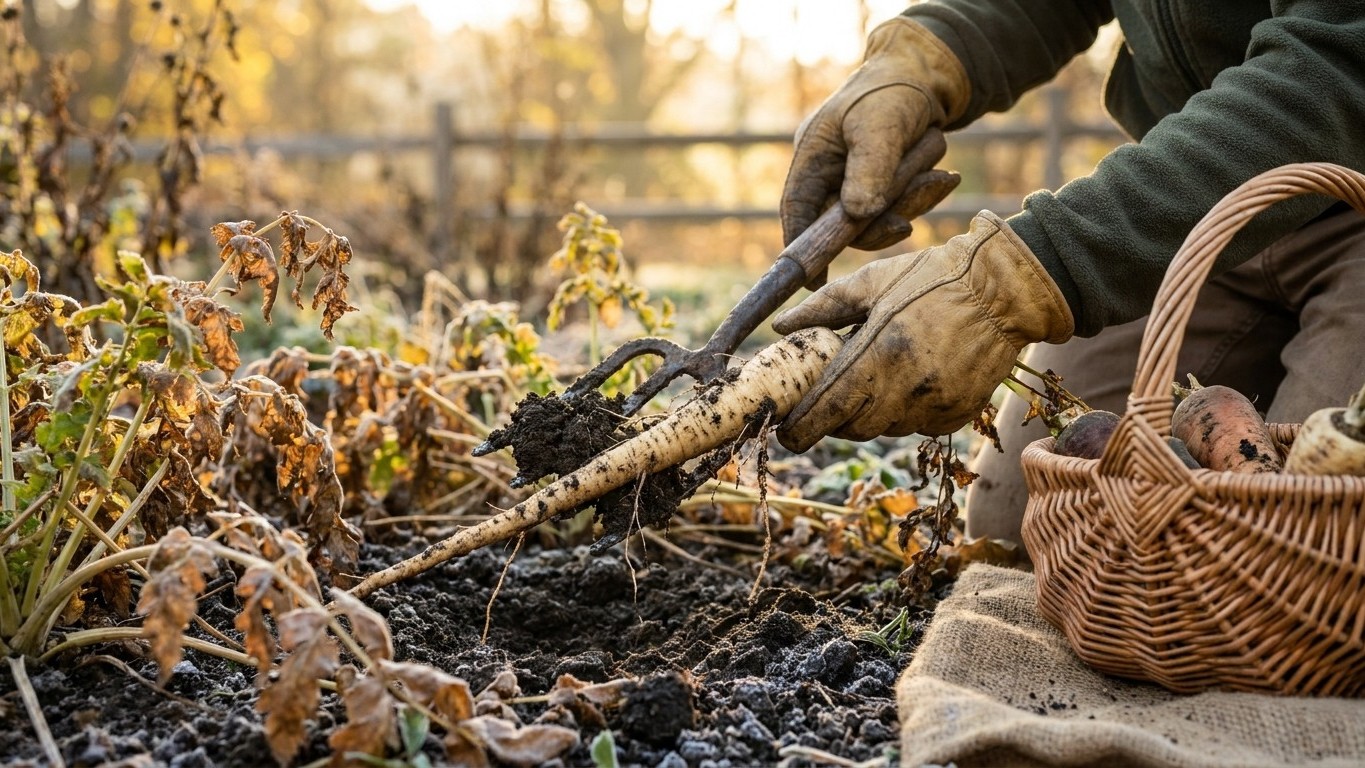

The short answer: harvest in fall for convenience, or leave the roots in the ground and lift them in early spring for flavor. Utah State University Extension explains why the two timings taste different, and the difference comes down to frost, not the calendar. Once you understand what cold actually does to a parsnip root, the choice gets a lot easier to make for your own kitchen.
The short answer
Parsnips are one of the few root vegetables that get better the longer they sit in cold soil. Utah State University Extension puts it plainly: parsnips “taste best when plants have been exposed to several weeks of cool, frosty weather,” because that exposure converts stored starch into sugar. A parsnip pulled in early October, before any hard frost, will be edible and starchy. The same root left where it grew, through weeks of freezing nights, turns noticeably sweeter.
That’s the case for waiting. Roots left in the ground and lifted in early spring are described by the same source as “especially tender and sweet,” which is about as strong an endorsement as an extension publication gives. If your goal is the best-tasting parsnip you can grow, spring lifting wins on flavor almost every time.
But flavor isn’t the only variable. Fall harvest has real advantages: you know exactly what you’re getting before winter weather makes the garden inaccessible, you can store the roots in a controlled space, and you don’t risk losing a crop to a hard freeze that locks the ground solid or to rodents that tunnel toward stored roots over winter. In regions where the ground freezes several feet deep, digging in spring can mean waiting for a thaw that doesn’t arrive on a convenient schedule.
So the answer splits by priority. Chasing sweetness, leave them. Chasing certainty and easier logistics, dig in fall after the first hard frosts have already done some of the sweetening work, then store the roots properly. Either path uses the same biological process, frost converting starch to sugar, just at different points before you actually eat the crop. The next section breaks down why that conversion happens and why cellar storage works on a different principle entirely.
What actually decides it
Starch converts to sugar in the cold
Parsnip roots store energy as starch through the growing season, the same way a potato does. Cold temperatures trigger the plant to break some of that starch down into simple sugars, a defense mechanism against freezing damage: sugar-rich cell fluid resists ice crystal formation better than starch-rich fluid. Utah State University Extension ties this directly to flavor, noting the sweetness follows “several weeks of cool, frosty weather,” not a single overnight dip. One light frost does very little. It’s the accumulated cold, week after week, that does the converting.
This is where hardiness zone gets misread. A zone doesn’t measure frost exposure, it measures a region’s average minimum winter temperature. A garden can sit in a comfortable zone and still get plenty of frosty weeks, or sit in a colder zone and get a short, sharp freeze followed by a thaw. What matters for parsnip flavor is sustained exposure to cold, frosty conditions over time, not which zone number appears on a seed packet map. A mild-winter garden that barely dips below freezing a handful of times will grow a perfectly fine parsnip that never develops the deep sweetness the Utah State University Extension description points to.
Storage works on a different mechanism entirely
Ground storage and cellar storage aren’t the same process, even though both keep roots edible past harvest. Leaving roots in the ground uses ongoing cold exposure to keep converting starch to sugar right up until you dig them. Cellar storage, by contrast, is about slowing decay after the conversion has already happened. Utah State University Extension recommends storing harvested roots at 32 F and 95 percent relative humidity for two to four weeks, and notes that roots kept “in moist sand in a cool cellar” will hold for several months. That’s a preservation mechanism, cold and humidity slowing moisture loss and microbial growth, not a flavor-improving one. A parsnip dug in fall and cellared won’t keep sweetening in storage the way one left in frozen garden soil will.
How to do it
- Sow parsnip seed directly in place. The roots don’t transplant well, so plan the bed where the crop will actually grow.
- Expect germination to take 14 to 21 days. Don’t assume a failed crop and re-sow bare soil before that window closes.
- Once seedlings are up, thin them to 3 to 6 inches apart, with rows spaced 12 to 18 inches apart, so roots have room to size up without crowding.
- Water consistently through the season, aiming for 1 to 2 inches per week, rather than letting the soil swing between dry and soaked.
- Let the roots mature for 100 to 120 days from the original seeding date before considering harvest.
- After several weeks of frosty weather have passed, decide: dig now for storage, or leave the roots in place through winter.
- If leaving roots in the ground, mulch the bed to keep the soil workable enough to dig once you’re ready.
- If harvesting in fall, lift the roots, brush off soil, and move directly to cold storage rather than leaving them exposed.
- If waiting for spring, lift the roots as early as the ground can be worked, before new top growth appears.
- Wear gloves when handling the foliage and stems at harvest. Parsnip greens can irritate skin, so cover up before pulling a full row.
- Store dug roots at 32 F and 95 percent relative humidity, or pack them in moist sand in a cool cellar for longer keeping.
Once lifted, the root itself is straightforward to use. NC State Extension describes it directly: “The fleshy sweet taproot from first-year plants is edible, either raw or baked, boiled, pureed, roasted, fried, grilled, or steamed.” That phrase “from first-year plants” matters more than it looks. A parsnip left past its first year sends up a flower stalk, and the root turns woody and loses the quality that made it worth growing in the first place. Harvest in the first year, whether that’s fall or the following spring, not the season after.
What goes wrong
- Forked or split roots. This has two separate causes, and they call for different fixes. Heavy or stony ground forces the taproot to divide around obstructions, so the remedy is working the bed deeply and removing rocks before sowing. Overwatering is the second, unrelated cause, pushing irregular growth even in clean soil; the fix there is sticking to the 1 to 2 inch weekly watering guideline rather than adding extra water out of habit.
- Nothing sprouting after a week or two. This usually isn’t a failed sowing. Germination genuinely takes 14 to 21 days for parsnip seed. Wait out the full window before disturbing the bed or reseeding.
- Tunneled, ruined roots at harvest. Parsnip fly maggots feed inside the root, often invisible until you slice one open. Remove and dispose of affected roots rather than composting them, and rotate where you plant parsnips the following season so the pest doesn’t build up in one bed.
- Spotted or dying foliage. Leaf blights spread faster in crowded, damp conditions. Keeping to the recommended spacing and watering at soil level instead of overhead reduces the leaf wetness that lets blight take hold.
- Soft, rotting roots after wet weather. Root rot develops in waterlogged soil. Improve drainage in the bed and avoid planting parsnips in low spots where water collects after rain.
- Yellowed, stunted plants. Yellows is a leafhopper-borne disease. Since leafhoppers spread it plant to plant, removing and destroying infected plants promptly limits how far it travels through the row.
Common questions
Can parsnips actually survive winter in the ground?
Yes. That’s the basis for spring lifting: the roots stay in place through freezing conditions and are dug once the ground thaws enough to work, before new top growth starts.
How do I know parsnips are ready to harvest?
Count from seeding. Utah State University Extension’s guidance is 100 to 120 days from sowing before roots reach harvestable size, after which the decision becomes about timing for flavor and storage rather than whether the root is grown.
Is handling parsnip foliage risky?
The stems and leaves can irritate skin on contact, especially in sunlight, so gloves during harvest are a sensible precaution regardless of when you dig.
How long will harvested parsnips keep?
Utah State University Extension recommends 32 F and 95 percent relative humidity for two to four weeks of storage, and notes that roots packed in moist sand in a cool cellar will keep for several months beyond that.