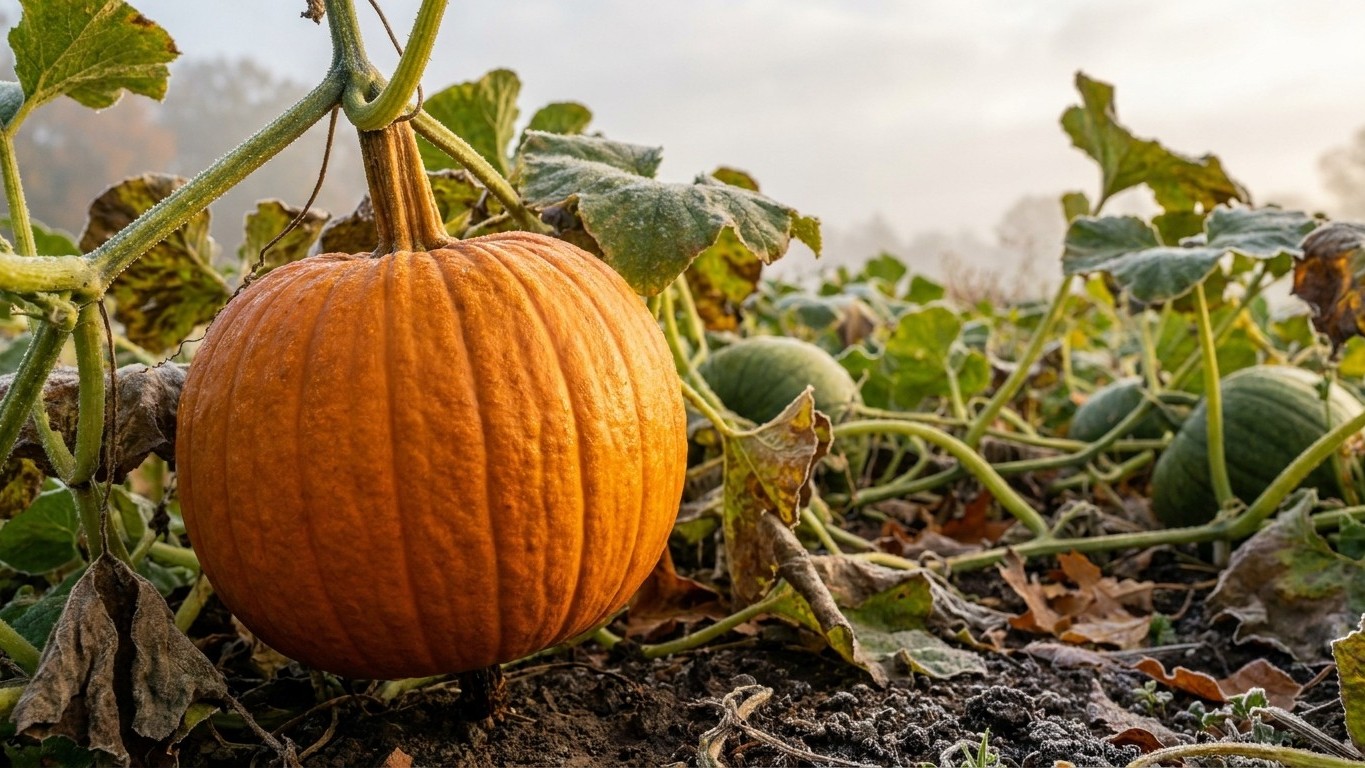

Indiana’s growing season is long enough for pumpkins, but only if the flowers open on schedule. Given the state’s typical first fall frost, arriving between October 21 and October 30 around Indianapolis, and the 45 to 55 days pumpkins need after flowering to mature, vines started on a normal spring timeline finish comfortably. The risk shows up when sowing slides into June or a cold, wet spring delays soil warming, because that pushes flowering too close to frost for the fruit to color.
The short answer
Work the calendar backward from frost, not forward from the seed packet. The first fall frost around Indianapolis lands somewhere between October 21 and October 30. Pumpkins need 45 to 55 days after a flower opens, not after the seed goes in the ground, to turn from green to a ripe, hardened fruit. Subtract that maturation window from the frost window and you get the true deadline: the last date a female flower can open and still deliver an orange pumpkin before the vine gets killed by cold.
Do the subtraction on the cautious end first. If you want a safety margin against the earliest possible frost, October 21, and you assume the longer 55-day maturation period, the flower needs to open by around August 27. That’s the number to plan around if you’re growing anything on the larger side, since bigger fruit tends to sit at the slower end of that maturity range. Push the calculation the other direction, using the latest frost date (October 30) and the shorter 45-day window, and the deadline for flowering slides out to around September 15.
So the real answer isn’t a single date. It’s a window, roughly late August through mid-September, and where you fall in that window depends on how much risk you’re willing to carry and where in the state you garden. Southern Indiana runs both its spring and fall frost dates later than the Indianapolis reference point, by two weeks or more in some years, which effectively hands southern growers extra room on the back end. Northern counties get squeezed the other way, with frost arriving earlier and less margin for a late-blooming vine. For a deeper look at how these regional differences play out, see Will Pumpkins Ripen Before Frost in Indiana?
None of this accounts for the fruit that sets from a late flower and is still green, or barely turning, when the first freeze hits. A frost that kills the vine doesn’t just stop growth, it stops the ripening process outright, so a pumpkin caught two weeks short of its 45-to-55-day window generally stays exactly that far short. That’s the mechanism behind every “my pumpkins never turned orange” complaint, and it traces straight back to a flower that opened too late for the season it had to work with.
When to sow here
Getting the flowering deadline right only matters if the planting date behind it is right too, and that’s where a lot of Indiana gardeners run into trouble. For a detailed breakdown of exact planting windows by region, see When to Sow Pumpkins in Indiana.ardens lose weeks without anyone noticing. The mistake is treating the last spring frost date as the green light for sowing pumpkin seed directly in the ground. It isn’t. Pumpkins germinate and establish once the soil itself reaches 65°F, and soil warms far slower than air. Here’s the sequence that actually works:
- Let the last frost window pass, not just arrive. Indianapolis’s last spring frost typically falls between April 9 and April 21, but that’s an air temperature date. Treat it as the earliest the ground even starts catching up, not the day to sow.
- Track soil temperature separately from air temperature. Bare garden soil in Indiana commonly lags well behind that mid-April frost window, often not reaching a steady 65°F until deeper into May in a cool, wet spring. The two numbers, last frost and 65°F soil, are not the same date and shouldn’t be treated as interchangeable.
- Check with an actual soil thermometer at planting depth rather than guessing from the calendar. A run of warm, sunny days can heat the top inch of soil while the seed-depth zone is still cold, which is exactly the gap that rots seed in the ground.
- Use row cover or black plastic mulch to close the gap. Either one can pull that 65°F date roughly two weeks earlier by trapping daytime heat, which matters directly for the flowering deadline calculated above, since two weeks gained in spring is two weeks of breathing room against an October frost.
- Count forward from the real sowing date, not the frost date, to your expected flowering window, then check that window against the 45-to-55-day maturity clock and the local frost date one more time before committing to a variety.
The arithmetic, in words: a mid-April frost date does not mean mid-April soil is ready. It usually means several more weeks of waiting for bare ground, and row covers are the one practical tool that buys back some of that time.
What goes wrong here
- A late flower that never colors. This is the direct result of sowing pushed too far into June, or a slow spring that delayed the 65°F soil mark. The fix is upstream, not downstream: warm the soil earlier with row cover or plastic mulch, and choose a variety with a track record of finishing reliably rather than betting on the largest fruit in the seed rack.
- A fruit caught by frost while still turning. Even a flower that opened inside the safe window can produce a pumpkin that’s orange on one side and green on the other when the first hard freeze hits, because the 45-to-55-day range is wide and weather doesn’t always cooperate. The remedy is to harvest with the stem attached the moment frost is forecast, even if color isn’t complete, and move the fruit somewhere it won’t freeze rather than leaving it on a dying vine hoping for a few more days.
- A vine that collapses before the skin hardens. Pumpkin skin needs the plant alive and functioning to finish hardening into a rind that will store. Vines that die back early, from disease, from drought stress, or from insect damage, leave fruit with a soft, thin skin even if the color looks fine. Squash bugs and cucumber beetles are common culprits behind this kind of early vine collapse in Indiana gardens, and both have their own dedicated pages on this site covering identification and control. The remedy here is watching the vine’s overall health through late summer, not just watching the fruit.
Checking this against your own county
The Indianapolis frost dates are a useful anchor, but Indiana runs from the Ohio River to the Michigan line, and a county at either end can differ from that reference point by a meaningful margin. Before finalizing a sowing date or a variety choice, check current guidance with Purdue Extension, which maintains county-level offices across the state and can confirm local frost timing, soil conditions, and variety performance specific to your area. That local check matters more than any statewide average once you’re trying to pin down a real deadline for your own garden.
Common questions
Can I still get a ripe pumpkin from a July sowing in Indiana?
It depends entirely on when the flowers open relative to the fall frost window. A July sowing that flowers by mid-August still has a workable path; one that pushes flowering into late September doesn’t have enough days left before an October 21 to October 30 frost, even at the shorter end of the 45-to-55-day maturation range.
Does a light frost kill an unripe pumpkin outright?
The published frost dates here mark the general first freeze window rather than a separate light-frost threshold, and no additional lower-temperature date is published in the source data for this state. The safest practice is to harvest before any predicted frost rather than gambling on how hard it will be.
How should I store pumpkins after harvest in Indiana?
Utah State University Extension’s guidance on this crop simply advises keeping harvested pumpkins somewhere they will not freeze, without specifying an exact storage temperature, humidity level, or keeping time, so plan for a cool, dry, frost-free space rather than assuming a fixed shelf life.
Do certain pumpkin varieties finish faster in Indiana’s season?
Named varieties differ, but no days-to-maturity figures, sizes, or colors are attached to specific variety names in the verified data behind this article, so treat catalog descriptions as a starting point and confirm performance locally through Purdue Extension rather than relying on a variety name alone.