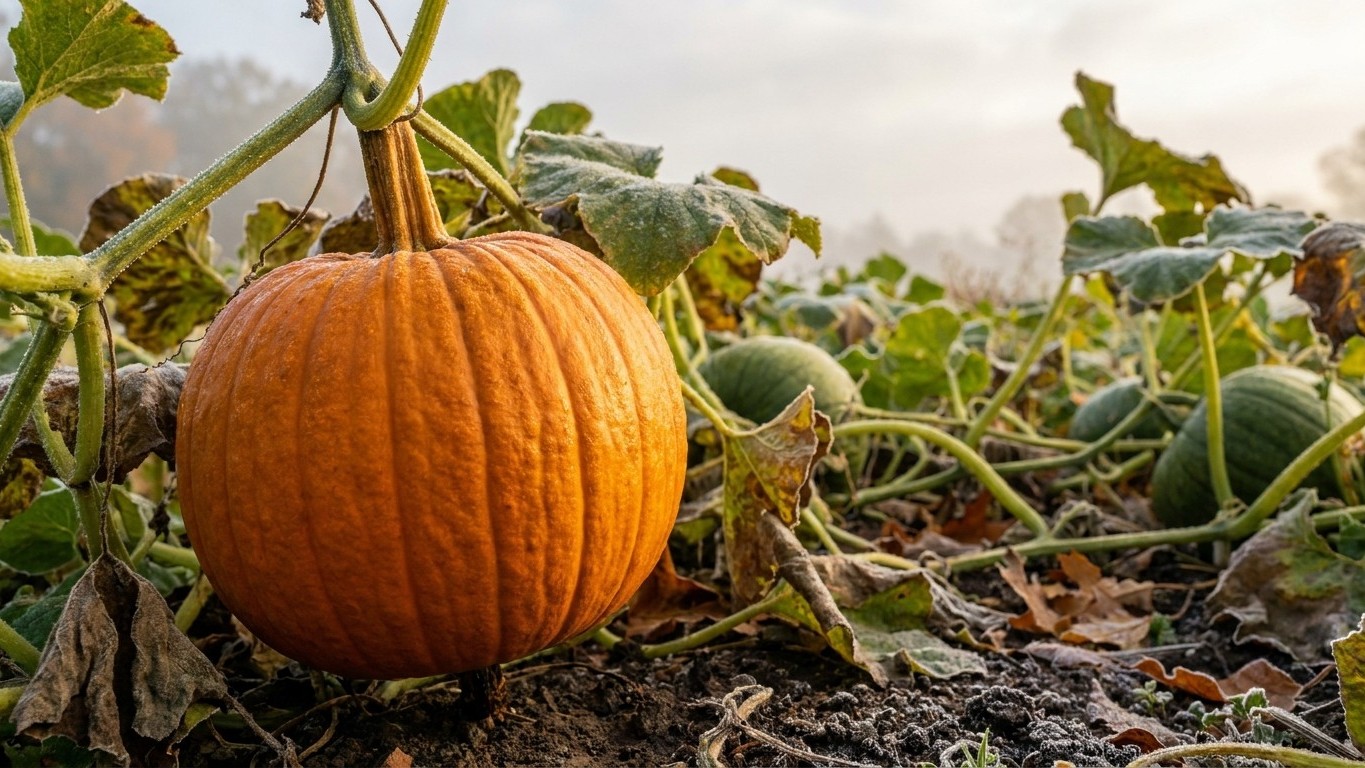

Will Pumpkins Ripen Before Frost in Kentucky? They can absolutely ripen before frost, but only if the flowers open early enough. Because fruit needs 45 to 55 days after flowering to color up, and because the state’s first fall freeze typically lands between November 2 and November 12, the real question isn’t how many pumpkins a vine can grow. It’s whether that vine is flowering by the right week in September.
The short answer
Kentucky’s first fall frost lands somewhere between November 2 and November 12 in most years, based on NOAA’s 1991-2020 Climate Normals for the region. That window is the fixed point every pumpkin grower here has to work backward from.
Utah State University Extension puts pumpkin maturity at 45 to 55 days after flowering, not after seeding, not after transplanting. That distinction matters more than almost anything else in the growing calendar, because a vine can look lush and be covered in leaves for weeks before a single female flower ever opens. The clock that decides whether a gardener ends up with an orange pumpkin or a green one starts ticking the day that flower opens, not the day the seed went into the ground.
Run the subtraction and a window appears. Counting back 55 days from the earliest frost date, November 2, lands on roughly September 8. Counting back 45 days from the latest frost date, November 12, lands on roughly September 28. That gives a rough safety window of early to late September for the last flowers that still have a realistic shot at turning into a ripe pumpkin before the ground freezes.
The narrower end of that window, closer to September 8, is the one worth planning around. NWS Louisville has noted that the station this data comes from tends to run later in spring and earlier in fall than the rural counties surrounding it, meaning a garden outside the city, on lower ground or away from urban heat, should treat the frost date as arriving sooner, not later. A flower that opens September 20 in a Louisville backyard might be cutting it close. The same flower opening the same day in a rural county forty miles out could already be too late.
So the short answer: yes, pumpkins ripen in Kentucky, comfortably, if the vine is flowering by early to mid September. Flowers that open in the last week of September are gambling on the late end of the frost window and the fast end of the maturity window landing together. Anything past the first week of October isn’t a ripening question anymore. It’s a hoping question.
When to Sow Pumpkins in Kentucky
Sowing date isn’t set by the calendar square for last frost. It’s set by the soil, and soil is slower than the sky.
- Start with the last spring frost window. NOAA’s Climate Normals put that at March 24 to April 4 for this region. That date only tells a gardener when the air stops freezing, not when the ground is ready for a pumpkin seed.
- Wait for the soil, not the air, to hit 65 F. Utah State University Extension is specific on this point: pumpkin seed wants soil at 65 F to germinate reliably. Bare ground in Kentucky, even after the last frost has passed in late March or early April, is still cold several inches down. Soil warms on its own schedule, lagging behind air temperature by weeks, so the 65 F mark in a typical Kentucky garden usually doesn’t arrive until well after most gardeners assume the frost date means “go.”
- Check with a soil thermometer, not a guess. Push it 2 to 4 inches down at midmorning for a few days running. One warm afternoon doesn’t mean the ground underneath has caught up.
- Use row covers if the season feels tight. Clear or floating row covers trap solar heat over bare soil, and laying them down ahead of planting commonly buys about two weeks on that 65 F date compared with ground left to warm on its own.
- Count forward once the soil is confirmed warm. From the sowing date, pumpkins need weeks of vine growth before the first female flowers even appear, and only then does the 45-to-55-day maturity clock described above start running. Sow too late against that 65 F threshold, and flowering gets pushed past the safe September window before frost even enters the picture.
The arithmetic, in words: last frost passes in late March or early April, soil takes additional weeks beyond that to reach 65 F, row covers can pull that date roughly two weeks earlier, and every day lost at this stage is a day subtracted from the safe flowering window in September.
What goes wrong here
- A late flower that never colors. When the first female flowers don’t open until late September or into October, the fruit behind them may size up but never turns from green to orange before the season runs out of warm days. The remedy is to pinch off new flowers and small fruit once it’s clear they can’t finish in time, so the vine stops wasting energy on pumpkins that were never going to make it and channels what’s left into the fruit that already has a chance.
- A fruit caught by frost. Even a pumpkin that’s most of the way to orange can be lost overnight if a hard freeze arrives before it’s cut. The remedy is to watch the forecast against the November 2 to November 12 window and harvest early rather than late, cutting the fruit with the stem attached and moving it somewhere it will not freeze, as Utah State University Extension advises, even if the color isn’t fully finished. A pumpkin cut a few days early beats one left on the vine and blackened by frost.
- A vine that dies back before the skin hardens. Vines weakened by pests can collapse weeks before the fruit is ready, leaving pumpkins stranded with soft, unhardened skin. This is where squash bugs and cucumber beetles do most of their damage in Kentucky gardens. The remedy starts with catching either insect early, since a vine lost in August has no chance of carrying a fruit through a September flowering window at all.
Checking this against your own county
Every date in this article comes from a single weather station, and Kentucky is a big state with real differences in elevation, soil type, and microclimate between the Purchase region in the far west and the mountains in the east. A garden in a river valley can run frost-free two weeks longer than one on a nearby ridge.
The University of Kentucky Cooperative Extension Service keeps county-level agents who track local frost records, soil temperature trends, and pest pressure specific to each county rather than a single statewide average. Before locking in a sowing date or a flowering deadline based on the windows above, it’s worth checking those numbers against what the local office has recorded for the actual county the garden sits in, not the nearest airport station.
That local check matters most for gardeners near the edges of the windows given here, whether that’s a rural garden that runs colder than the reference station suggests, or a warmer microclimate that might allow flowering a little later than the general window implies.
Common questions
How many days before the first frost should pumpkins flower in Kentucky?
Aim for female flowers open by early to mid September. Counting back 55 days from the earliest recorded frost date, November 2, lands near September 8, which gives the full margin the maturity window allows for.
Can I still plant pumpkins in July in Kentucky?
It depends entirely on when the soil already reached 65 F and how quickly the vine reaches flowering after that. There’s no published figure here for days from sowing to first flower, so the safer approach is a soil thermometer check now and close attention to when female flowers actually appear, rather than counting on a July sowing date alone.
What temperature actually kills pumpkin vines in fall in Kentucky?
The frost dates cited above, November 2 to November 12, are built from 32 F freeze probability data. That 32 F threshold is the benchmark behind these dates, though it reflects freeze probability at a single reference station, not a guarantee for every county.
How should I store pumpkins after harvest in Kentucky?
Utah State University Extension only specifies keeping harvested pumpkins somewhere they will not freeze. No storage temperature, humidity level, or keeping time is published in that source, so beyond frost protection, there’s no verified figure to pass along here.