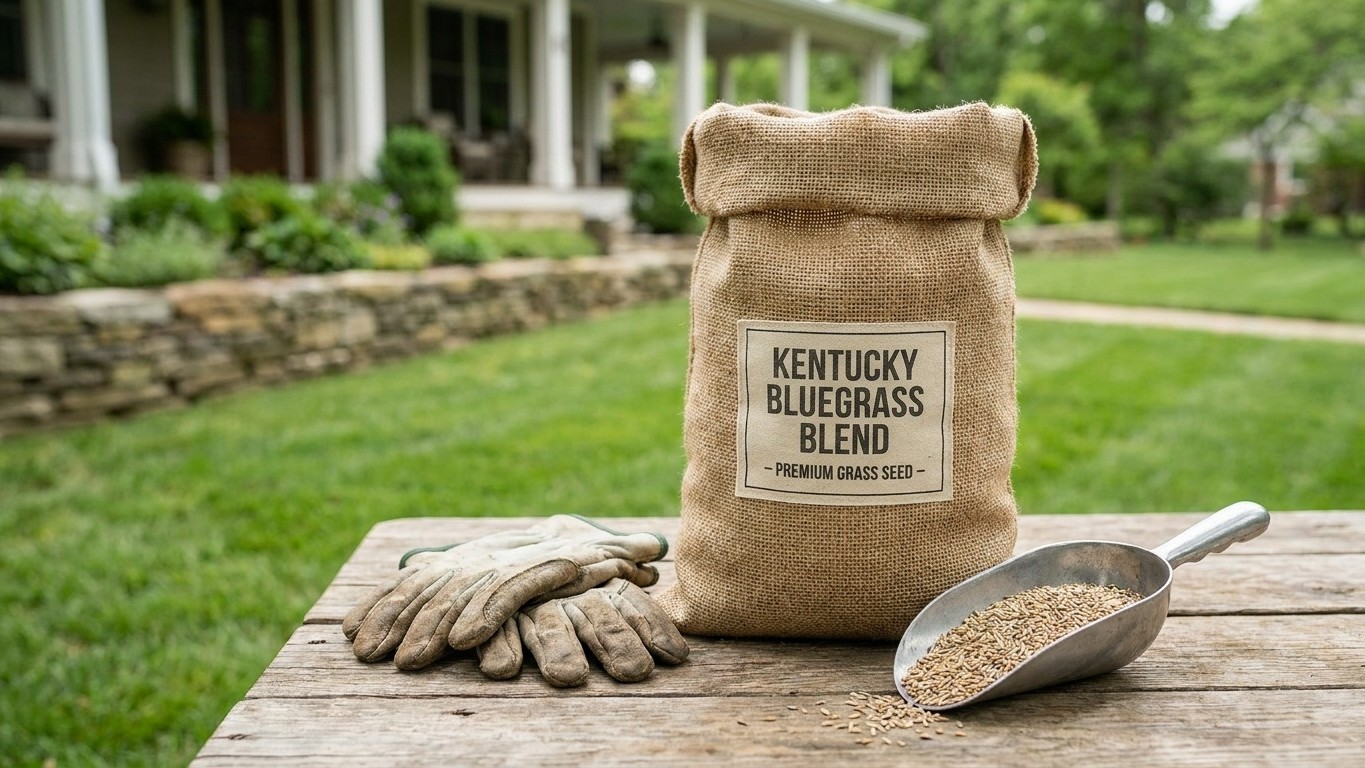

Kentucky sits in what turf researchers call the transition zone: too hot in summer for cool-season grass to thrive without stress, too cold in winter for warm-season grass to stay green. Clemson Cooperative Extension (HGIC 1214) and Penn State Extension list five species grown across the state: Tall Fescue, Kentucky Bluegrass, and Perennial Ryegrass on the cool-season side, Zoysiagrass and Bermudagrass on the warm side. A cool-season lawn stays green through winter but wilts in a hot July; a warm-season lawn holds through summer heat but turns brown from the first fall frost until spring. Decide which season you can tolerate the lawn looking rough in, then choose from that half of the list.
The short answer for Kentucky

There’s no single grass that just works everywhere in your yard — Kentucky sits in a strip of the country too hot for northern grass and too cold for southern grass to be happy year-round, so the real question is which season you’re willing to let the lawn look a little rough in. Fescue and its cool-season cousins stay green all winter but can wilt and thin during a brutal July stretch; zoysia and bermuda shrug off summer heat but turn brown from the first frost until spring. Walk your yard, notice how much sun it actually gets, and let that answer decide which half of the list you’re choosing from.
For most home lawns in Kentucky, a Tall Fescue blend is the default cool-season choice, because it tolerates more shade and drought than Kentucky Bluegrass and holds its color longer into summer than Perennial Ryegrass alone. That does not make it the best grass outright. It is the safer pick for a yard with some shade and average watering. Zoysiagrass and Bermudagrass answer for a full-sun yard where the owner accepts brown turf for several winter months in exchange for a tougher, denser lawn through July heat.
Compare the five before you choose
| Grass | Season type | Sun needs | Main trade-off |
|---|---|---|---|
| Tall Fescue | Cool-season | Full sun to moderate shade | Thins in deep summer heat without irrigation |
| Kentucky Bluegrass | Cool-season | Full sun | Shallow roots struggle in drought |
| Perennial Ryegrass | Cool-season | Full sun | Short-lived on its own, usually mixed with fescue or bluegrass |
| Zoysiagrass | Warm-season | Full sun to light shade | Slow to green up in spring, brown longest of the warm-season pair |
| Bermudagrass | Warm-season | Full sun | Aggressive spreader, needs full sun and heat to perform |
The right pick for your yard depends on how much sun it gets, how you feel about a dormant lawn in the coldest months, and whether you’ll irrigate through a dry August. Start with Kentucky Lawn Care for the soil testing and site prep that should happen before any seed or sod goes down.
Working through the year
Cool-season and warm-season grasses are worked in opposite halves of the calendar. Figure out which group your lawn belongs to before following any date below, because the same month means active growth for one and dormancy for the other.
Cool-season lawns: Tall Fescue, Kentucky Bluegrass, Perennial Ryegrass
Clemson’s Tall Fescue Maintenance Calendar (HGIC 1219) treats fall as the main growing and repair season for this group. Fall is when to seed, fertilize, and aerate a cool-season lawn in Kentucky, timed around the first freeze. NOAA’s 1991-2020 climate normals put the first fall freeze near Louisville at November 2 to November 12, and seeding roughly six weeks ahead of that window lands in late September to early October near Louisville, giving new grass time to root before cold weather sets in. Gardens outside the city, especially low-lying rural spots, tend to freeze earlier, so lean toward the earlier end of that window. Core aeration belongs in that same fall stretch, opening the soil right before or alongside seeding.
Spring calls for a pre-emergent herbicide before crabgrass germinates, a second, lighter round of nitrogen than fall gets, and mowing height raised as temperatures climb. Through summer, the Clemson calendar backs off nitrogen almost entirely and shifts to deep, infrequent irrigation, because feeding a stressed cool-season lawn in July pushes growth it cannot support and invites disease. Winter needs little beyond occasional mowing on mild days and staying off frozen turf.
Warm-season lawns: Zoysiagrass, Bermudagrass
Clemson’s Zoysiagrass calendar (HGIC 1217) and Bermudagrass calendar (HGIC 1216) run the opposite direction: spring and summer are the growing season, fall and winter are dormancy. Both green up only after the soil warms in spring, later than most homeowners expect, and both take their heaviest nitrogen feeding during the height of summer growth, not in fall. Aeration and dethatching are spring jobs, done as the lawn is greening up and can recover quickly, not once growth has stopped. The last nitrogen application of the year needs to come well before dormancy sets in near the first fall freeze. Feeding too late pushes tender new growth into the cold and raises the risk of winterkill.
For the month-by-month version of either schedule, The Kentucky Lawn Care Calendar, Month by Month lays out the tasks in order rather than by species.
What changes across Kentucky
The figures above come from the weather station at Louisville, and the rest of the state runs on a different clock. NWS Louisville itself warns that this urban station reports a later spring and an earlier fall than the rural Jefferson County that surrounds it, because pavement and buildings hold heat longer than open fields do. A farm outside the city can expect its own freeze window to run tighter than the November 2 to November 12 range NOAA’s 1991-2020 normals give for the Louisville station.
Elevation and region shift the whole calendar
Eastern Kentucky’s mountain counties sit at higher elevation than the Bluegrass region around Lexington or the western lowlands near Paducah, and higher ground cools off earlier in fall and stays cooler through summer. That favors cool-season grass a little more and shortens the warm-season growing window. Western Kentucky’s lower elevation and longer, hotter summers push the balance the other way, toward better performance from Zoysiagrass and Bermudagrass than the same species would show in the mountains.
None of this changes the underlying picture: Kentucky as a whole sits in the transition zone, and no county falls cleanly into a pure cool-season or pure warm-season climate the way a state further north or further south does. What shifts is how much each grass struggles, not which species is guaranteed to work. A homeowner in the mountains leaning cool-season and one in the far west leaning warm-season are both making a reasonable call based on their own summers and winters, not choosing from a different list of options.
The mistakes this climate punishes
Feeding the wrong grass at the wrong end of the year
Fertilizing a warm-season lawn in fall is the most common mistake in a transition-zone yard, because the habit carries over from cool-season care. Zoysiagrass and Bermudagrass are heading into dormancy as the first fall freeze approaches, and a dose of nitrogen at that point forces new growth that has no time to harden off before cold weather arrives. The damage does not show right away. It shows up the following spring as dead patches that never green up, well after the fertilizer application is forgotten.
The reverse mistake, skipping fall fertilizer on a cool-season lawn because it looks like it is winding down, costs just as much. Tall Fescue and Kentucky Bluegrass are actively rebuilding roots in fall, and Clemson’s Tall Fescue calendar (HGIC 1219) treats this as the heaviest feeding of the year, not the lightest.
Seeding cool-season grass in the wrong season
Seeding Tall Fescue, Kentucky Bluegrass, or Perennial Ryegrass in late spring or summer is a second recurring failure. Seed sown after the cool spring window either germinates weakly in warming soil, or germinates fine and then dies in the first heat wave, before roots go deep enough to survive it. Fall seeding, timed around the first freeze discussed above, gives seedlings a full cool season to establish before they meet their first Kentucky summer.
Cutting a cool-season lawn short in July is the third habit that costs a lawn here specifically. A short cool-season lawn loses the shade its own canopy would otherwise cast over the soil, and the crown of the plant sits exposed to heat it never evolved to handle. The grass does not die outright. It thins, browns in patches, and opens the door to weeds that a taller, denser stand would have shaded out.
Checking this against your county
Confirm local freeze dates and current pest pressure with the University of Kentucky Cooperative Extension Service before locking in a seeding date, especially if you garden outside Jefferson County. Extension offices also run soil tests, which matter more to lawn success than the species you pick, and can point you toward current cultivar options within whichever species fits your yard.
Find your county’s office through the University of Kentucky Cooperative Extension Service directory.
Common questions
Will Bermuda grass survive winter in Kentucky?
It survives as a dormant, brown lawn rather than dying outright, and greens back up once soil warms in spring. The real risk is winterkill in an unusually cold winter, or in a lawn fed nitrogen too late in fall, and that risk runs higher in the cooler parts of the state than near Louisville.
Can I mix Bermuda or Zoysia with a fescue lawn?
Not in the same patch of turf. The two groups green up and go dormant on opposite schedules, so a mixed stand shows patches of brown and green year round and neither species gets the mowing height or fertilizer timing it needs. Keep them in separate zones of the yard if you want both.
Is Kentucky Bluegrass actually native to Kentucky?
No, it’s native to Europe, northern Asia, and parts of North Africa, and it earned the “Kentucky” name because it naturalized so widely across the state’s Bluegrass region after early settlers brought it over. It’s still a solid choice for a full-sun, well-watered lawn, just not the drought-tolerant option Tall Fescue is.
How long until new grass seed fills in a bare patch?
It depends on the species and the weather that follows, and catalogue germination times are measured under controlled conditions a home lawn rarely gets. A cool-season patch seeded in the fall window discussed above typically shows green within a couple of weeks, but full, walkable density takes the rest of the season to fill in.