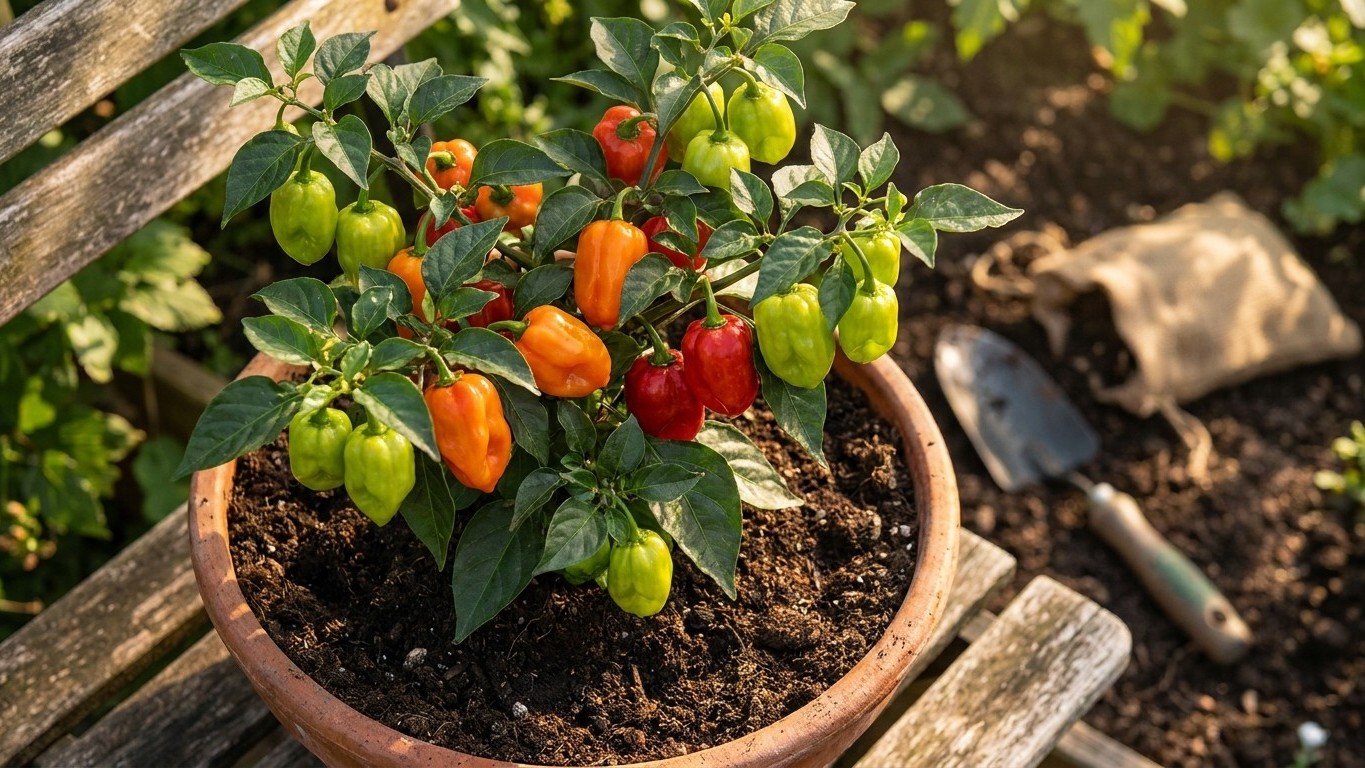

Habanero peppers are a hot type, not a mild one, and that single fact should decide when you set them out. This cultivar needs consistently warm soil to get going, so a grower who plants before the ground has warmed is really just waiting longer for the same result. The safer move is to wait for warm soil rather than a date on the calendar.
What You’re Actually Growing
The name on the seed packet matters less than the type behind it, and this one is a habanero. That single word tells you more than any cultivar name could: extreme heat, a lantern-shaped fruit, and a plant bred for flavor concentration rather than mild eating. This particular cultivar appears on the recommended list published by Clemson Cooperative Extension, which identifies it simply as a habanero-type pepper worth growing in home gardens.
What the source doesn’t say is worth stating plainly, because guessing would do the reader a disservice. Clemson’s list and NC State Extension‘s variety descriptions don’t publish a days-to-maturity figure for this cultivar, a fruit size, or an expected yield per plant. Most pepper cultivars in extension databases carry that kind of gap. A gardener who knows the number isn’t published is better off than one handed a confident estimate that nobody actually measured.
One distinction is worth making before going further. Some pepper plants sold at nurseries are grown purely for their colorful, ornamental foliage and fruit display, not for eating. Those decorative peppers are a different product entirely and shouldn’t be treated as food. The habanero discussed here is an edible cultivar, grown for the kitchen, not the porch planter.
How Hot Is It, Really?
Heat in peppers tracks with type far more reliably than it tracks with any single cultivar name. A bell pepper carries essentially no heat. A jalapeño sits in the moderate range. A habanero, like this one, belongs at the extreme end of the scale, grown specifically for the burn as much as the flavor.
No Scoville number is published for this particular habanero cultivar, and none should be assumed. Only two figures exist in the published record worth citing for comparison: the Carolina Reaper averages 1.64 million Scoville heat units, and jalapeños typically run between 2,500 and 8,000. Those numbers belong to different peppers entirely, but they show the scale a habanero is playing on, somewhere well above jalapeño territory and often in the same conversation as the world’s hottest cultivars.
What extension guidance actually says about eating habaneros is more useful than any invented number. NC State Extension notes that habanero fruits are edible, “but spiciness is unpredictable in intensity.” That unpredictability isn’t a disclaimer, it’s the mechanism at work. Capsaicin, the compound behind the heat, concentrates under plant stress. A habanero grown through a hot, dry stretch with inconsistent watering will typically bite harder than the same cultivar grown in a mild, well-watered season. Two plants from the same seed packet, given different summers, can hand you noticeably different heat. That’s the honest answer, and it’s more accurate than any single number could be.
What This Plant Actually Needs
Habaneros as a type tend toward compact, bushy growth, which makes them a reasonable choice for large containers as well as garden beds, though neither Clemson nor NC State publishes a specific growth habit figure for this exact cultivar. What both sources make clear is the recommendation itself: this habanero made Clemson’s list of varieties suited to home gardens, which implies reasonable regional performance without guaranteeing a specific disease resistance or heat-tolerance rating for this name alone.
Days to maturity: not published for this one
Only one pepper in the broader extension record carries a specific days-to-maturity figure, and this habanero isn’t it. Rather than estimate a number based on “habaneros generally,” the more honest answer is that the count isn’t published for this cultivar. The number that will actually apply to your garden is the one printed on your own seed packet, since seed producers test germination-to-harvest timing for their specific stock and growing conditions.
One rule does apply across every pepper type, habanero included: this is a warm-season, warm-soil crop. Soil temperature, not air temperature, is what triggers root development and steady growth. Set transplants into cold ground, even if the calendar says late spring, and the plant will sit stalled for weeks rather than pushing new growth. If you’re working from seed or timing your transplant date, it’s worth checking a dedicated guide on starting pepper seeds indoors and one on transplanting peppers outdoors for the soil-temperature thresholds that matter more than any date on a calendar.
The Taste and the Use
Flavor in peppers follows type the same way heat does. A bell pepper is sweet and holds its shape when stuffed or roasted. A banana pepper is mild and tangy, well suited to pickling. A jalapeño works fresh in salsa, stuffed as poppers, or pickled whole. A cayenne is typically dried and ground into powder. A habanero, the type this cultivar belongs to, is known for a fruity, almost tropical flavor underneath the heat, which is why cooks tend to use it in small quantities rather than by the handful.
Neither Clemson Cooperative Extension nor NC State Extension publishes a tasting note specific to this exact cultivar beyond identifying it by type. That’s worth saying outright rather than inventing a flavor description that sounds authoritative but isn’t sourced. What can be said honestly is the type-level truth: habaneros bring fruit-forward heat, used sparingly in salsas, hot sauces, and marinades where a little goes a long way. Cooks who want the habanero flavor without overwhelming heat typically remove the seeds and internal membrane, where much of the capsaicin concentrates, though even seeded flesh carries real heat.
Common Questions
Is a habanero pepper hotter than a jalapeño?
Yes, by type. Jalapeños run 2,500 to 8,000 Scoville heat units according to published figures, while habaneros as a type sit in the extreme range well above that, though no specific Scoville number is published for every individual habanero cultivar.
Why does one habanero taste hotter than another from the same plant?
Heat intensity is unpredictable in habaneros, according to NC State Extension. Plant stress, particularly drought and high heat, concentrates capsaicin, so fruit grown during a hard, dry stretch of summer often bites harder than fruit from a milder, well-watered period.
When should I transplant habanero seedlings outdoors?
Wait for consistently warm soil rather than a fixed date. Peppers set into cold ground stall for weeks regardless of air temperature, so checking soil temperature is more reliable than the calendar.
Are all ornamental pepper plants edible?
No. Some peppers are sold purely for decorative foliage and fruit display and aren’t intended for eating. The habanero covered here is a separate, edible cultivar grown for the kitchen, not a decorative planter variety.