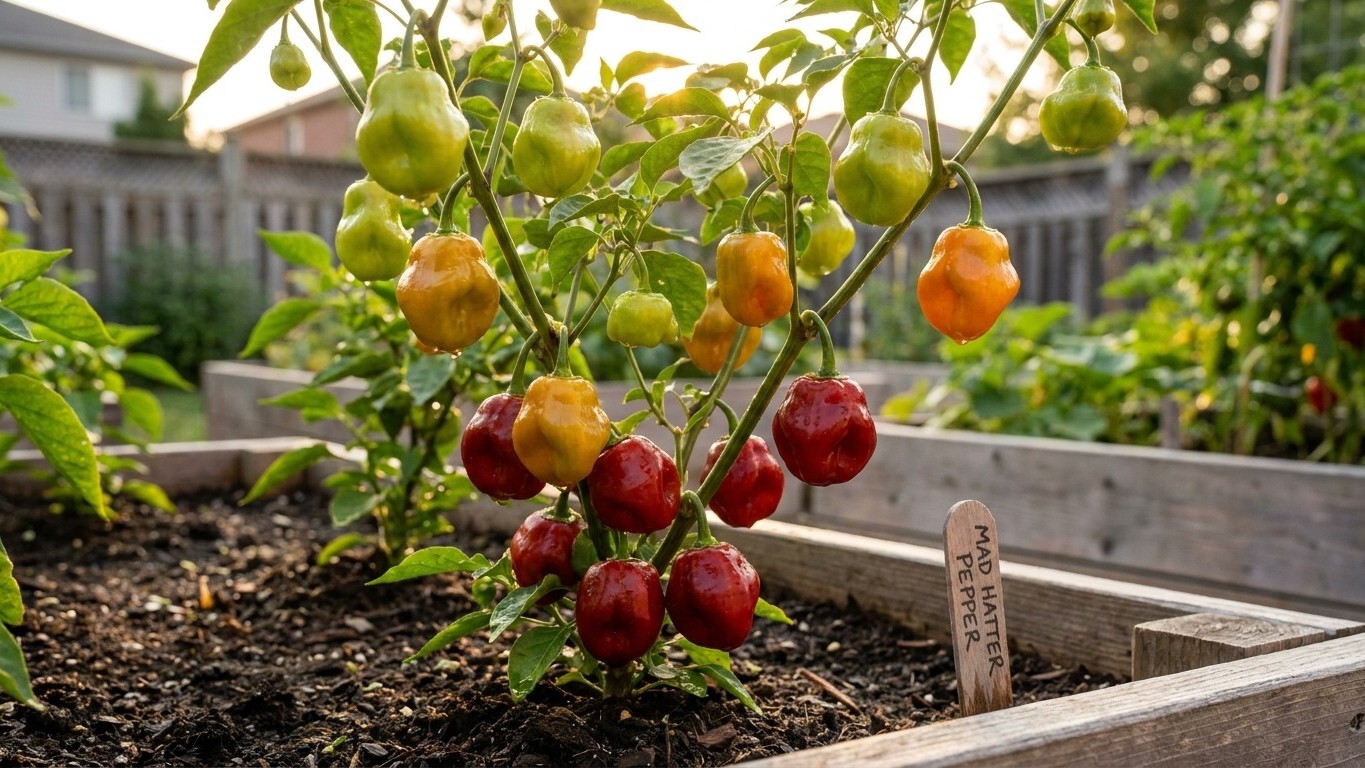

The Mad Hatter pepper isn’t sorted into a heat category by the two university sources behind this page, and that omission is itself the answer worth knowing. NC State Extension describes it plainly: “No heat but the prolific production of a habanero pepper.” Read that twice. It’s an edible plant, mild in the mouth, but built like one of the most productive hot peppers grown in home gardens. What follows is what’s actually documented, and what still isn’t.
What the Mad Hatter Pepper Actually Is
Clemson Cooperative Extension’s recommended pepper list sorts varieties into clear buckets: bell, banana, jalapeño, habanero, cayenne, and a catch-all “other hot peppers” group. The Mad Hatter doesn’t appear in that sorted list. It shows up instead in NC State Extension’s separate description, described on its own terms rather than filed under a type. That matters because type usually tells a gardener more than a cultivar name ever could. Skip the type category here, and you’re left with the description itself: no heat, but fruiting behavior that mirrors a habanero plant’s output.
What NC State doesn’t say is just as important as what it does. There’s no published days-to-maturity figure for this cultivar. No listed fruit size. No yield estimate per plant. Most named pepper varieties carry at least one of those three numbers somewhere in an extension database or seed catalog description; this one, based on the two sources available, carries none. That’s a gap worth stating outright rather than papering over with a plausible-sounding estimate borrowed from a similar-looking pepper. A reader who knows a number isn’t published is better off than one handed a confident guess dressed up as fact.
One distinction matters before going further. Some pepper plants sold at nurseries are grown strictly for ornamental foliage and berry-like fruit display, not for eating, and those are a different product entirely. The Mad Hatter, as described by NC State Extension, is an edible cultivar. But the broader category of decorative pepper plants sold for looks rather than food is worth knowing about if you’re comparing options at a garden center, because not everything labeled “pepper” on a nursery tag belongs on a plate.
Is the Mad Hatter Pepper Hot? Here’s What the Heat Level Really Means
Heat in peppers tracks almost entirely with type, which is exactly why the missing type classification for this cultivar leaves a real gap. A bell pepper carries essentially no heat. A jalapeño sits in moderate territory, measured by Clemson Cooperative Extension at 2,500 to 8,000 Scoville units. A habanero runs far hotter, and the Carolina Reaper, the extreme end of the scale, averages 1.64 million Scoville units. Those two figures are the only Scoville numbers documented in the sources behind this page. No number exists for the Mad Hatter, and inventing one here would present a guess as a measurement.
What does exist is the description itself, and it’s oddly specific: no heat, but the prolific fruiting habit of a habanero plant. That phrasing suggests a pepper shaped and produced like a hot variety without carrying the capsaicin load that usually comes with that shape. It’s an unusual combination worth taking at face value rather than reading extra spice into it because of the habanero comparison.
NC State Extension’s broader caution about pepper fruits applies here too: they’re edible, “but spiciness is unpredictable in intensity.” That line isn’t hedging for legal cover. Capsaicin production in a pepper plant responds to stress. A hot, dry stretch late in the season concentrates capsaicin in the fruit; a mild, well-watered season tends to mute it. The same plant, the same cultivar, can taste noticeably different from one year to the next depending on what the weather did to it. For a cultivar already described as bearing no heat, that mechanism matters less than for a jalapeño or habanero, but it’s the same biological rule at work across the whole pepper family.
Growing Conditions the Mad Hatter Pepper Actually Asks For
What the source confirms and what it leaves out
NC State Extension’s description centers on the fruiting habit, not on a full growing profile. There’s no days-to-maturity figure published for this cultivar in the sources available, and no note on whether it’s bred for containers, compact growth, or particular disease resistance. Rather than estimate a maturity window from a type this cultivar isn’t even filed under, the more useful move is pointing to the number that will actually govern a specific planting: the days-to-maturity count printed on the seed packet in hand. Seed packets vary by seed lot and grower, and that printed figure is the one that applies to the plants actually going in the ground, not a generic estimate borrowed from a similar-sounding pepper.
The one rule that applies regardless
Every pepper, regardless of type or cultivar, shares one non-negotiable requirement: warm soil. Peppers are a heat-loving crop, and soil that hasn’t warmed above roughly 60°F stalls root development even if air temperatures feel mild enough for a jacket-free afternoon. Transplant into cold ground and the plant doesn’t die outright, it just sits there, sulking, for weeks, while a plant set out two or three weeks later into properly warmed soil catches up and often passes it. For the mechanics of timing that transition correctly, see our guide on transplanting pepper seedlings outdoors. If you’re starting from seed rather than buying starts, the seed-starting timeline for peppers covers the indoor lead time that makes the outdoor transplant date work.
Taste and Best Uses for the Mad Hatter Pepper
Pepper flavor and use track closely with type. A bell pepper is sweet and holds its shape well stuffed or roasted. A banana pepper is mild and works best pickled. A jalapeño is the standard for fresh salsa, poppers, and quick pickles. A cayenne is typically dried and ground rather than eaten fresh. A habanero is intensely fruity and used in small quantities precisely because a little goes a long way. None of those type-based profiles apply cleanly to the Mad Hatter, since the sources behind this page don’t sort it into any of those groups.
What NC State Extension does establish is narrower but useful: the fruit carries no heat, despite a fruiting habit modeled on a habanero plant’s productivity. That combination points toward a pepper meant for fresh eating without the caution a habanero shape would normally demand, useful in dishes where a mild, fruit-forward pepper adds bulk and a bit of visual interest without any burn. Beyond that specific note, the source doesn’t offer a tasting description, and inventing one, a claim about sweetness or texture that isn’t in the record, is exactly the kind of detail a careful reader can catch and shouldn’t have to. The honest answer is that the flavor profile beyond “no heat” isn’t documented, and a gardener growing this cultivar is largely finding that out firsthand.
Common questions
Is the Mad Hatter pepper the same as a habanero?
No. NC State Extension describes it as having no heat but the prolific fruiting habit of a habanero plant. It shares a production pattern with habaneros, not their capsaicin level.
How many Scoville units does the Mad Hatter pepper have?
No Scoville figure is published for this cultivar in the available sources. The only documented figures in this comparison set are the Carolina Reaper, averaging 1.64 million Scoville units, and jalapeños, at 2,500 to 8,000.
How many days until the Mad Hatter pepper is ready to harvest?
No days-to-maturity number is published for this cultivar. Check the count printed on your specific seed packet, since that figure reflects the actual seed lot you’re growing.
Can I grow the Mad Hatter pepper in a container?
The sources don’t specify container suitability for this cultivar. What does apply universally is the need for warm soil before transplanting, whether in ground or in a pot, since cold soil stalls pepper root growth regardless of container type.