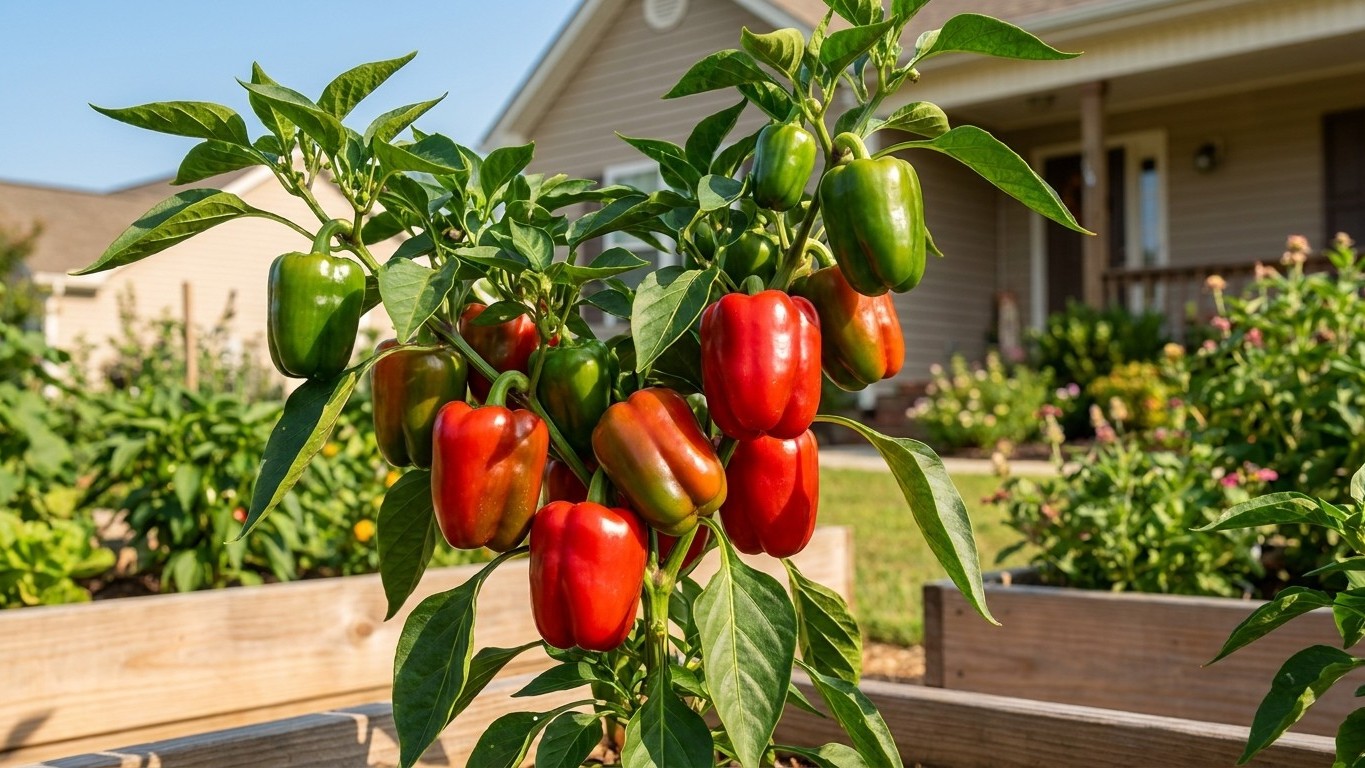

Jupiter is a bell pepper, recommended by Clemson Cooperative Extension for home gardens. That single fact matters more than the variety name does: bell peppers carry essentially no heat. What the university sources actually publish is a list entry and a type, not a full growing profile, no days to maturity, no fruit size, no yield figure specific to this cultivar. And one distinction worth making before anything else: decorative pepper plants sold for colorful foliage are a separate category entirely and are not food. Jupiter is not that.
What Jupiter Pepper Actually Is
Start with the type, because it tells a reader more in three words than the name Jupiter ever will. This is a bell pepper. That places it in the sweet, mild category alongside blocky green-to-red varieties bred for eating fresh, stuffed, or roasted, not the fiery end of the pepper spectrum where jalapenos and habaneros live.
Clemson Cooperative Extension lists Jupiter among its recommended cultivars for South Carolina gardens, identifying it plainly as a bell pepper type. NC State Extension’s plant database entry, which many growers consult for cultivar background, adds descriptive detail on general characteristics but stops short of quantifying this particular variety’s fruit size, maturity window, or yield potential.
That gap is worth naming rather than papering over. A lot of pepper cultivars sold through garden centers and seed catalogs get a marketing sheet with a days-to-maturity number, an expected fruit weight, maybe a per-plant yield estimate. Jupiter, at least in the two extension sources behind this page, doesn’t come with that kind of spec sheet. Clemson’s recommendation confirms it performs well enough regionally to earn a spot on a trusted list. NC State’s entry confirms the type. Neither publishes a fruit-size range or a harvest count.
For a gardener trying to plan a season, that means leaning on the seed packet in hand rather than a cultivar reputation built on secondhand numbers. It also means treating Jupiter the way you’d treat any solid, extension-recommended bell pepper: reliable enough to be listed, not documented down to the ounce.
How Hot Is Jupiter Pepper?
No heat, or close enough to none to matter for cooking purposes. That’s what “bell pepper” means botanically. Bell types have been bred over generations to suppress the capsaicin production that gives other peppers their bite, which is why a bell can be sliced raw into a salad without a second thought while a jalapeno demands caution around the seeds and ribs.
Context helps here, because heat numbers get thrown around loosely. Jalapenos run 2,500 to 8,000 Scoville units, enough for a noticeable kick but nothing that stops most eaters. The Carolina Reaper, at the other extreme, averages 1.64 million Scoville units, a figure so far past culinary use that it’s mostly a novelty and endurance-contest number. Jupiter, as a bell type, doesn’t register meaningfully on that scale at all. No Scoville figure is published for it, and none would make sense to invent.
Where the caution about unpredictability applies is mostly to hot pepper cultivars, not sweet bells, but the underlying mechanism is worth understanding anyway since it explains why pepper heat in general isn’t fixed. NC State Extension notes for certain cultivars that fruits are edible “but spiciness is UNPREDICTABLE in intensity.” The reason comes down to stress. Drought, heat spikes, and nutrient strain push a capsicum plant toward concentrating more capsaicin in its fruit, a defense response more than a flavor choice. A hot pepper grown through a brutal, dry August can bite noticeably harder than the same variety grown in a mild, well-watered season.
Bell peppers like Jupiter mostly sidestep that variability because they lack the genetic machinery for heavy capsaicin production in the first place. Stress can make a bell taste less sweet or more bitter, but it won’t turn a bell pepper spicy.
Growing Requirements: What Jupiter Asks For
Here’s where the source material stays quiet again, and it’s better to say so than to guess. No days-to-maturity figure is published for Jupiter specifically, in either the Clemson recommendation or the NC State entry. Only one pepper cultivar in university-sourced material carries a confirmed maturity count, and Jupiter isn’t it. That means the number that actually applies to a given gardener’s plants is the one printed on their own seed packet, since packet counts reflect the specific seed lot and growing zone the seller tested against.
What does carry across every bell pepper, Jupiter included, is soil temperature sensitivity. Peppers are a warm-season crop through and through. Set transplants into cold, wet ground and the plant doesn’t just grow slowly, it can stall outright for weeks, sitting nearly the same size while soil-borne stress and root-zone cold suppress growth hormones. That stall often costs more time than waiting an extra week or two for soil to warm properly before planting.
Neither Clemson nor NC State’s Jupiter listing specifies whether this cultivar is bred for containers, bred for disease resistance, or particularly heat-tolerant compared to other bells. Those traits, when they exist, usually show up explicitly in extension descriptions or seed packet copy. Their absence here suggests Jupiter is treated as a standard, general-purpose bell pepper rather than a specialty cultivar bred for a narrow condition.
For the practical steps of getting a pepper seedling into the ground at the right moment, timing transplants to soil warmth and hardening plants off properly matters more for outcome than any cultivar choice. A grower deciding when to start seeds indoors or move transplants outside will get more mileage from following soil-temperature guidance than from chasing a maturity number that isn’t published for this variety.
Taste and Kitchen Use
Neither Clemson Cooperative Extension nor NC State Extension publishes a tasting note specific to Jupiter. What’s confirmed is the type, and the type carries the flavor profile that matters for cooking. Bell peppers are sweet, not bitter, with a crisp, watery flesh and a shape that holds together under heat, which is exactly why they’re the pepper of choice for stuffing, halving and roasting, or slicing into strips for a stir-fry.
That sweetness comes from low acid content combined with sugars that concentrate as the fruit ripens from green to red, yellow, or orange, depending on how long it’s left on the plant. A green bell, picked early, reads more vegetal and slightly bitter. Left to fully color, the same fruit turns noticeably sweeter, which is why recipes calling for roasted red peppers specifically want the ripened stage rather than the green harvest.
Without a cultivar-specific flavor note on record for Jupiter, the honest description is the type description: a standard sweet bell, suited to raw eating, roasting, stuffing, grilling, or freezing for later use in cooked dishes. Claiming anything more distinctive, a particular sweetness level or a signature crunch unique to this variety, would be inventing detail the source material doesn’t support.
Common questions
Is Jupiter pepper spicy?
No. As a bell pepper type, Jupiter carries essentially no heat. Bell peppers are bred to suppress capsaicin production, which is the compound responsible for pepper heat in general.
How many days does Jupiter pepper take to mature?
No days-to-maturity figure is published for this cultivar in the Clemson or NC State sources behind this page. Check the count printed on the seed packet, since it reflects the specific seed lot tested for a given growing zone.
Can Jupiter pepper be eaten raw?
Yes. As a bell pepper, it’s suited to raw eating in salads or as a snack, along with cooked uses like roasting, stuffing, and grilling.
Is Jupiter pepper the same as an ornamental pepper?
No. Jupiter is an edible bell pepper recommended by Clemson Cooperative Extension for garden growing. Ornamental peppers sold for colorful foliage are a separate category grown for appearance, not for eating.