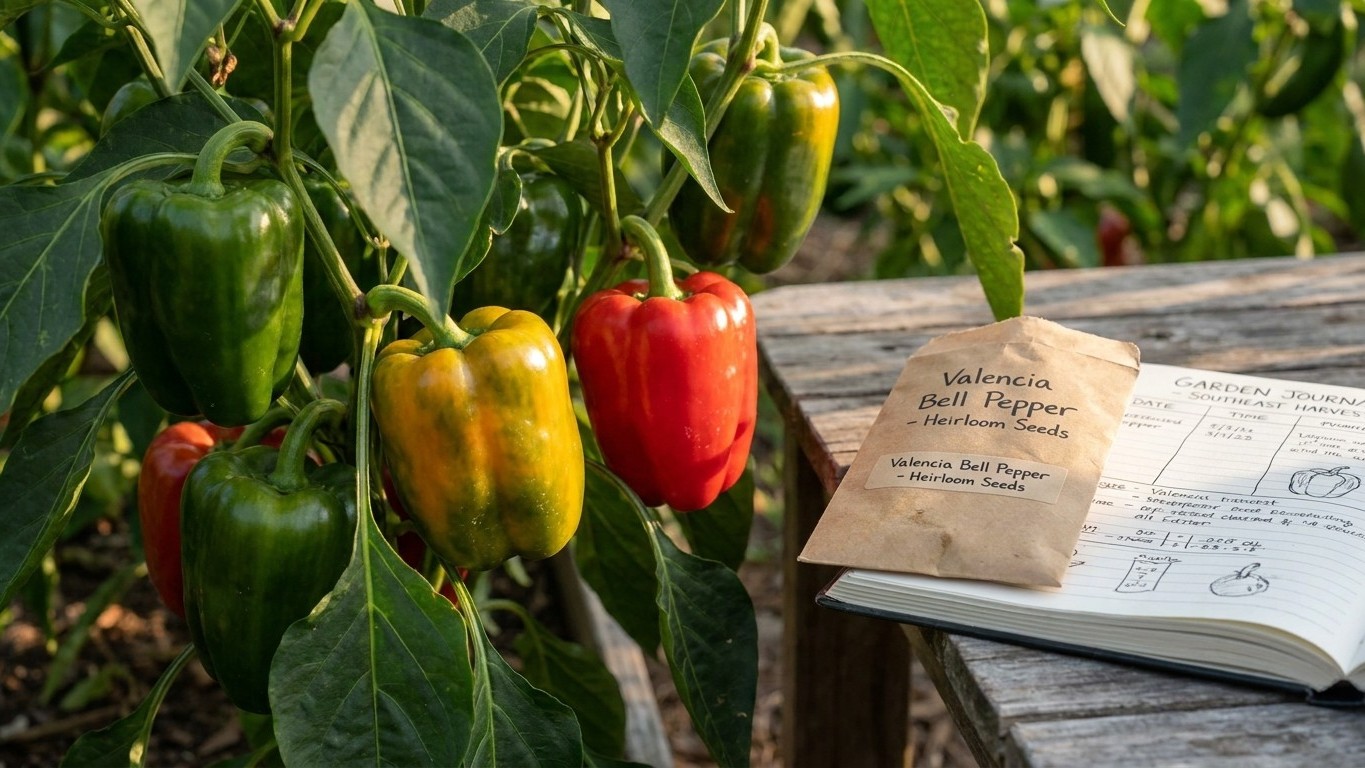

Valencia is a bell pepper, recommended by Clemson Cooperative Extension for home gardens in the Southeast. No published days-to-maturity, fruit size or yield figure exists for this cultivar specifically, so the seed packet in your hand is the timing reference that actually applies to your garden, not a number pulled from elsewhere.
What Kind of Pepper Is Valencia
Start with the type, because it tells you more than the name ever will. Valencia falls under the bell pepper category, the blocky, thick-walled, sweet fruit most home cooks already know from grocery store bins. Clemson Cooperative Extension lists Valencia among the bell peppers it recommends for South Carolina gardens, a nod that puts it in the same family as familiar green, red and yellow bells rather than anything with heat.
Here’s where things get honest rather than tidy. Most university-published cultivar lists, including the one behind Valencia’s recommendation, do not include a days-to-maturity count, a stated fruit size, or a yield estimate for this particular cultivar. NC State Extension, which maintains detailed cultivar write-ups for many peppers, has not published a specific description for Valencia beyond its type classification. A gardener who assumes a number, borrowing it from a similar-sounding bell pepper, risks planning a harvest window that doesn’t match what actually happens in the ground.
What you know for certain: Valencia is a bell pepper, vetted for regional performance by a land-grant extension service. What you don’t know from published sources: exact maturity timing, fruit dimensions, per-plant yield. Any gardening resource claiming otherwise for this specific cultivar is likely extrapolating from bell peppers in general, not reporting on Valencia itself.
One more distinction worth making clear: ornamental pepper plants sold for colorful, upright fruit, often marketed for fall porch displays, are bred for foliage and appearance rather than eating, and some aren’t food at all. Valencia is an edible garden cultivar meant for the kitchen, and the two categories shouldn’t be confused at the nursery checkout.
How Hot Is a Valencia Pepper
Bell peppers, as a type, carry no heat. That’s the baseline answer, and it applies to Valencia the same way it applies to any other bell in a seed catalog. There’s no capsaicin punch built into the genetics of a true bell pepper, which is why they show up in salads and stuffed dishes rather than hot sauce bottles.
But the honest answer stops short of assigning Valencia a Scoville number, because none has been published for it. Only two peppers in university extension literature carry a measured figure worth citing: the Carolina Reaper, which averages 1.64 million Scoville units, and jalapenos, which run 2,500 to 8,000. Everything in between, including bell peppers like Valencia, doesn’t get a specific rating because bells sit so far below the measurable threshold that assigning a number would suggest a precision that doesn’t exist.
NC State Extension’s broader caution about pepper fruit applies here too, even for a mild type. The university notes that pepper fruits are edible “but spiciness is UNPREDICTABLE in intensity.” That line reflects a mechanism that runs through the whole pepper family: environmental stress, drought, heat spikes, uneven watering, all concentrate capsaicin production in the fruit. A bell pepper grown in a rough, dry summer won’t turn hot, but the same plant, the same seed packet, can produce noticeably different fruit depending on what kind of season it gets.
Growing Conditions and Timing
What the Source Establishes, and What It Doesn’t
Clemson Cooperative Extension’s recommendation places Valencia among bell peppers suited to home garden conditions in the region, but the published record stops there. No days-to-maturity figure exists specifically for Valencia in the source material behind this page. Only one pepper cultivar across this entire reference base carries a published maturity count, and Valencia isn’t it.
That’s not a gap worth papering over. If your seed packet lists a maturity range, that number is the one that applies to your garden, your seed lot and your growing conditions. It will be more accurate than any general estimate borrowed from a different bell pepper cultivar, because seed producers test their own stock under controlled conditions before printing a number on the packet.
The One Rule Every Pepper Follows
What does carry across every pepper cultivar, Valencia included, is soil temperature. Peppers are a warm-season crop through and through, and they do not tolerate cold soil well. Transplant into ground that hasn’t warmed sufficiently, and the plant doesn’t just grow slowly, it stalls, sometimes for weeks, while it waits out conditions it should never have been asked to handle. Root development slows, and the whole timeline you were counting on from the seed packet shifts later regardless of what the calendar says.
That single fact does more to determine your harvest date than any cultivar-specific claim could. Waiting for genuinely warm soil, not just warm air, before transplanting is the practical lever every pepper grower has, and it applies to Valencia exactly as it applies to any other bell pepper. For the mechanics of getting seedlings into the ground at the right moment, and for guidance on starting seed indoors before that window opens, the transplanting and seed-starting guides on this site cover the process step by step.
Taste, Texture and Best Uses
Bell peppers as a category are prized for exactly what their name suggests: a sweet, mild flavor with none of the sharpness found further down the heat scale, paired with a thick wall that holds its shape whether it’s roasted, grilled, stuffed and baked, or sliced raw into a salad. That’s the profile Valencia inherits by virtue of being a bell pepper, and it’s the profile Clemson Cooperative Extension had in mind when recommending it for home gardens.
No cultivar-specific tasting note for Valencia appears in the source material behind this page, and it wouldn’t be honest to invent one. NC State Extension does publish specific flavor language for other cultivars, describing one as having a “sugary sweet flavor” and another as having “no heat but the prolific production of a habanero pepper,” language worth quoting exactly because it’s precise and sourced. Valencia doesn’t have an equivalent published line. What can be said accurately is that it belongs to a type known for sweetness and structural firmness, the same qualities that make bell peppers a kitchen staple.
For a home cook, that translates into straightforward use: Valencia works where any good bell pepper works, roasted, diced raw for crunch, stuffed and baked, or sliced for fajitas. None of that comes from a cultivar-specific claim, it comes from knowing the type, which in this case is the most reliable information available.
Common questions
Is Valencia pepper spicy?
No. It’s classified as a bell pepper, a type that carries essentially no heat. Bell peppers sit at the bottom of the pepper heat spectrum, well below jalapenos or habaneros.
How many days does Valencia pepper take to mature?
No days-to-maturity figure has been published specifically for this cultivar. Check your own seed packet for the number that applies to your particular seed lot and growing region.
Can I transplant Valencia pepper seedlings into cool spring soil?
It’s best avoided. Peppers, Valencia included, are a warm-soil crop, and transplanting into cold ground can stall growth for weeks regardless of air temperature.
Are ornamental pepper plants the same as edible varieties like Valencia?
No. Some ornamental pepper plants are bred for colorful foliage and display rather than eating, and certain ones are not edible at all. Valencia is a distinct, edible bell pepper cultivar meant for cooking.