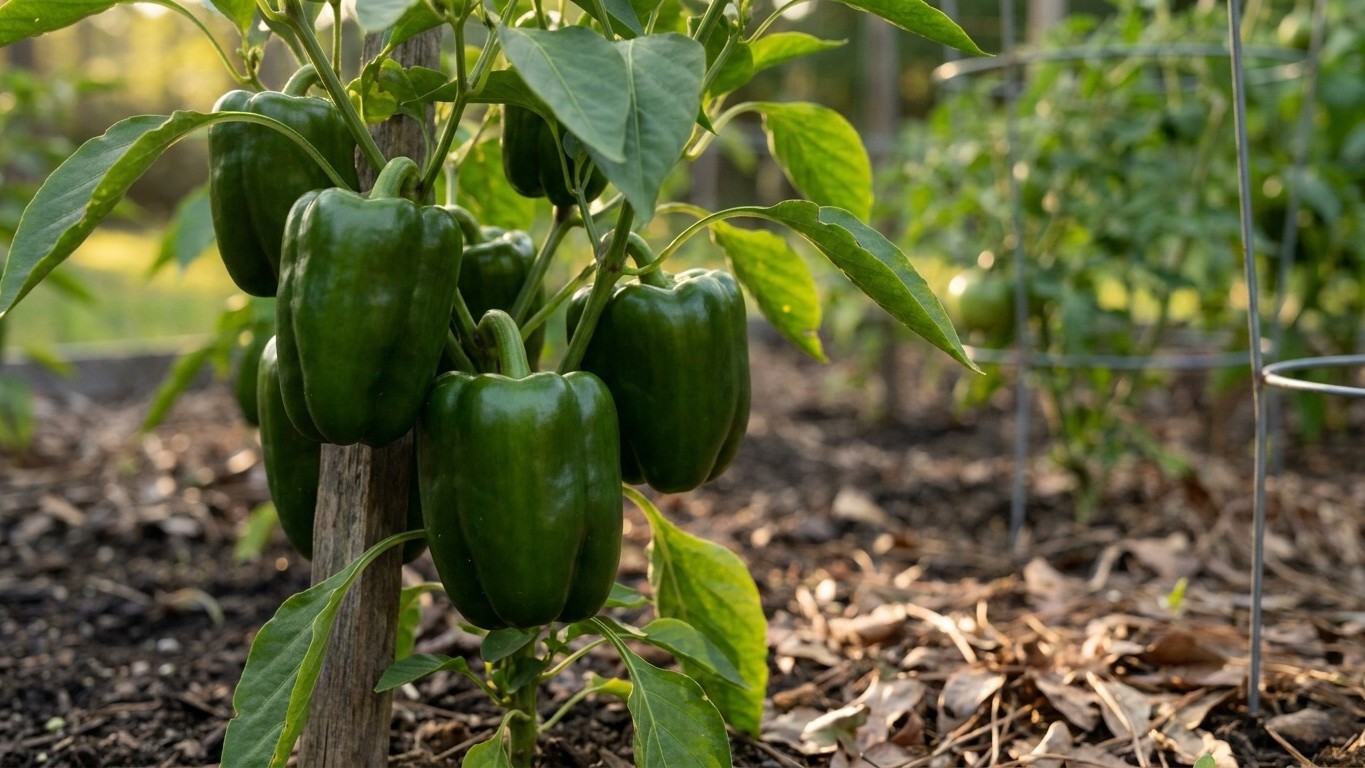

The Antebellum pepper is a bell pepper, recommended by Clemson Cooperative Extension for home gardens. That single fact matters more than the name itself: it tells you the fruit is sweet, mild, boxy-shaped, and built for stuffing or roasting rather than for heat. Clemson’s listing does not include a fruit size, a yield estimate, or a days-to-maturity count, so this page works with what’s actually published rather than filling those gaps with guesses.
What Clemson Cooperative Extension actually says about this cultivar
Clemson’s Home & Garden Information Center places Antebellum on its list of recommended pepper cultivars for South Carolina gardens, identifying it plainly as a bell pepper. That’s the extent of the published entry: a name, a type, and a recommendation. There’s no companion note on fruit wall thickness, typical fruit weight, or how many peppers a healthy plant tends to set in a season.
That gap is worth naming instead of papering over. Extension recommended lists exist to tell a grower a cultivar has performed reliably in regional trials, not to serve as a full growing profile. Many home-garden cultivars, Antebellum included, simply don’t have a widely published data sheet the way a commercial hybrid might.
Worth separating out clearly: some pepper plants sold at nurseries are grown purely for ornamental foliage and colorful fruit display, and those are not edible. Antebellum isn’t one of them. It’s listed among food-garden recommendations, grown for the fruit, and treated by Clemson the same way as any other bell pepper meant for the kitchen. But the distinction matters enough to state once, since the pepper aisle at a garden center mixes both kinds on the same table.
So the honest starting point is this: you’re growing a bell pepper that a respected land-grant extension service considers worth planting, without a detailed spec sheet attached to the name. That’s common for open-pollinated and regional favorites, and it doesn’t make the cultivar less reliable, just less documented in public sources.
Is the Antebellum pepper hot? What the heat level actually means
No. As a bell pepper, Antebellum carries essentially none of the capsaicin that makes other peppers bite. Bell peppers sit at the bottom of the heat spectrum, full stop, which is different from a jalapeno’s moderate warmth or a habanero’s near-scorching intensity. There’s no Scoville figure attached to Antebellum in Clemson’s listing, and none should be invented here, since bell peppers as a type don’t register meaningfully on that scale.
For perspective: jalapenos typically run 2,500 to 8,000 Scoville Heat Units, according to extension sources, while a specialty cultivar like the Carolina Reaper averages 1.64 million. Bell peppers, by type, land nowhere near either end. That’s a function of genetics, not growing conditions, so no amount of stress on the plant will push a true bell pepper into jalapeno territory.
Where unpredictability applies is elsewhere in the pepper world. NC State Extension notes that for many pepper cultivars, fruits are edible “but spiciness is unpredictable in intensity.” The reason comes down to stress: drought, heat spikes, and nutrient shortages all concentrate capsaicin production in a pepper plant’s fruit. A jalapeno grown through a punishing dry summer can end up noticeably hotter than the same variety grown in a mild, well-watered season.
Bell peppers like Antebellum sidestep that unpredictability almost entirely, since there’s so little capsaicin to concentrate in the first place. A stressed bell pepper plant might produce smaller or oddly shaped fruit, but it won’t suddenly develop heat. If you’re growing Antebellum specifically for a reliably mild pepper for a household with kids or heat-sensitive eaters, that expectation is based on the type, not a guess.
Growing conditions: what Antebellum needs and what isn’t published
What the source confirms and what it leaves out
Clemson’s recommendation doesn’t come with a days-to-maturity count for Antebellum, a fruit size, or a stated yield per plant. Rather than estimate any of those from the bell pepper type generally, the more useful answer is to point at what will actually apply to your garden: the seed packet in your hand. Days to maturity vary by seed lot and by grower, and the number printed there is the figure bred and tested for that specific batch, making it more reliable for your planning than any general bell pepper average.
The one rule that applies to every pepper, Antebellum included
Regardless of what’s published or missing for a given cultivar, peppers as a crop share one hard requirement: warm soil. Peppers are native to warm climates and stall badly when transplanted into cold ground, sometimes losing weeks of growth they never fully recover. Soil temperature, not just air temperature or the calendar date, is the trigger that gets a young pepper plant moving. Gardeners who rush transplants into soil still in the 50s often end up with stunted plants that a neighbor’s later-planted peppers overtake by midsummer.
That single fact does more to determine your harvest timing than any cultivar name. If you’re deciding when to start seeds indoors or when it’s safe to move Antebellum transplants outside, the details on soil temperature thresholds and hardening off matter more here than a missing days-to-maturity figure. Our guides on starting pepper seeds indoors and on transplanting peppers safely cover those thresholds in full, and they apply to Antebellum the same way they apply to any bell pepper cultivar.
Taste and best uses for the Antebellum bell pepper
Bell peppers, as a type, are the sweetest member of the pepper family, and that sweetness is what makes them useful in the kitchen the way hot peppers aren’t. A ripe bell pepper holds its shape well, whether stuffed whole with rice and ground meat, roasted until the skin blisters and chars, or sliced raw into a salad for crunch and color. There’s no published cultivar-specific tasting note for Antebellum in Clemson’s listing, so the honest thing to say is that it shares the general profile of the type: mild, sweet, thick-walled enough to stand up to cooking without collapsing.
That’s a meaningful contrast to a jalapeno, which suits fresh salsa, pickling, and poppers; a cayenne, mostly grown for drying and grinding into powder; or a habanero, used sparingly for its fruity, floral heat. Antebellum’s bell pepper classification puts it firmly in the sweet, food-versatile category rather than the condiment or spice category, and that’s the practical takeaway for anyone deciding what to do with a full harvest basket.
If a cultivar-specific flavor note existed in the Clemson or NC State record, it would be worth quoting directly. For Antebellum, no such quote exists in the published record, so the fair answer stops at the type: expect a mild, sweet bell pepper suited to stuffing, roasting, grilling, and eating fresh, without assuming a flavor nuance that hasn’t actually been documented.
Common questions
Is the Antebellum pepper the same as an ornamental pepper?
No. Antebellum is a food-garden bell pepper recommended by Clemson Cooperative Extension. Ornamental peppers, sold mainly for their colorful foliage and fruit display, are a separate category and are not meant to be eaten.
How hot is the Antebellum pepper compared to a jalapeno?
It isn’t in the same category. As a bell pepper, Antebellum carries essentially no heat, while jalapenos run 2,500 to 8,000 Scoville Heat Units by type. There’s no Scoville rating published for Antebellum because bell peppers as a class don’t register meaningfully on that scale.
How many days does the Antebellum pepper take to mature?
Clemson’s listing doesn’t publish a days-to-maturity figure for this cultivar. The most reliable number for your specific plants is the one printed on your seed packet, since it reflects the actual seed lot you’re growing.
When is it safe to plant Antebellum pepper transplants outside?
Only once soil temperature, not just air temperature, has warmed enough for peppers to grow without stalling. Cold soil can set a transplant back for weeks regardless of cultivar, so checking soil warmth before transplanting matters more than following a fixed calendar date.