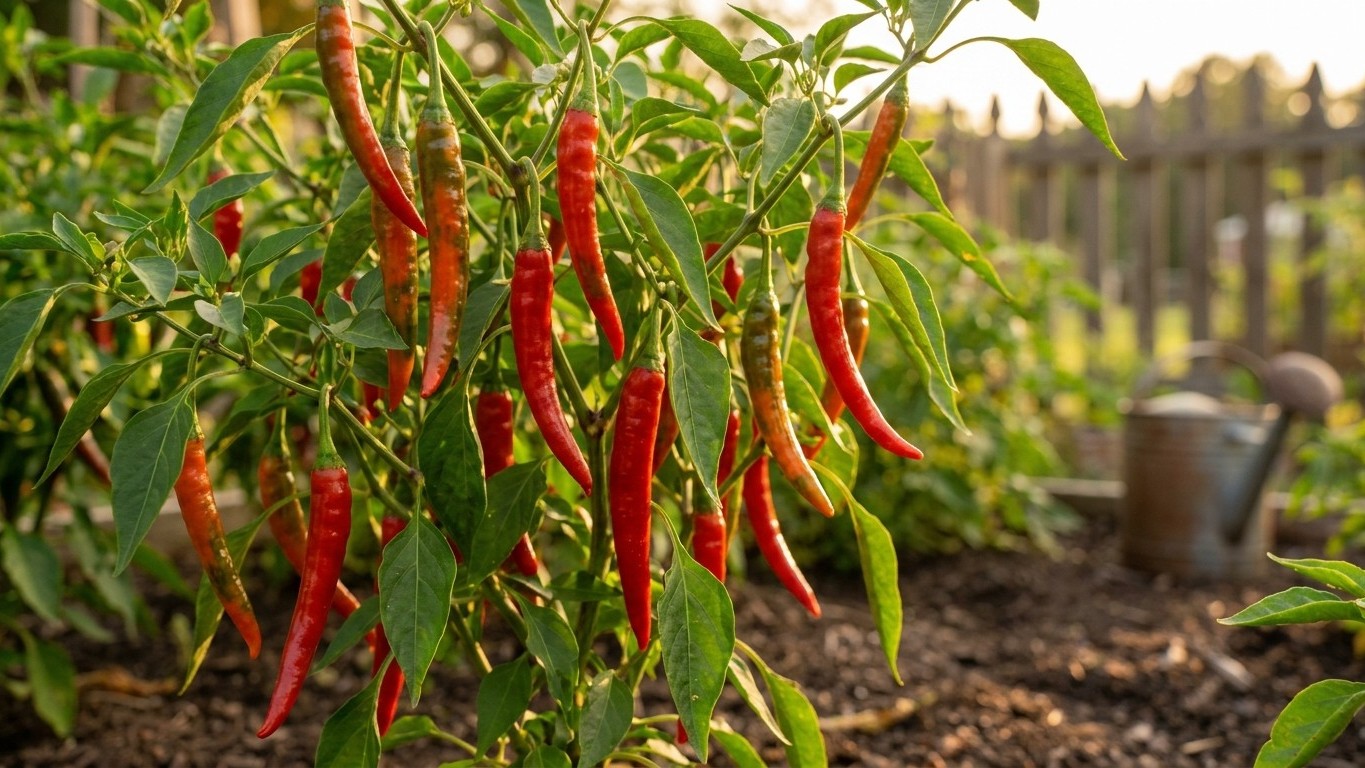

The Carolina Cayenne is a cayenne-type pepper recommended by Clemson Cooperative Extension for South Carolina gardens. That word, cayenne, tells you more than the cultivar name: expect a slender, tapering pod meant for drying and grinding, not stuffing or slicing raw. No published days-to-maturity figure exists for it, so the count on your own seed packet is what matters.
What Type of Pepper Is the Carolina Cayenne?
Start with the category, because it decides most of how this plant behaves in the ground and on the plate. A cayenne is a hot, narrow, thin-walled pepper bred for drying and powdering, distinct from a bell (sweet, thick-walled), a jalapeno (moderate heat, thicker flesh), or a habanero (small, lantern-shaped, intensely hot). The Carolina Cayenne sits in that first camp. Clemson Cooperative Extension lists it among cultivars recommended for home gardeners in the state, filed under the cayenne type in its Home & Garden Information Center resources.
That is the extent of what the university source confirms. There is no published fruit length, yield estimate, or days-to-maturity figure attached to the Carolina Cayenne name specifically. That gap is worth stating rather than papering over with an invented number. A reader who knows a figure is missing can plan around that honestly; a reader handed a guess dressed up as fact cannot.
One distinction matters here and gets blurred often: decorative pepper plants sold at garden centers for their colorful fruit and dense foliage are a different product entirely. Many are not bred or tested for eating, and some are not considered edible at all. The Carolina Cayenne, as an extension-recommended garden cultivar, belongs to the food side of that line. But the line exists, and it is worth checking a plant tag before eating a pepper grown purely for looks.
How Hot Is It, Really?
Heat, again, comes from the type before it comes from the cultivar. A bell pepper carries essentially none. A jalapeno runs moderate, typically 2,500 to 8,000 Scoville units. A habanero and the Carolina Reaper sit at the extreme end, with the Carolina Reaper averaging 1.64 million Scoville units, one of the hottest peppers ever measured. The cayenne type falls well above jalapeno territory and below the superhot habaneros and reapers, roughly matching what home cooks expect from cayenne pepper flakes at the spice rack.
No Scoville number has been published specifically for the Carolina Cayenne, so none appears here. Assigning one would suggest a lab measurement that does not exist for this cultivar. What NC State Extension does say, describing pepper heat generally, is that fruits are edible « but spiciness is unpredictable in intensity ». That single line does more useful work than a fabricated figure could.
The mechanism behind that unpredictability is straightforward. Capsaicin, the compound responsible for heat, concentrates when the plant is under stress. Less rainfall, high heat, or soil that dries out between waterings tends to push a pepper plant toward hotter fruit, since it produces less water volume to dilute the same chemical load. A cool, well-watered season often yields milder pods off the same plant. Two gardeners growing the Carolina Cayenne from the same seed packet, one in a drought year and one in a mild one, can genuinely harvest peppers of noticeably different heat. It is not inconsistent farming; it is the plant responding to its environment, and it is why no reputable source attaches a fixed number to a cultivar grown across dozens of different backyards and climates.
Growing Conditions and Timing
What the source actually specifies
Clemson Cooperative Extension includes the Carolina Cayenne on its recommended list for South Carolina gardens, signaling reliable performance under regional heat and humidity. Beyond that inclusion, the source does not specify whether the plant is compact, container-bred, or more disease- or heat-tolerant than other cayennes on the same list. Where a source is silent, the honest move is to say so rather than assume a trait because it would be convenient.
Timing, without a fabricated date
Days to maturity is the figure most gardeners want before planting, and for the Carolina Cayenne specifically it is not published in these two extension resources. Rather than estimate it from the cayenne category generally, which would just be a guess wearing a number’s clothing, the more useful answer is this: check the days-to-maturity printed on your own seed packet. Seed lots vary by producer, and the packet in hand governs your actual harvest date, not a category average pulled from a different cultivar.
One rule applies across essentially every pepper, cayenne or otherwise, and it trips up more gardens than any missing maturity date does. Peppers are a warm-soil crop. Soil temperature, not calendar date, triggers real growth. Transplant into ground still cold from spring, and a pepper plant does not just grow slowly, it can stall outright for weeks while warm-soil neighbors take off. Waiting for consistently warm soil before transplanting, and timing indoor seed-starting around that wait, does more for a pepper harvest than any other single decision a gardener makes before the plant goes in the ground.
Flavor and Kitchen Uses
Flavor, like heat, tracks the type more reliably than the cultivar name. A bell pepper is sweet and holds its shape well enough to stuff or roast whole. A banana pepper stays mild and works best pickled. A jalapeno brings moderate heat suited to fresh salsa and quick pickles. A habanero brings a fruity character used sparingly since a little carries a lot of heat. The cayenne type is built for drying: pods are thin-walled and slender, losing moisture quickly on a rack or in a dehydrator, then ground into the red pepper flakes and cayenne powder found in most spice cabinets.
Neither Clemson Cooperative Extension nor NC State Extension publishes a tasting note specific to the Carolina Cayenne cultivar itself, no mention of it being sweeter, milder, or more aromatic than other cayennes on the recommended list. Where these sources do offer cultivar-specific flavor notes for other peppers, such as a « sugary sweet flavor » or one praised for no heat but prolific production, those quotes get credited directly to NC State Extension because they say something the type alone does not. For the Carolina Cayenne, the honest description stops at the category: a hot, thin-walled pepper suited to drying and grinding, without inventing a specific taste the source never claimed.
That makes the Carolina Cayenne, practically speaking, a pantry pepper rather than a fresh-eating one. Home cooks growing it for drying typically string pods or lay them on screens in a warm, ventilated spot until they snap rather than bend, then grind them as needed, keeping the flavor closer to fresh than pre-ground store flakes that may have sat on a shelf for a year or more.
Common questions
Is the Carolina Cayenne pepper the same as a Carolina Reaper?
No. They share a state name but nothing else. The Carolina Reaper is a superhot cultivar averaging 1.64 million Scoville units, one of the hottest peppers on record. The Carolina Cayenne is a standard cayenne-type pepper, well below that heat range.
How hot is a Carolina Cayenne compared to a jalapeno?
Cayennes generally run hotter than jalapenos, which measure 2,500 to 8,000 Scoville units. No specific number is published for the Carolina Cayenne, and its actual heat can shift with drought or heat stress during the growing season.
How many days does the Carolina Cayenne take to mature?
No days-to-maturity figure is published for this cultivar in the available extension sources. Check the number printed on your seed packet, since it reflects the specific seed lot you are planting.
Are ornamental pepper plants the same as edible cayenne peppers?
No. Some pepper plants sold for their colorful, decorative fruit and foliage are not bred or intended for eating, and some are considered not edible. The Carolina Cayenne, as an extension-recommended garden cultivar, is grown for food, but always confirm before eating a pepper from a plant sold purely as ornamental.