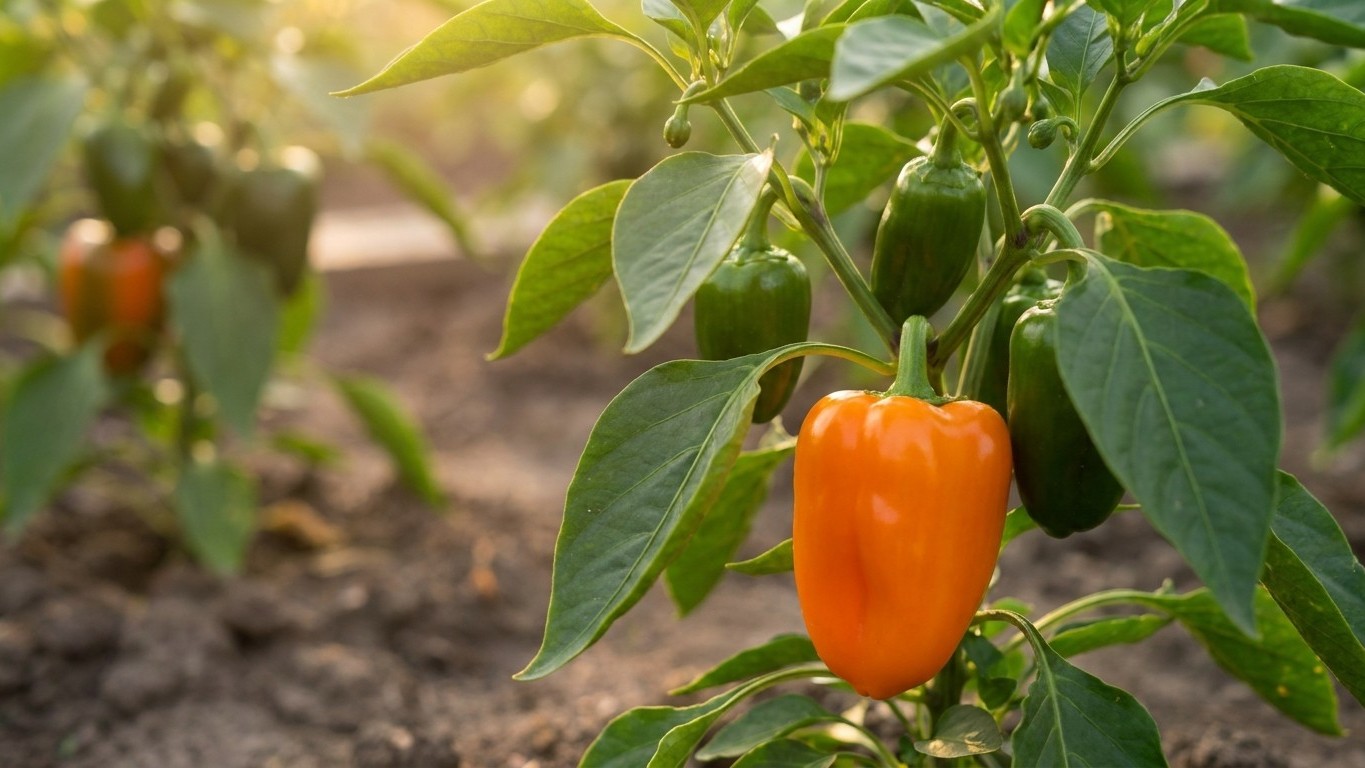

Sweet Orange is grown for one trait above all: a mild, sugary flavor that NC State Extension describes simply as “sugary sweet flavor.” That single line is nearly everything the public record says about this specific cultivar, and it puts it in the sweet camp rather than the hot one, no Scoville reading, no yield chart, just a taste note from a university extension service.
What Sweet Orange Actually Gives You
Clemson Cooperative Extension keeps a recommended list of peppers for home gardens, and that list sorts everything into working groups: bell, banana, jalapeno, habanero, cayenne, and a catch-all “other hot peppers” category. Sweet Orange does not appear sorted into any of those groups in the material available. NC State Extension, meanwhile, describes the cultivar directly rather than filing it under a type, and the only line of description it offers is the one already quoted: “Sugary sweet flavor.”
That is worth sitting with rather than papering over. No days-to-maturity number is published for Sweet Orange. No fruit size is listed. No yield-per-plant figure exists in the record. A reader who wants those numbers will not find them attached to this cultivar name, and guessing at them from the word “orange” or from what similar-sounding peppers usually do would be inventing data, not reporting it. The honest answer is that the taste note is confirmed and specific; the agronomic numbers simply are not published for this one.
One distinction matters before going further. Garden centers also sell ornamental pepper plants, grown for colorful foliage and decorative fruit display rather than for eating. Those are a different product entirely and are not food. Sweet Orange, as described by NC State Extension, is an edible cultivar grown for the fruit itself, not a decorative plant, and the two should never be confused at the nursery table.
Is Sweet Orange Hot? What to Expect
Heat in peppers tracks type far more reliably than it tracks a single cultivar name, and this is exactly where Sweet Orange gets tricky because its type is not pinned down in the sourced record. For context: a bell pepper carries essentially no heat, a jalapeno sits in a moderate range that Clemson-adjacent data puts at 2,500 to 8,000 Scoville units, and a habanero or a Carolina Reaper sit at the extreme end, with the Carolina Reaper averaging 1.64 million Scoville units. Those are the only two hard Scoville figures that exist anywhere in the sourced material behind this page.
Sweet Orange gets neither number. Given the “sugary sweet flavor” description, it reads as a mild pepper rather than a hot one, but no lab figure backs that up, and manufacturing one here would misrepresent a taste note as a heat measurement. What NC State Extension does say, in language that applies across pepper cultivars generally, is that fruits are edible “but spiciness is unpredictable in intensity.” That caution is the actually useful piece of information, more useful than a fabricated number would be.
The mechanism behind that unpredictability is straightforward. Capsaicin, the compound responsible for pepper heat, concentrates under plant stress. A pepper grown through a hot, dry summer with inconsistent watering will often taste sharper than the same variety grown in a mild, well-irrigated season. Heavy rain right before harvest can dilute it; a drought stretch can spike it. That is true across sweet and hot cultivars alike, which is why extension services hedge on intensity rather than promising a fixed number for any pepper that hasn’t been lab-tested. For a cultivar sold on sweetness, that mostly means the fruit stays mild, but a stressed plant in a rough season is the one variable that can surprise a gardener expecting consistent sweetness every year.
Growing Requirements: What Makes Sweet Orange Different
What the Record Confirms
Beyond the flavor description, the sourced material doesn’t attach specific growth traits to Sweet Orange, no note on compact size, no disease-resistance claim, no container-breeding designation. That is a gap in the public record, not a claim that the cultivar lacks those traits. It simply means a gardener shouldn’t assume features that haven’t been documented for this specific name.
Days to maturity is the number most gardeners want and, again, it is not published for Sweet Orange anywhere in this source base. Only one pepper cultivar in the broader record has a documented days-to-maturity figure, and Sweet Orange isn’t it. The number that will actually govern a reader’s own harvest timeline is the one printed on their seed packet, since that figure reflects the specific seed lot and grower conditions behind that packet rather than a generic average.
The One Rule That Applies Regardless
What does apply, to Sweet Orange and to every pepper cultivar without exception, is that peppers are a warm-soil crop. Soil temperature, not calendar date, is what starts the clock on healthy root development. Transplant into cold ground and the plant doesn’t just grow slowly, it can stall for weeks, sitting stunted while warm-soil transplants planted later actually overtake it. Gardeners deciding when to move seedlings outside should check soil temperature guidance on transplanting peppers before working from the calendar alone, and anyone starting from seed indoors should time that process using the guidance on starting pepper seeds rather than guessing at a start date.
Taste and Culinary Use
The flavor profile for Sweet Orange is the one piece of this page grounded in an actual quote: NC State Extension’s “sugary sweet flavor” description, and that phrase is the safest guide to how the fruit performs at the table. A pepper described that way behaves like the sweet end of the pepper spectrum generally, good eaten fresh in salads, sliced raw for snacking, or added to a dish where the goal is sweetness and crunch rather than heat.
Where a bell pepper is prized for holding its shape when stuffed or roasted, a banana pepper for pickling, and a jalapeno for fresh salsa or poppers, Sweet Orange’s documented profile points toward that same fresh, sweet-eating lane rather than a drying or hot-sauce use. That said, no source in this record extends the description beyond the flavor note itself, no comment on skin thickness, no note on whether it holds up to roasting, no verdict on pickling suitability.
Rather than inventing a cooking recommendation to fill that gap, the honest approach is to treat the fruit as a sweet, mild pepper suited to raw or lightly cooked preparations, and let a home cook’s own kitchen testing settle the specifics that the extension record doesn’t cover. That is a modest claim, but it is the one the sourced material actually supports.
Common Questions
Is Sweet Orange a bell pepper or a hot pepper?
Neither classification is confirmed in the sourced material. Clemson Cooperative Extension’s recommended list sorts peppers into bell, banana, jalapeno, habanero, cayenne, and other hot pepper groups, but Sweet Orange isn’t placed in any of those categories in the available record. NC State Extension describes it only by flavor, “sugary sweet flavor,” without assigning a type.
How many days until Sweet Orange peppers are ready to pick?
No days-to-maturity figure is published for this cultivar in the sourced record. The number on a gardener’s own seed packet is the figure that applies to that specific seed lot, and it’s the one to plan a harvest calendar around.
Will Sweet Orange peppers taste hot in a dry summer?
Possibly milder heat sensations shift with stress, but no Scoville figure exists for this cultivar to compare against. NC State Extension’s general caution that pepper “spiciness is unpredictable in intensity” applies here: heat-tolerant compounds like capsaicin concentrate under drought or heat stress, so a rough growing season can shift how sharp any pepper tastes, sweet cultivars included.
Are ornamental pepper plants the same as Sweet Orange?
No. Ornamental peppers are bred and sold for colorful foliage and display fruit, not for eating, and they are a separate product from edible cultivars like Sweet Orange. Always check the plant tag or seed packet to confirm a pepper is sold as an edible variety before eating the fruit.
Related guides
- Sweet Sunset Pepper: When to Plant the Tomatoes That Ripen All at Once
- Capistrano Pepper: When to Plant the Tomatoes That Ripen All at Once
- Jupiter Pepper: When to Plant the Tomatoes That Ripen All at Once
- Sunscald on Peppers
- Transplanting Peppers
- Blossom-End Rot on Peppers
- Tiger Paw NR Pepper: When to Plant the Tomatoes That Ripen All at Once