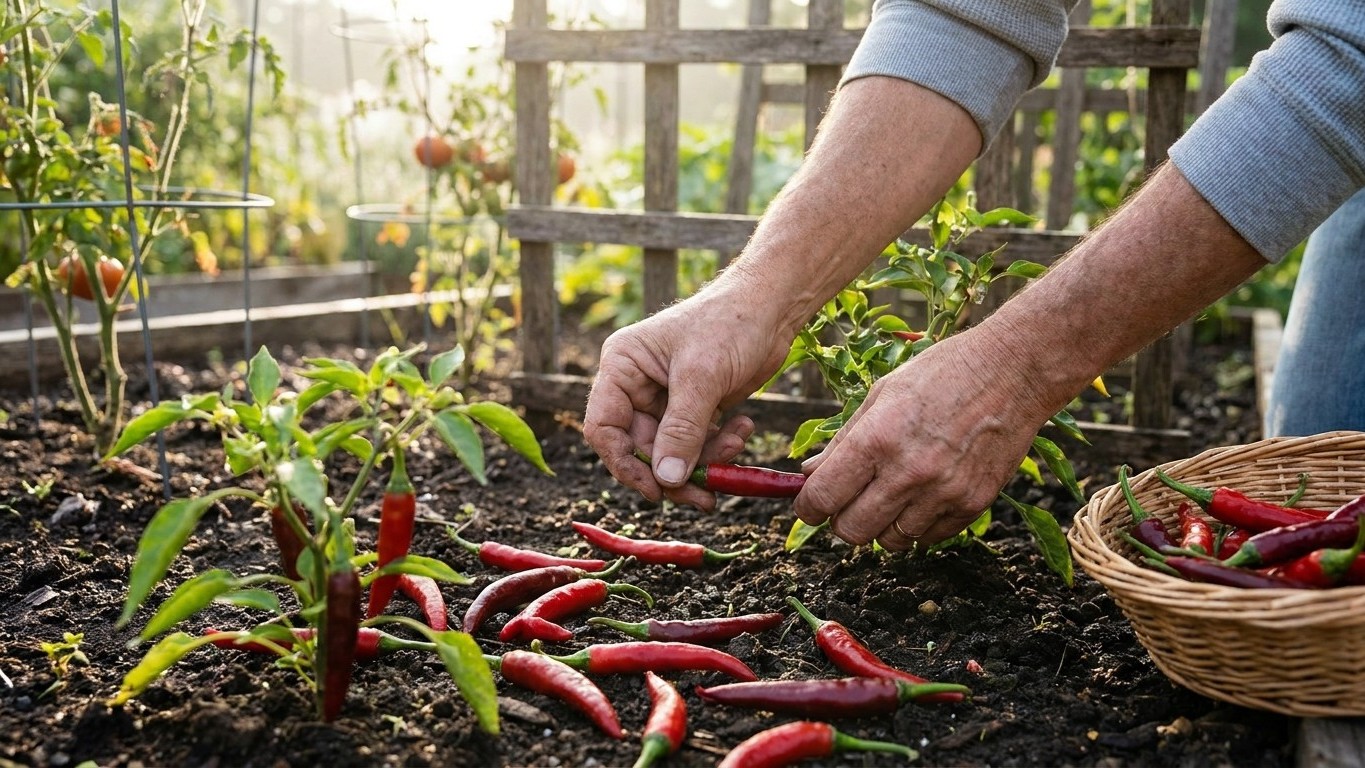

Super Cayenne II is a cayenne-type pepper included on Clemson Cooperative Extension’s list of recommended garden varieties. That means one thing before anything else: it’s built for heat and for drying, not for slicing into a salad. No published days-to-maturity, fruit size or yield figure exists for this specific cultivar, so the timing question comes down to soil temperature, not a calendar date tied to its name.
What Super Cayenne II Actually Is
Start with the category, because it tells a grower more than the name on the seed packet ever will. Super Cayenne II belongs to the cayenne group, the long, slender, thin-walled peppers traditionally dried and ground into the red pepper flakes and powder found on most spice racks. Clemson Cooperative Extension places Super Cayenne II on its recommended pepper variety list, identifying it plainly as a cayenne type suited to home gardens.
That’s a useful nod of confidence from a university extension office, but it’s also the extent of the published record. Neither Clemson nor NC State Extension has put out a cultivar-specific profile for Super Cayenne II with a fruit-size measurement, a stated yield, or a days-to-maturity window. A lot of garden marketing fills that gap with confident-sounding numbers. This page won’t. If a figure isn’t published by a university extension source, it’s better to say so than to hand a reader a guess dressed up as fact.
One distinction worth making clearly, since pepper displays at garden centers mix them together: some pepper plants sold in fall, with tiny upright fruit in purple, orange and red, are grown strictly for ornamental foliage display. Those are not bred or sold as food crops. Super Cayenne II is not one of them. It’s an edible cayenne meant for the kitchen, but the two categories sit on the same nursery shelf often enough that the label is worth reading before anything goes in a pot.
How Hot Is It, Really?
Heat in peppers tracks type far more reliably than it tracks a specific cultivar name. A bell pepper carries essentially none. A jalapeno sits in the moderate range, measured at 2,500 to 8,000 Scoville units. A habanero runs hot, and the Carolina Reaper, the current extreme end of the scale, averages 1.64 million Scoville units. Cayenne peppers land well up that ladder, in the category gardeners describe as genuinely hot rather than merely warm.
No Scoville figure has been published for Super Cayenne II specifically, and quoting one here would misrepresent a measurement that doesn’t exist for this cultivar. What NC State Extension does say, describing pepper varieties broadly, is that fruits are edible “but spiciness is UNPREDICTABLE in intensity.” That single sentence carries more practical value than a fabricated number ever could.
The mechanism behind that unpredictability is straightforward. Capsaicin, the compound responsible for the burn, concentrates in a pepper plant under stress. A summer with drought stretches and high heat pushes a plant to produce more of it. The same seed, the same row, grown in a cooler, wetter season, can turn out noticeably milder fruit the following year. That’s not a flaw in the cultivar. It’s how the plant is chemically wired to respond to its growing conditions, and it means two gardeners growing Super Cayenne II three states apart, or even the same gardener in two different summers, can end up with fruit that bites at two different levels of intensity.
Growing Requirements That Set It Apart
The published record for Super Cayenne II is thin on cultivar-specific detail, and it’s worth being upfront about what isn’t there rather than filling it in. No days-to-maturity figure, no stated plant height, no note on container suitability or disease resistance has been published for this variety by either Clemson Cooperative Extension or NC State Extension. That’s a real gap, and the honest answer is to point gardeners toward the number that will actually govern their season: the days-to-maturity count printed on their own seed packet. That figure reflects the seed lot in hand, and it’s the one number that applies directly to a given garden.
The One Rule That Does Apply
Regardless of cultivar, every pepper is a warm-soil crop. Peppers germinate slowly and grow sluggishly in cold ground, and setting transplants out before the soil has warmed doesn’t just slow them down, it can stall growth for weeks with no real recovery even once temperatures rise later. That single fact matters more for Super Cayenne II’s timeline than any cultivar name does. Gardeners starting seed indoors or timing a transplant date should work from the soil-temperature guidance on starting pepper seeds indoors and transplanting pepper seedlings, since those thresholds apply to cayenne peppers exactly as they apply to bells, jalapenos and habaneros.
In practice, that means watching soil temperature at the planting depth, not the calendar page, and resisting the urge to get transplants in the ground early just because the weather looks warm enough on a given afternoon.
Taste and How to Use It
Cayenne peppers, as a category, aren’t grown for eating fresh off the plant the way a bell or a banana pepper might be. They’re grown to dry. The long, thin fruit loses moisture quickly once cured, concentrating flavor and heat into the red pepper flakes and ground cayenne powder found in spice cabinets, chili blends and hot sauce recipes. That’s the type’s defining use, and it applies to Super Cayenne II by category, since no cultivar-specific tasting note has been published for it by Clemson or NC State Extension.
It’s worth contrasting that against other pepper types on the same spectrum. A bell pepper is bred for sweetness and holds its shape when stuffed or roasted. A banana pepper is mild enough for pickling straight from the jar. A jalapeno splits the difference, showing up fresh in salsa and poppers as often as it does pickled. A habanero, at the far end, brings a distinct fruity character used in small amounts rather than large ones. Cayenne sits apart from all of them: it’s a working pepper, harvested for drying and grinding rather than fresh eating, and Super Cayenne II fits squarely into that role rather than offering some unique flavor twist of its own.
Common questions
Is Super Cayenne II hotter than a jalapeno?
Almost certainly, since cayenne is a hotter type on the pepper heat spectrum than jalapeno, which runs 2,500 to 8,000 Scoville units. No specific Scoville figure has been published for Super Cayenne II itself, so the comparison holds at the category level rather than as a measured number.
When should I plant Super Cayenne II?
No days-to-maturity figure is published for this cultivar, so timing depends on the count printed on your own seed packet combined with soil temperature. Peppers stall in cold ground regardless of variety, so transplanting only after soil has warmed matters more than any calendar date.
Is Super Cayenne II the same as ornamental peppers sold for fall decoration?
No. Ornamental pepper plants sold for foliage display are a separate category, not bred or intended as a food crop. Super Cayenne II is an edible cayenne, recommended as such by Clemson Cooperative Extension.
Why does the heat level of the same plant vary year to year?
Capsaicin concentrates under plant stress, and drought or heat during the growing season pushes production higher. NC State Extension notes that pepper spiciness is unpredictable in intensity, which reflects this seasonal variation rather than any inconsistency in the seed itself.
Related guides
- Carolina Reaper Pepper: When to Plant the Tomatoes That Ripen All at Once
- Ghost Pepper Pepper: When to Plant the Tomatoes That Ripen All at Once
- Scotch Bonnet Pepper: When to Plant the Tomatoes That Ripen All at Once
- Mad Hatter Pepper
- Jupiter Pepper: When to Plant the Tomatoes That Ripen All at Once