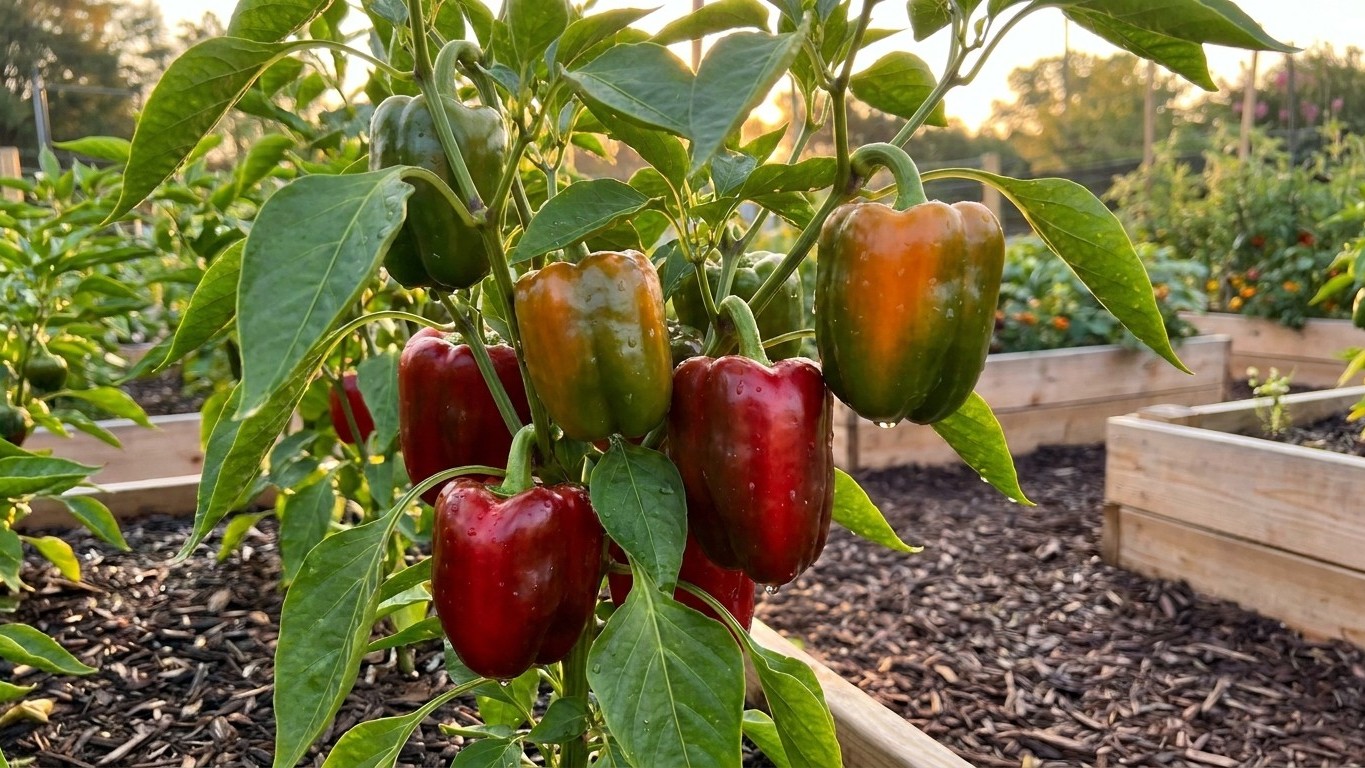

Capistrano is a bell pepper, plain and simple. Clemson Cooperative Extension includes it on its list of recommended cultivars for home gardens, which means it’s been vetted for reliable performance in the Southeast rather than picked for novelty. No days-to-maturity number, no fruit-size spec, no yield estimate rides along with that recommendation. That gap matters more than it sounds.
What You’re Actually Growing
The word “pepper” covers a huge range of plants, from sweet bells that never bite back to habaneros that can send you reaching for milk. Capistrano sits at the mild end of that spectrum because it’s classified as a bell pepper, the same broad category as the blocky green-to-red fruits sold in every grocery produce aisle. That classification tells you more about what to expect on your plate than the cultivar name ever will.
Clemson Cooperative Extension names Capistrano among the bell pepper cultivars it recommends for South Carolina gardens, a list built from university trial data and extension observation rather than marketing copy. NC State Extension, which maintains detailed plant profiles for gardeners across the Carolinas, lists it as an edible bell pepper cultivar as well. Between the two sources, that’s the extent of what’s documented: a name, a type, and a recommendation.
What’s missing is worth stating outright. Neither extension service publishes a days-to-maturity figure for Capistrano, nor a typical fruit size, nor an expected yield per plant. That’s not an oversight on our part; it simply isn’t in the record. A lot of pepper cultivars get marketed with confident numbers that never trace back to a university trial. We’d rather tell you the number doesn’t exist than invent one that sounds authoritative.
One more distinction matters here, because the pepper aisle at a garden center blurs it constantly. Some pepper plants sold for their colorful, upright fruit (the ones marketed as fall porch decor alongside mums) are ornamental varieties bred for foliage and display, not for eating. Capistrano isn’t one of those. It’s an edible cultivar meant for the kitchen. But if you’re buying a “decorative pepper” six-pack at a big-box store in October, check the tag. Ornamental and edible are not interchangeable categories.
How Hot Is It, Really?
Short answer: barely at all, or not at all. Bell peppers as a type carry little to no capsaicin, the compound responsible for pepper heat, and that’s true whether the fruit is green, red, yellow, or orange. Compare that to the rest of the pepper world. A jalapeno runs 2,500 to 8,000 Scoville units, enough for a genuine kick but still approachable. A habanero jumps into the extreme range entirely. The Carolina Reaper, one of the hottest cultivars ever bred, averages 1.64 million Scoville units, a number that exists in a different universe from anything you’d find in a bell pepper.
Capistrano, as a bell type, doesn’t carry a Scoville rating in either extension source, and that’s expected rather than an oversight. Bells aren’t measured for heat the way hot peppers are, because there’s essentially none to measure.
That said, NC State Extension makes an important point that applies broadly across edible pepper cultivars: fruits are edible “but spiciness is unpredictable in intensity.” The mechanism behind that caution is worth understanding rather than dismissing. Capsaicin production in peppers responds to plant stress. Drought, heat waves, and irregular watering can concentrate whatever capsaicin a plant does produce, meaning even a mild or heatless cultivar can develop a sharper edge in a rough growing season. A bell pepper grown through a brutal, dry August in Texas may taste slightly different than the same cultivar grown in a mild, well-watered season in coastal Oregon.
The practical takeaway: don’t expect fireworks from Capistrano, but don’t assume every fruit off the plant will taste identical either. Weather writes part of the flavor.
Growing Conditions and What This Cultivar Actually Asks For
What’s documented, and what isn’t
Neither Clemson Cooperative Extension nor NC State Extension publishes a days-to-maturity figure for Capistrano specifically. That’s not unusual across this database of pepper cultivars, in fact only a single cultivar we’ve profiled carries a published number at all. For everyone growing Capistrano, the number that actually matters is printed on your own seed packet. Seed producers test their specific seed lots and print maturity windows based on that testing, which makes the packet a more reliable reference than a generic estimate pulled from thin air.
What both sources agree on, implicitly, is that Capistrano behaves like a standard bell pepper cultivar rather than a specialty or novelty type. Neither extension flags it as unusually compact, container-bred, disease-resistant, or heat-tolerant beyond what’s typical for the category. That absence of special notes is itself informative: this is a straightforward bell pepper, not a cultivar bred for a particular garden constraint.
The one rule that applies regardless
Every pepper, Capistrano included, is a warm-season, warm-soil crop. Soil temperature drives germination and early root development far more than air temperature does, and peppers are notoriously unforgiving about cold ground. Transplant into soil that’s still chilly from a late spring, and the plant doesn’t just grow slowly. It stalls, sometimes for weeks, sitting there sulking while warm-planted neighbors race ahead. That stall can cost you a meaningful chunk of the growing season in states with shorter summers.
If you’re timing your transplant or starting seeds indoors, the details matter more than the calendar date. See our guides on starting pepper seeds indoors and transplanting peppers into the garden for the soil-temperature thresholds that actually predict success.
The Taste and How to Use It
Bell peppers, as a type, are the sweet end of the pepper family. No capsaicin bite means the flavor is clean and mild, closer to a crisp vegetable than a spice. That sweetness gets more pronounced as the fruit ripens from green to red, yellow, or orange, since the ripening process converts starches to sugars the same way it does in tomatoes.
Neither Clemson Cooperative Extension nor NC State Extension publishes a cultivar-specific tasting note for Capistrano beyond identifying it as a bell type. That’s worth saying plainly rather than papering over with an invented flavor description. What we can say with confidence comes from the type itself: bell peppers hold their shape well under heat, which is exactly why they’re the standard choice for stuffing, roasting whole, or grilling in wedges alongside other vegetables. Their mild flavor also makes them a workhorse in fresh preparations, diced raw into salads or salsas where you want vegetable crunch without any heat to manage.
If you’re comparing Capistrano against hotter cultivars for a specific recipe, the type does the deciding. Bells stuff and roast. Jalapenos go into fresh salsa, poppers, and pickling brine. Cayennes get dried and ground into powder. Habaneros show up in tiny quantities because their fruity heat overwhelms a dish fast. Capistrano falls squarely in the first camp: a reliable, sweet, shape-holding bell for the kitchen tasks bells are built for.
Common Questions
Is Capistrano a hot pepper?
No. It’s classified as a bell pepper by both Clemson Cooperative Extension and NC State Extension, and bell peppers as a type carry little to no capsaicin, the compound that produces heat in peppers.
How many days does Capistrano take to mature?
Neither extension source publishes a days-to-maturity figure for this specific cultivar. The most reliable number is the one printed on your seed packet, since it reflects testing done on that particular seed lot.
Can I eat an ornamental pepper plant that looks similar?
Don’t assume so. Some pepper plants sold for decoration, especially around fall, are bred for colorful foliage and display rather than for eating, and they’re a different category from edible cultivars like Capistrano. Check the plant tag before eating any fruit from a pepper plant you didn’t buy specifically as a food crop.
Why does one bell pepper plant sometimes taste different from another of the same cultivar?
Plant stress, including drought and heat waves, can shift how much capsaicin and how many sugars a pepper produces. NC State Extension notes that spiciness in edible peppers can be “unpredictable in intensity,” a caution rooted in how weather and watering affect the plant during fruit development.
Related guides
- Jupiter Pepper: When to Plant the Tomatoes That Ripen All at Once
- Plato Pepper: When to Plant the Tomatoes That Ripen All at Once
- Antebellum Pepper: When to Plant the Tomatoes That Ripen All at Once
- Carolina Reaper Pepper
- Habanero Pepper
- Carolina Cayenne Pepper
- Charleston Hot Pepper: When to Plant the Tomatoes That Ripen All at Once