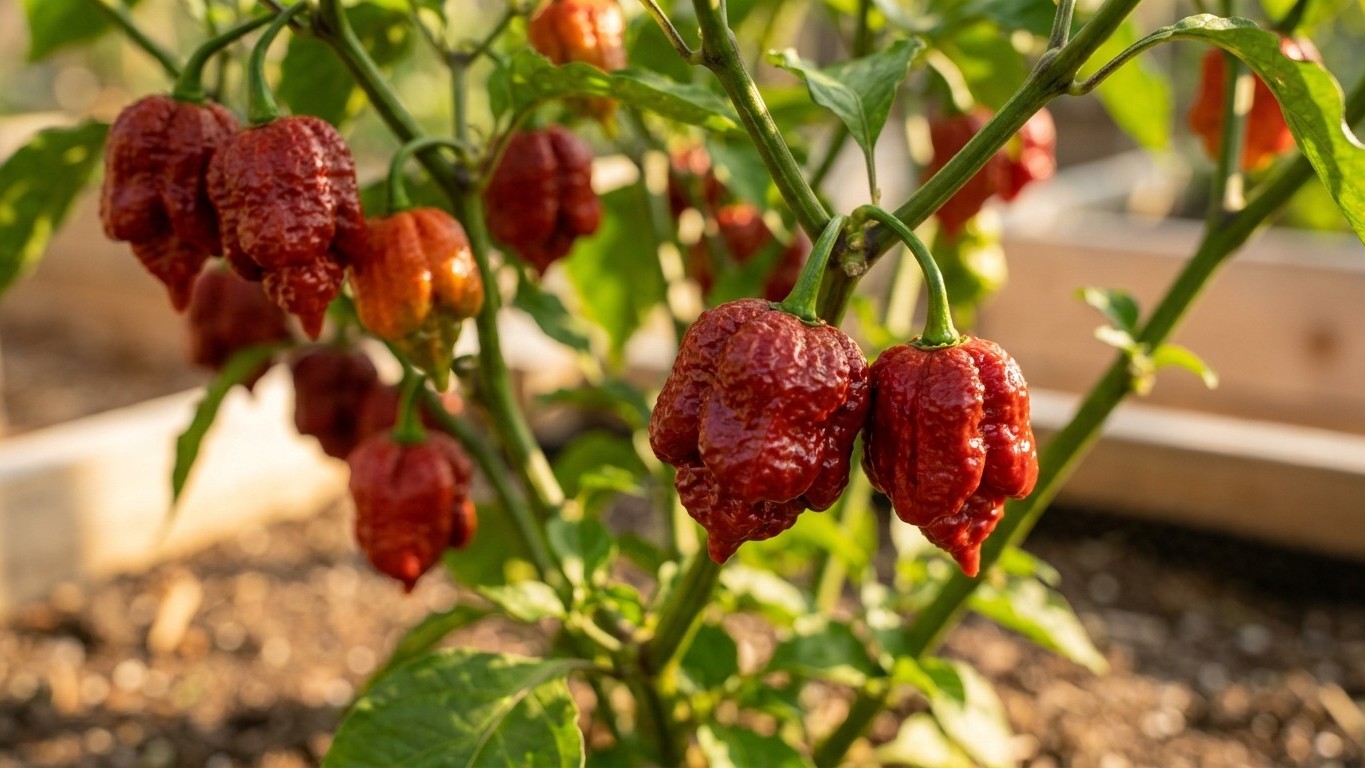

The short answer: there’s no published days-to-maturity for the Carolina Reaper, so “when to plant” comes down to soil temperature, not a calendar date tied to this specific cultivar. What you can plant on is the number printed on your own seed packet, combined with one non-negotiable rule extension services repeat for every pepper: cold soil stalls growth for weeks, no matter how hot the fruit eventually gets.
A Hot Pepper by Type, With Real Gaps in the Record
Start with the category, because it tells you more than the name does. The Carolina Reaper is listed by Clemson Cooperative Extension on its recommended pepper varieties as a “hot pepper,” the same broad type as cayenne and habanero, distinct from a sweet bell or a mild banana pepper. That single classification already sets expectations for how the fruit will be used in a kitchen, long before any cultivar-specific detail comes into play.
NC State Extension describes the cultivar plainly: “Developed in SC; hottest pepper officially recorded as of 2019.” That’s the extent of the published record for growth habit. There’s no listed days to maturity for the Carolina Reaper, no stated fruit size, no yield figure from either source. That’s worth saying outright rather than papering over with a guess. A gardener who knows the gap exists can plan around it, checking their own seed packet or nursery tag; a gardener handed a confident-sounding number that nobody actually measured ends up with expectations nobody can back up.
One distinction matters here too: some peppers sold at garden centers are ornamental, grown for colorful foliage and berry-like fruit rather than for eating, and those are not food. The Carolina Reaper is not one of those. It’s an edible hot pepper bred for the kitchen and, for some growers, for competitive heat. But the two categories, ornamental and edible, get mixed up often enough at nursery displays that it’s worth keeping them separate in your head before you ever put a plant in the ground.
How Hot Is It, Really?
Heat in peppers tracks with type before it tracks with cultivar name. A bell pepper carries essentially no heat. A jalapeño sits in the moderate range, published at 2,500 to 8,000 Scoville units. A habanero moves into extreme territory. The Carolina Reaper sits at the far end of that same extreme category, and this is one of the rare cases where a specific number is actually published: the Carolina Reaper averages 1.64 million Scoville units, which is why NC State Extension calls it the hottest pepper officially recorded as of 2019.
That average is not a guarantee, though, and this is the part worth reading twice before you plant a row of these expecting uniform fire. NC State Extension’s caution applies to hot peppers broadly and it applies here: fruits are edible “but spiciness is UNPREDICTABLE in intensity.” The average Scoville figure describes a population of fruit tested under known conditions, not the single pepper you’ll pick off your own plant in October.
The mechanism behind that unpredictability is straightforward. Capsaicin, the compound responsible for heat, concentrates more heavily in fruit grown under stress: drought, heat spikes, poor watering consistency all push a plant to produce hotter fruit than it would in a mild, evenly watered season. Two Carolina Reaper plants grown ten feet apart, one in a stressed patch of dry soil and one kept consistently watered, can produce noticeably different heat even though they’re genetically identical. That’s the honest answer to “how hot will mine be”: hotter in a hard summer, closer to average in an easy one, and never exactly predictable either way.
Growing Conditions: Warm Soil, Unpublished Timeline
Neither Clemson Cooperative Extension nor NC State Extension publishes a days-to-maturity figure, fruit size, or yield estimate specifically for the Carolina Reaper. Among the peppers covered across this series, only one cultivar has a published maturity count from these sources, and this isn’t it. So rather than backfilling that gap with a number borrowed from “hot peppers in general,” the honest move is to send you to the figure that will actually govern your own harvest: the days-to-maturity printed on your seed packet or plant tag. That number reflects the specific seed lot and growing conditions the supplier tested against, and it’s more useful to you than any category-wide estimate could be.
What does hold across every pepper, this one included, is soil temperature. Peppers are warm-season plants through and through, and transplanting into cold ground doesn’t just slow them down gently, it stalls growth outright, sometimes for weeks, while the plant waits for conditions it can actually use. If you’re starting seeds indoors or figuring out your transplant window, the timing guidance on starting pepper seeds indoors and transplanting peppers outdoors covers that groundwork in more depth than fits here. The short version: get the soil warm first, then worry about the calendar.
Flavor and Kitchen Use
Flavor, like heat, tracks with type more reliably than with cultivar name in the published record. A bell pepper is sweet and holds its shape well stuffed or roasted. A banana pepper is mild and suits pickling. A jalapeño works in fresh salsa, poppers, and quick pickles. A cayenne is typically dried and ground rather than eaten fresh. A habanero brings a fruity note and gets used in small quantities because the heat demands restraint.
The Carolina Reaper falls into that hot pepper category at its most extreme end, which shapes how it’s actually used in a kitchen: not as a fresh-eating snack pepper, but in tiny amounts, in sauces, extracts, or dishes where a sliver goes a long way. Neither Clemson Cooperative Extension nor NC State Extension offers a specific tasting note for this cultivar beyond its heat record, so rather than inventing a flavor description that sounds authoritative, it’s more accurate to describe what the type tells us and stop there. If you’re growing it, plan your recipes around the category it belongs to, extreme-heat hot peppers used sparingly, rather than around a flavor claim nobody has actually published.
Common questions
Is the Carolina Reaper pepper edible or ornamental?
It’s an edible hot pepper, listed on Clemson Cooperative Extension’s recommended pepper varieties. That’s a separate category from ornamental pepper plants sold for colorful foliage, which aren’t grown for eating.
How hot is the Carolina Reaper compared to a jalapeño?
The Carolina Reaper averages 1.64 million Scoville units, making it the hottest pepper officially recorded as of 2019 per NC State Extension. A jalapeño, by comparison, runs 2,500 to 8,000 Scoville units, a difference of several orders of magnitude.
When should I plant Carolina Reaper peppers?
Neither source publishes a days-to-maturity figure for this cultivar, so the count on your own seed packet is the number to plan around. What’s consistent across all peppers is the need for warm soil; transplanting into cold ground stalls growth for weeks regardless of the variety.
Will every Carolina Reaper fruit be equally hot?
No. NC State Extension notes that spiciness in hot peppers is unpredictable in intensity, and drought or heat stress during growth tends to concentrate capsaicin, producing hotter fruit than the same plant would yield in a milder, evenly watered season.