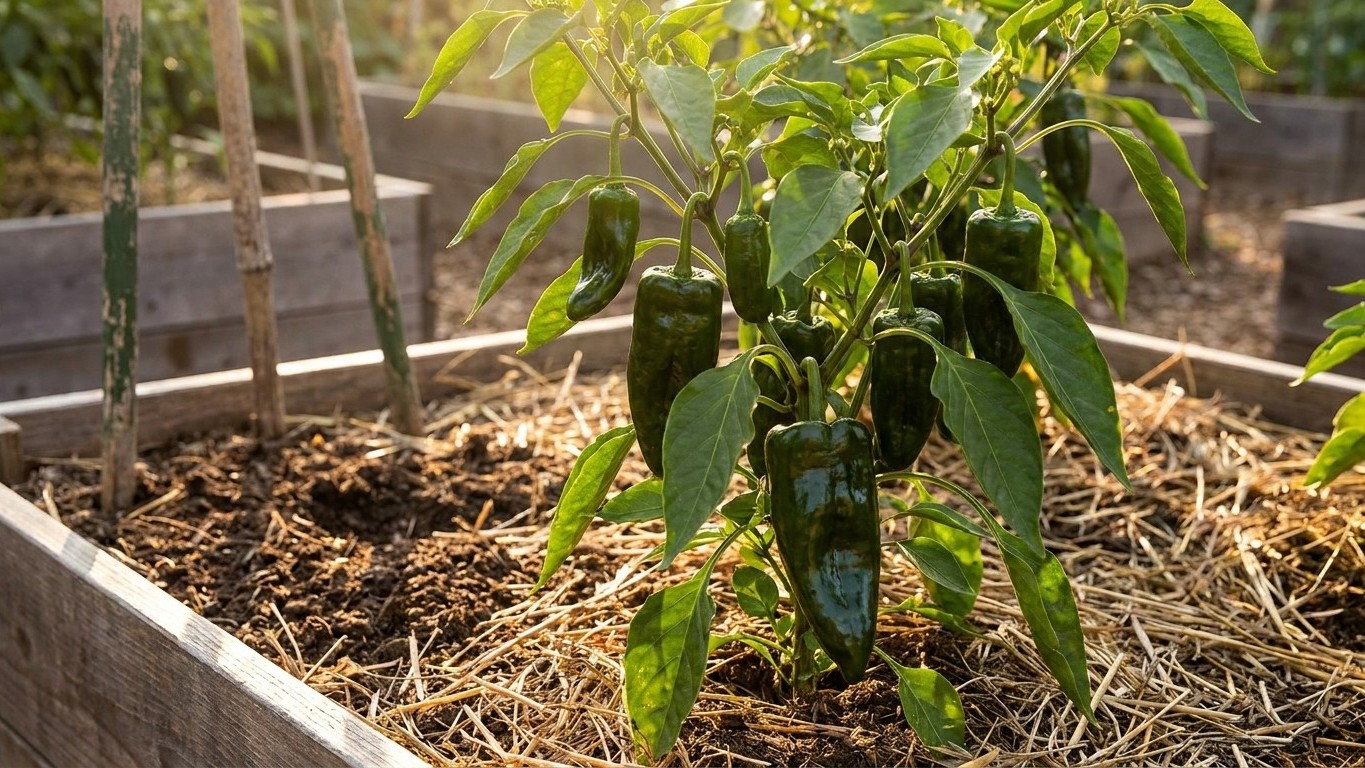

A poblano is classified as a hot pepper on Clemson Cooperative Extension’s list of recommended garden cultivars. That single word, hot, tells a gardener more than the name itself: it puts the plant in the same category as jalapeños and habaneros rather than with sweet bells or mild banana peppers. No Scoville number is published for this specific cultivar, and no days-to-maturity figure comes with it either. What follows is what the two university extension sources actually say, and just as importantly, what they don’t.
What Kind of Pepper Is the Poblano
Type comes first because it decides more than any variety name. Clemson Cooperative Extension lists the poblano among its recommended cultivars for home gardens, and the category attached to that recommendation is simply “hot pepper.” That single classification is the extent of what the source states directly about this plant’s identity: it belongs to the hot pepper group, alongside jalapeños, cayennes and habaneros, rather than the sweet bell or mild banana categories.
What isn’t published matters just as much. Neither Clemson nor NC State Extension gives a fruit size, a yield estimate, or a days-to-maturity count specific to this cultivar in the sources behind this page. Rather than guess at those numbers from the general behavior of hot peppers, it’s more honest to say plainly: they aren’t listed. A gardener who knows a figure is missing can plan around that gap; one handed an invented number can’t.
One distinction is worth making once, clearly. Some pepper plants sold at garden centers are grown purely for ornamental foliage and colorful fruit display, and those are not food crops. The poblano covered here is an edible garden cultivar recommended for harvest and cooking, not a decorative houseplant variety. Confusing the two categories is the one mistake that actually matters at the nursery checkout.
How Hot Is a Poblano Pepper
Heat is best understood by category rather than by a single borrowed number. A bell pepper carries essentially no heat. A jalapeño runs 2,500 to 8,000 Scoville heat units, a documented figure. At the far end, the Carolina Reaper averages 1.64 million Scoville units, an extreme outlier bred specifically for that intensity. The poblano sits in the “hot pepper” category, above the bell and banana types, but no Scoville figure for this specific cultivar appears in the Clemson or NC State material used here. Naming one would suggest a lab measurement that doesn’t exist.
What the source does say is more useful than a fake number anyway. NC State Extension’s caution about edible peppers in general is that fruits are edible “but spiciness is unpredictable in intensity.” That single phrase explains why two peppers grown from the same seed packet, even the same plant, can bite differently.
The mechanism behind that unpredictability is stress. Capsaicin, the compound responsible for pepper heat, tends to concentrate when a plant is pushed by drought, high temperatures, or uneven watering. A poblano grown through a hot, dry stretch of summer is likely to run hotter than the same cultivar coasting through a mild, well-watered season. That’s not a guarantee, just the direction the evidence points. Anyone expecting a fixed heat level from a poblano is expecting more precision than the plant, or the science behind it, actually delivers.
Growing Conditions and Timeline
Beyond the “hot pepper” classification and its Clemson recommendation, the sources used here don’t attach traits like compact growth habit, disease resistance, or container suitability to this particular cultivar. No claim along those lines is made, so none is repeated here. What’s listed is the category and the recommendation itself, and that’s the honest limit of the record.
Days to Maturity: What’s Missing and What Isn’t
Only one pepper in the broader body of research behind this content silo has a published days-to-maturity figure, and the poblano isn’t it. Estimating a number from its type would be a guess dressed up as a fact. The number that actually applies to a given plant is printed on the seed packet in hand, since maturity timing varies by seed source, growing region, and season. That packet, not a general online claim, is the figure worth trusting.
One rule does apply across every pepper cultivar, poblano included: this is a warm-soil crop from start to finish. Cold soil doesn’t just slow growth, it stalls it, sometimes for weeks, while the plant waits for conditions it can actually use. Gardeners starting from seed or moving transplants outdoors too early routinely lose that time and never fully get it back later in the season. For the mechanics of timing that move correctly, see our guides on transplanting peppers and starting pepper seeds indoors, both of which cover the soil-temperature thresholds that matter more than the calendar date.
Taste and Best Uses
Flavor and use, like heat, track closest with type rather than cultivar name in the record available here. Hot peppers as a category are grown for the heat itself as much as for flesh or sweetness, and they typically go into dishes where that bite is the point: fresh salsas, cooked sauces, stuffed and roasted preparations, or dried and ground for later use, depending on the specific pepper’s wall thickness and size. That’s the general behavior of the hot pepper category, and it’s the fair description to offer here.
Neither Clemson Cooperative Extension nor NC State Extension attaches a specific tasting note, like a sweetness claim or a flavor descriptor, to this cultivar in the material behind this page. Some other pepper profiles in this same research base do carry a quoted line, such as a “sugary sweet flavor” noted for a different variety. Inventing a similar line for the poblano just because it would read nicely isn’t something this page does. What can be said honestly is that it belongs to the hot pepper type, and its culinary role follows from that category rather than from any documented cultivar-specific flavor claim.
Cooks working with a hot pepper of unknown individual heat level, the poblano included, are generally better served tasting a small piece before committing a whole fruit to a dish, given how much season and stress can shift the outcome from one harvest to the next.
Common questions
Is a poblano pepper hot?
It’s classified in the hot pepper category by Clemson Cooperative Extension, placing it above sweet bells and mild banana peppers. No specific Scoville figure is published for this cultivar, so its exact intensity isn’t pinned to a number, only to the broader hot pepper classification.
When should I plant poblano peppers?
Like every pepper, it needs warm soil to get going. Transplanting or direct-seeding into cold ground stalls growth for weeks rather than simply slowing it, so waiting for soil temperatures to warm reliably matters more than following a fixed calendar date.
Are ornamental peppers the same as poblano peppers?
No. Some pepper plants are sold specifically for decorative foliage and colorful fruit display, and those are not intended as food. The poblano discussed here is an edible garden cultivar recommended by Clemson Cooperative Extension for harvest and cooking, a different category entirely.
How long does a poblano pepper take to mature?
No days-to-maturity figure for this specific cultivar appears in the Clemson or NC State material behind this page. The number printed on the seed packet in hand is the figure most likely to apply, since timing varies by seed source and growing conditions.
Related guides
- Serrano Pepper: When to Plant the Tomatoes That Ripen All at Once
- Basket of Fire Pepper: When to Plant the Tomatoes That Ripen All at Once
- Black Pearl Pepper: When to Plant the Tomatoes That Ripen All at Once
- Tiger Paw NR Pepper
- Biscayne Pepper
- Calico Pepper
- Vanguard Pepper: When to Plant the Tomatoes That Ripen All at Once