
Clemson Cooperative Extension sorts recommended peppers into clear groups: bell, banana, jalapeño, habanero, cayenne, and other hot peppers. Calico pepper isn’t on that list. NC State Extension describes it instead by its foliage, not its fruit type, which means the planting date for this one comes down to the same rule every pepper follows: warm soil, not a calendar square.
What the Calico Pepper Actually Is
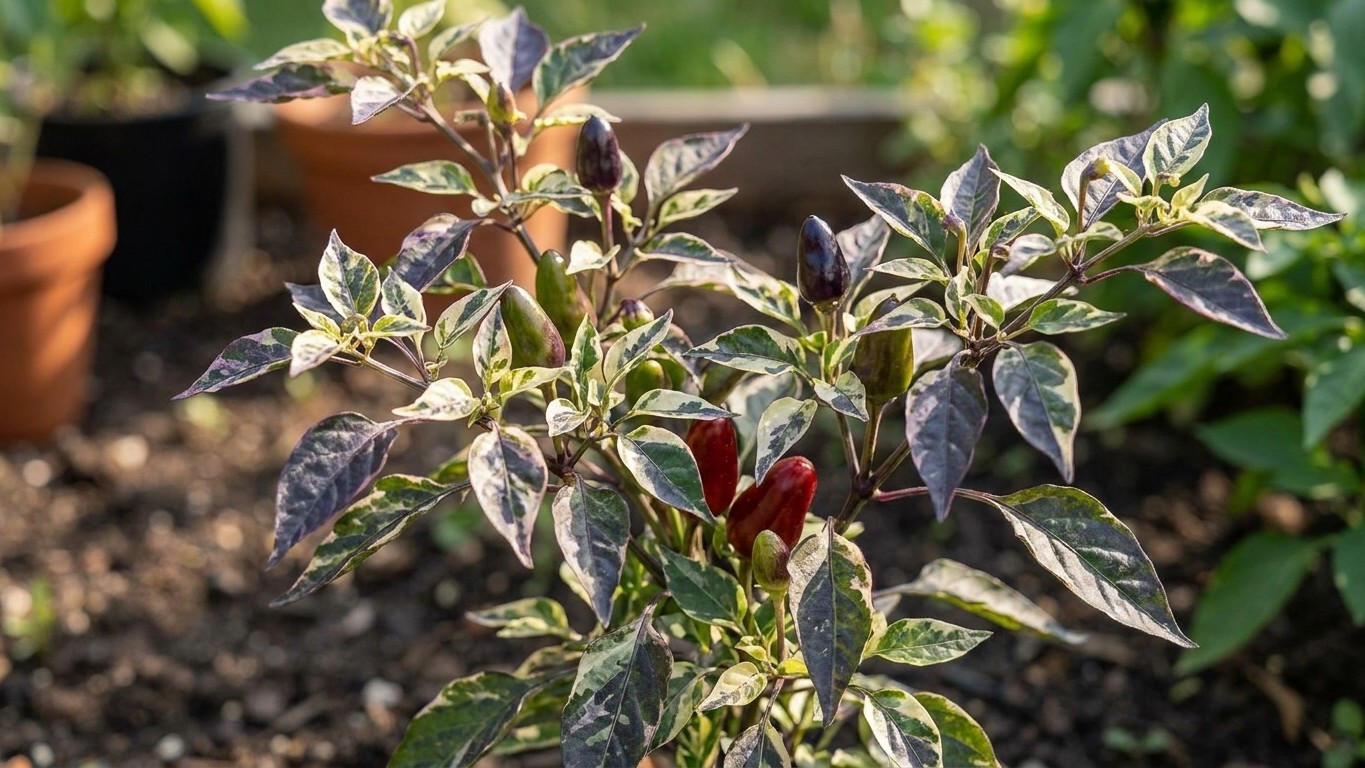
Start with what’s actually documented, because it’s less than most gardeners expect. NC State Extension describes Calico pepper this way: “Variegated leaves of dark purple, green, and white.” That’s the entire published description for this cultivar. No fruit size. No yield estimate. No days to maturity. Clemson Cooperative Extension, whose recommended list groups peppers by type, doesn’t include Calico among its bell, banana, jalapeño, habanero, or cayenne entries at all.
That gap matters more than it might seem. Most seed catalogs and grower forums will tell you a cultivar’s type before anything else, because the type predicts flavor, heat, and use. With Calico, the two university sources behind this page simply don’t make that call. What you can say, honestly, is that the description leans toward a plant valued for its leaf color, a pattern of dark purple, green, and white foliage, rather than one profiled for its fruit.
This is also the point to draw a line that gets blurred constantly in garden centers. Plenty of pepper plants sold under decorative names are grown purely for color and are not edible, some are bred as houseplant or bedding novelties with fruit that shouldn’t be eaten. This page treats Calico as an edible cultivar, consistent with how NC State Extension presents it, but the caution stands generally: a pepper plant marketed for its foliage is not automatically a food crop, and a gardener should know which one they bought before anyone in the household bites into a fruit.
How Hot Is It, Really?
Here’s the honest answer: nobody has published a Scoville number for Calico pepper, and neither Clemson nor NC State offers one. In this entire body of research, only two cultivars carry a measured figure. Jalapeños run 2,500 to 8,000 Scoville heat units. The Carolina Reaper averages 1.64 million. Every other pepper, Calico included, sits outside that measured range, and inventing a number here would misrepresent what’s actually known.
What NC State does say, and it’s the more useful piece of information, is that fruits across these unmeasured cultivars are edible “but spiciness is unpredictable in intensity.” That’s not a hedge. It reflects how capsaicin, the compound behind pepper heat, actually behaves in the plant. Drought stress and high heat concentrate capsaicin production, so a plant that produces a mild fruit in a mild, well-watered summer can turn noticeably sharper during a dry, scorching one. Same seed packet, same row, different year, different bite.
| Type | General heat level | Scoville figure |
|---|---|---|
| Bell pepper | None | Not applicable |
| Banana pepper | Mild | Not published in this source set |
| Jalapeño | Moderate | 2,500–8,000 SHU (measured) |
| Habanero | Very hot | Not published in this source set |
| Cayenne | Hot | Not published in this source set |
| Carolina Reaper | Extreme | Averages 1.64 million SHU (measured) |
Since Calico isn’t sorted into any of these categories by the source material, the practical advice is to taste cautiously the first time a fruit ripens, especially after a stretch of hot, dry weather, rather than to rely on a number that doesn’t exist for this cultivar.
Growing Calico Pepper: What This Plant Needs
The gap in the record continues here. No days-to-maturity figure is published for Calico pepper in either Clemson’s recommended list or NC State’s description, and across this entire base of pepper cultivars, only one carries that number at all. Guessing at a count based on similar-looking peppers would just be a confident-sounding invention. The figure that actually matters is the one printed on the reader’s own seed packet, because seed lots and growing conditions vary enough that a packet’s stated days to maturity is a far better predictor than a generic estimate pulled from a different plant entirely.
What does apply universally, regardless of cultivar or type, is soil temperature. Peppers are a warm-season crop through and through, and their internal clock doesn’t start running until the soil itself warms up. Set a pepper transplant, Calico or otherwise, into cold ground and the plant doesn’t just grow slowly, it can stall outright for weeks, sitting stunted while warmer-planted peppers nearby take off. That single variable, soil temperature at transplant, does more to determine a pepper’s first-month growth than the cultivar name on the tag.
For the specifics on timing that transition correctly, including how to judge when soil has warmed enough and how to harden off seedlings before they go in the ground, see our guide on when to transplant pepper seedlings. If starting from seed rather than buying transplants, the indoor timeline and lighting needs are covered separately in our piece on starting pepper seeds indoors. Both apply to Calico exactly as they would to any other pepper cultivar, since nothing in the published description suggests special handling beyond what every pepper needs.
Taste and Kitchen Use
This is where the honest answer stays honest rather than getting creative. Because Clemson’s recommended list doesn’t place Calico into a type category, and NC State’s own description is limited to its leaf coloring, no source establishes what this cultivar tastes like or how it’s meant to be used in the kitchen. A bell pepper’s sweetness, a banana pepper’s mild pickling profile, a jalapeño’s fresh bite in salsa, a cayenne’s dried and ground use, a habanero’s fruity heat in small doses, all of that flows directly from knowing the type. Without that classification for Calico, assigning it one of those profiles would be a guess dressed up as a fact.
What the description does suggest is a plant grown at least partly for visual interest, that variegated dark purple, green, and white foliage reads like something bred with ornamental appeal in mind, alongside whatever fruit it produces. That doesn’t mean the fruit isn’t food. NC State frames it as edible. It means a gardener growing Calico for the table should treat the first ripe fruits as a personal test case: taste a small piece, note the texture and heat, and decide from there whether it suits fresh eating, cooking, or preserving, the same practical approach recommended for any pepper without a clearly documented flavor profile.
The safer general guidance, then, is to lean on the plant’s actual appearance and let it inform expectations rather than borrowing taste notes from a different, better-documented cultivar. A pepper this lightly described deserves to be judged fruit by fruit, not by assumption.
Common Questions
Is Calico pepper the same as an ornamental pepper?
Not necessarily. NC State Extension describes it as an edible cultivar, but its variegated foliage overlaps visually with plants sold purely as ornamentals that are not meant to be eaten. Always confirm which type of plant is in hand before eating the fruit.
When should I plant Calico pepper?
No days-to-maturity figure is published for this cultivar, so timing follows the universal pepper rule: wait until soil has warmed and all frost risk has passed before transplanting, and check the days-to-maturity printed on your specific seed packet for a more precise estimate.
How spicy is Calico pepper?
No Scoville figure exists for it in the available research. NC State notes that fruits in this category are edible but that spiciness is unpredictable, since heat, drought stress can raise capsaicin levels within the same plant.
Can I grow Calico pepper in a container?
Neither Clemson nor NC State documents container performance specifically for this cultivar. General pepper growing guidance applies: warm soil, consistent moisture, and enough pot depth for root development.
Related guides
- California Wonder Pepper: When to Plant the Tomatoes That Ripen All at Once
- Early Jalapeno Pepper: When to Plant the Tomatoes That Ripen All at Once
- Hot Returns Pepper: When to Plant the Tomatoes That Ripen All at Once
- Pepper Varieties
- Key Largo Pepper: When to Plant the Tomatoes That Ripen All at Once