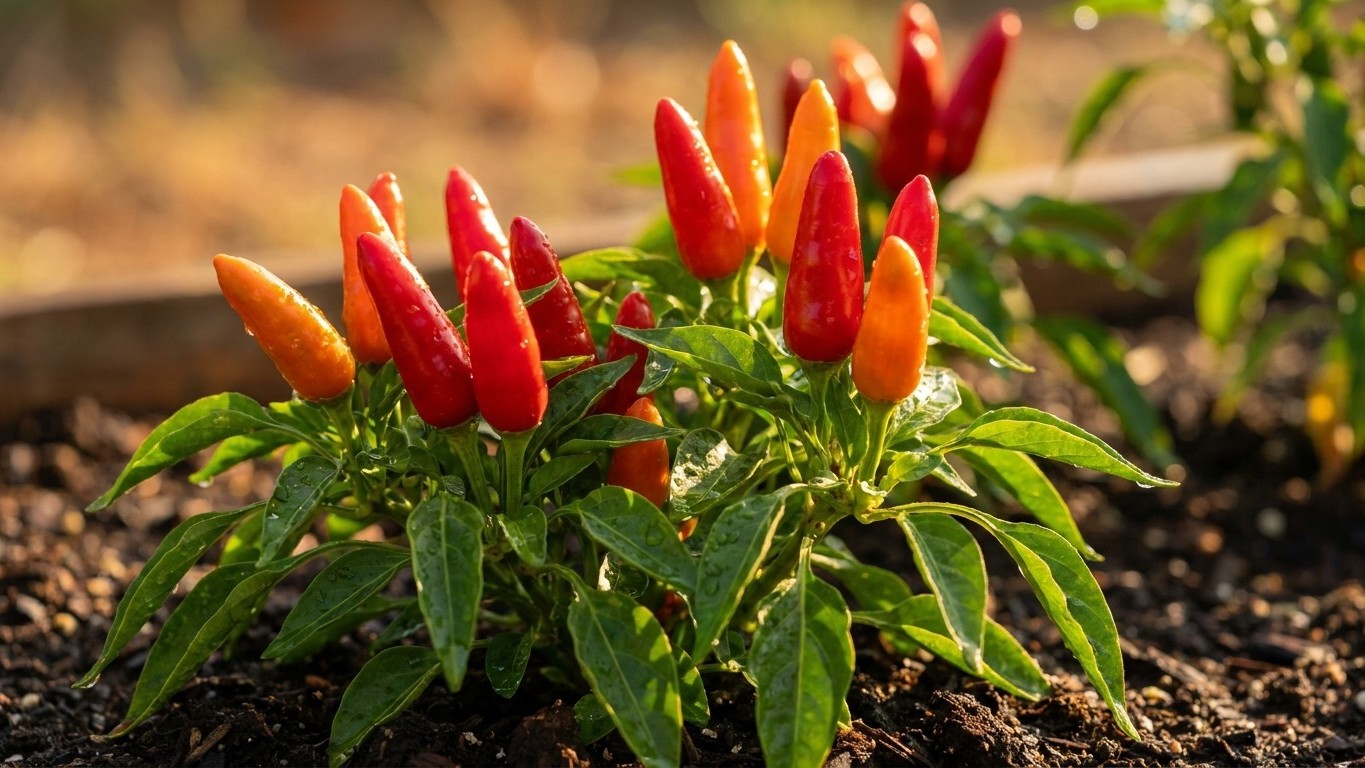

Hot Returns pepper is a spicy pepper cultivar described by NC State Extension as producing “spicy, upright ornamental/culinary pods.” There’s no published days-to-maturity for it, so the honest answer to “when do I plant it” comes from your own seed packet and one rule that applies to every pepper: the soil has to be warm before the clock starts.
What Hot Returns Pepper Actually Is
Clemson Cooperative Extension keeps a recommended list that sorts peppers into clear buckets: bell, banana, jalapeno, habanero, cayenne, and a catch-all “other hot peppers” category. Hot Returns doesn’t appear in that sorted list. It shows up instead in NC State Extension’s plant database, described in a single line: “Produces spicy, upright ornamental/culinary pods.” That’s the full description available from either university source, and it’s worth quoting exactly rather than dressing it up, because the wording tells you something specific: this is a cultivar grown for both looks and eating, with pods that stand upright on the plant rather than hanging down.
What the description does not tell you matters just as much. There’s no fruit size listed, no yield estimate, no days-to-maturity figure. Most cultivars in university extension databases get this same treatment. Only one pepper in Clemson’s entire recommended list carries a published maturity date. Everything else, Hot Returns included, gets a general description and nothing more. A reader who knows that gap exists is better positioned than one handed a confident-sounding number that nobody actually measured.
One distinction matters here and gets blurred often in garden centers: decorative pepper plants sold purely for their colorful foliage are a different category of plant, bred for ornamental value, and some of those are not meant to be eaten. Hot Returns isn’t one of those. NC State’s own listing calls it “culinary” alongside “ornamental,” which places it in the edible category even though its upright, colorful pods also make it a decent-looking container plant.
How Hot Is It, Really?
Pepper heat runs on a spectrum by type. A bell pepper carries essentially none. A jalapeno sits in the moderate range, measured by Clemson and other sources at 2,500 to 8,000 Scoville heat units. A habanero jumps into serious territory, and the Carolina Reaper, the hottest cultivar tracked in this kind of database, averages 1.64 million Scoville units. Those are the only two hard numbers backed by measurement here.
Hot Returns doesn’t get sorted into Clemson’s type categories, so there’s no type-based heat range to borrow for it either. What NC State does say, in plain language, is that the fruits are edible “but spiciness is unpredictable in intensity.” That sentence is doing real work. It means the same plant, grown in two different backyards, or even in the same backyard in two different summers, can turn out noticeably different in the mouth.
The mechanism behind that is straightforward: capsaicin, the compound responsible for pepper heat, concentrates under plant stress. A dry stretch, a heat wave, inconsistent watering, all of it pushes a pepper plant to produce hotter fruit than it would under steady, well-watered conditions. So a Hot Returns pepper picked after a scorching, dry August could bite harder than one picked from a plant that got even moisture all season. There’s no Scoville figure to hand you here, because none has been measured and published for this specific cultivar, and inventing one would just be a guess dressed up as data. What you can count on is the pattern: stressed plants run hotter, and this one is not exempt from that rule.
Growing Requirements: What Sets It Apart
The description NC State provides highlights an “upright” growth habit, which matters more for garden planning than it might seem. Peppers that hold their pods upright rather than letting them dangle tend to show off color better in a mixed bed or a large container, and it’s likely part of why this cultivar gets flagged as ornamental as well as edible.
What’s Missing, and Why It’s Fine
No days-to-maturity figure is published for Hot Returns in either extension source. Rather than estimate one from a type it isn’t even sorted into, the more useful move is to check the number printed on your own seed packet. That figure reflects the actual breeding line and growing conditions the seed producer tested, and it’s the number that will actually predict your harvest window, not a borrowed average from a different pepper entirely.
The One Rule That Never Changes
Every pepper, regardless of cultivar or type, is a warm-soil crop. Transplant into cold ground and the plant doesn’t just grow slowly, it can stall for weeks, sitting stubbornly at the same size while warmer-planted neighbors take off. Soil temperature matters more here than air temperature or calendar date. If you’re timing this planting, our guide to starting pepper seeds indoors covers the lead time needed before your last frost date, and the companion piece on transplanting peppers outdoors walks through the soil-temperature check that actually determines when it’s safe to move seedlings out.
Taste and Kitchen Use
Because Hot Returns isn’t classified into one of Clemson’s pepper types, there’s no cultivar-specific flavor note published for it beyond what NC State’s short description already covers, and that description talks about the pods, not the taste. Inventing a tasting note here would be exactly the kind of unsupported claim worth avoiding, so the honest approach is to describe what’s known about spicy pepper types generally and let that guide expectations.
Spicy, hot-type peppers across the board tend to work best in small quantities rather than as a bulk vegetable. Think fresh in salsas and hot sauces, dried and crushed into flakes, or pickled whole for a condiment that holds its shape and its heat over months in the fridge. Given the “unpredictable” heat NC State flags for this cultivar, it’s a reasonable idea to taste a small piece of a fresh pod before committing it to a full batch of salsa or a jar of pickles. That single bite tells you more about that particular pepper’s heat than any general description can.
The “ornamental” side of its description also means the plant itself, loaded with upright colorful pods, can serve double duty in a front-yard bed or a large patio pot, doing garden work and kitchen work at the same time without needing a separate ornamental variety planted alongside it.
Common questions
Is Hot Returns pepper the same as an ornamental pepper you can’t eat?
No. NC State Extension describes it as “ornamental/culinary,” meaning it’s grown for looks and for eating. That’s different from purely decorative pepper plants sold for foliage, some of which are not intended as food. Hot Returns falls on the edible side of that line.
How many Scoville units does Hot Returns pepper have?
None have been measured and published for this cultivar. Only two peppers in this kind of database carry a verified number: jalapenos at 2,500 to 8,000 Scoville units, and the Carolina Reaper averaging 1.64 million. NC State instead describes Hot Returns’ heat as unpredictable in intensity.
When should I plant Hot Returns pepper seeds or transplants?
No days-to-maturity figure is published for this cultivar, so check your specific seed packet for that number. The rule that always applies: wait until soil is reliably warm before transplanting, since cold soil stalls pepper growth regardless of variety.
Why does the heat of this pepper vary so much?
Capsaicin, the compound that produces heat, concentrates under plant stress. Drought and high heat during the growing season tend to push the same plant toward spicier fruit than it would produce under steady, well-watered conditions.
Related guides
- Mad Hatter Pepper: When to Plant the Tomatoes That Ripen All at Once
- Purple Flash Pepper: When to Plant the Tomatoes That Ripen All at Once
- Sweet orange Pepper: When to Plant the Tomatoes That Ripen All at Once
- Charleston Hot Pepper
- Key Largo Pepper
- Jupiter Pepper
- Mitla Pepper: When to Plant the Tomatoes That Ripen All at Once