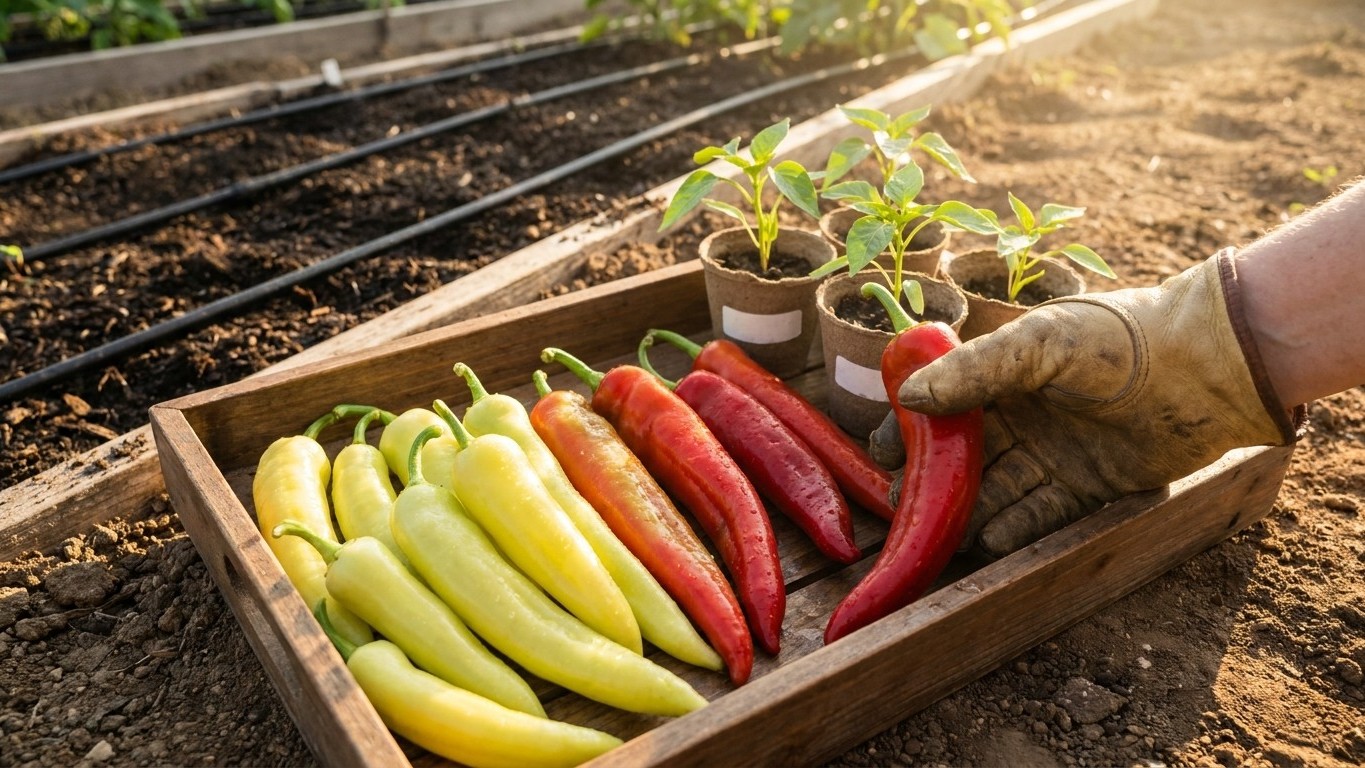

The Key Largo pepper is a banana pepper variety recommended by Clemson Cooperative Extension for home gardens. Its heat runs mild to none, in line with every banana pepper. There’s no published days-to-maturity figure for this specific cultivar, so the count on your own seed packet is the number that actually applies. What matters most for timing: peppers stall in cold soil, so wait until the ground has warmed before you transplant.
What Key Largo Actually Is
Start with the category, because it tells you more than the name does. Key Largo belongs to the banana pepper group, the long, tapered, pale-yellow-to-red fruit familiar from sandwich toppings and jars of pickled rings at the grocery store. That single fact sets expectations for heat, shape and use before anything else does.
Clemson Cooperative Extension lists Key Largo among its recommended home garden cultivars, identifying it plainly as a banana pepper type. That’s the extent of what the university publishes on it: a recommendation and a type, nothing more elaborate. NC State Extension, the other source behind this page, covers banana peppers generally but doesn’t add a separate entry describing Key Largo’s fruit size, yield or growth habit by name.
That gap is worth stating outright rather than papering over. Most cultivars in university extension databases, Key Largo included, carry no published days to maturity, no fruit-size range and no yield estimate. A reader who knows that information simply isn’t published is better served than one handed a number that sounds precise but was never measured. If you want firm figures, the seed packet in your hand, printed by the company that bred or sells that specific seed lot, is the only reliable source for those specifics.
One more distinction matters before you buy anything labeled “pepper” at a nursery. Some pepper plants sold in garden centers are ornamental, bred for colorful, upright fruit display rather than for eating, and those are not food crops. Key Largo is not one of them, it’s an edible banana pepper grown for the kitchen, but the mix-up happens often enough at big-box garden centers that it deserves a flat warning here.
How Hot Is the Key Largo Pepper?
Banana peppers as a type sit at the mild end of the pepper world, somewhere between a bell pepper’s zero heat and a jalapeno’s moderate kick. That’s the honest, type-level answer, and it’s the one Key Largo inherits simply by being classified as a banana pepper.
What this page won’t do is hand you a Scoville number for Key Largo specifically, because none exists in the university sources behind it. Only two cultivars in this reference base carry a measured figure at all: the Carolina Reaper, which averages 1.64 million Scoville units, and jalapenos generally, which run 2,500 to 8,000. Every other pepper, Key Largo included, falls outside that measured range, and inventing a number for it would misrepresent something nobody actually tested.
NC State Extension’s own language on pepper heat generally is the more useful takeaway anyway. Fruits are edible, the university notes, “but spiciness is unpredictable in intensity.” That single line explains why two peppers grown from the same seed packet, in the same yard, can taste noticeably different by August.
The mechanism behind that unpredictability is stress. A pepper plant that’s short on water, baking through a heat wave, or struggling in poor soil tends to concentrate capsaicin, the compound responsible for heat, in its fruit. A well-watered, evenly grown plant in a mild summer produces gentler fruit from the identical genetics. So a Key Largo pepper grown through a droughty, scorching season in Texas or Oklahoma may bite noticeably harder than one grown in a cooler, wetter summer in Ohio or upstate New York, even though both came from the same seed packet and carry the same variety name.
Growing Requirements and Timing
What the source establishes, and what it doesn’t
Clemson’s recommendation places Key Largo among home-garden-worthy banana peppers, but the published record stops short of describing it as compact, container-bred, disease-resistant or unusually heat-tolerant. None of those traits are attributed to this cultivar by name in the sources behind this page, so none get claimed here. If a seed catalog markets it with additional traits, that’s catalog copy, not university-verified data.
Days to maturity: the one number that isn’t published here
Only one pepper cultivar in this reference base has a published days-to-maturity figure. Key Largo isn’t it. Rather than estimate a number based on “banana peppers generally,” the more honest move is to point you to the number printed directly on your seed packet, which reflects the actual seed lot you’re planting and the breeder’s own trial data. That figure, not a type-level guess, is the one that will actually predict your harvest date.
The one rule that applies regardless
What does hold true across every pepper, Key Largo included, is that this is a warm-soil crop. Peppers are native to tropical and subtropical climates, and their root systems simply don’t grow in cold ground. Transplant into soil that hasn’t warmed sufficiently, and the plant doesn’t die outright, it just sits there, stalled, sometimes for weeks, while warm-season weeds and warm-loving neighbors in the garden bed race ahead. If you’re timing your planting calendar, the practical move is to check a soil thermometer rather than the wall calendar, and to review a dedicated guide to transplanting peppers or a seed-starting timeline before committing plants to the ground.
Taste and Kitchen Use
Flavor, again, tracks the type more reliably than the cultivar name. Banana peppers are known for a mild, faintly tangy flavor with barely a whisper of heat, which is exactly why they show up sliced into rings on pizza, layered into sandwiches, and packed whole into jars of pickling brine. Their thin walls and elongated shape make them easy to slice thin and quick to pickle, unlike thicker-walled bells or blockier jalapenos.
NC State Extension’s descriptions of other cultivars in its database do include cultivar-specific tasting notes, phrases like “sugary sweet flavor” for certain varieties, but no comparable line exists for Key Largo specifically. That’s worth stating directly rather than smoothing over: this page describes what’s true of banana peppers as a category, because that’s what the available sources support, and it stops there rather than inventing a tasting note that was never published for this particular name.
In the kitchen, that translates to straightforward uses: raw rings on salads and sandwiches, quick pickles in a vinegar brine, or a light saute alongside onions and peppers for a mild finish that won’t compete with a dish’s other flavors. It’s a pepper built for volume and versatility rather than for heat-seekers.
Common questions
Is the Key Largo pepper hot?
No, it belongs to the banana pepper type, which sits at the mild end of the heat scale, closer to a bell pepper than a jalapeno. No Scoville figure is published for this cultivar specifically.
When should I plant Key Largo pepper seeds or transplants?
Only once soil has warmed, since peppers stall in cold ground. Since no days-to-maturity figure is published for this cultivar, check your own seed packet for the timeline that applies to your specific seed lot.
Is Key Largo the same as an ornamental pepper?
No. Key Largo is an edible banana pepper recommended by Clemson Cooperative Extension for home gardens. Some pepper plants sold for their colorful foliage and fruit display are ornamental and not intended for eating, a different category entirely.
What does a Key Largo pepper taste like?
The published sources describe banana peppers generally as mild and slightly tangy, suited to pickling, sandwiches and light cooking. No cultivar-specific tasting note for Key Largo appears in the university sources behind this page.