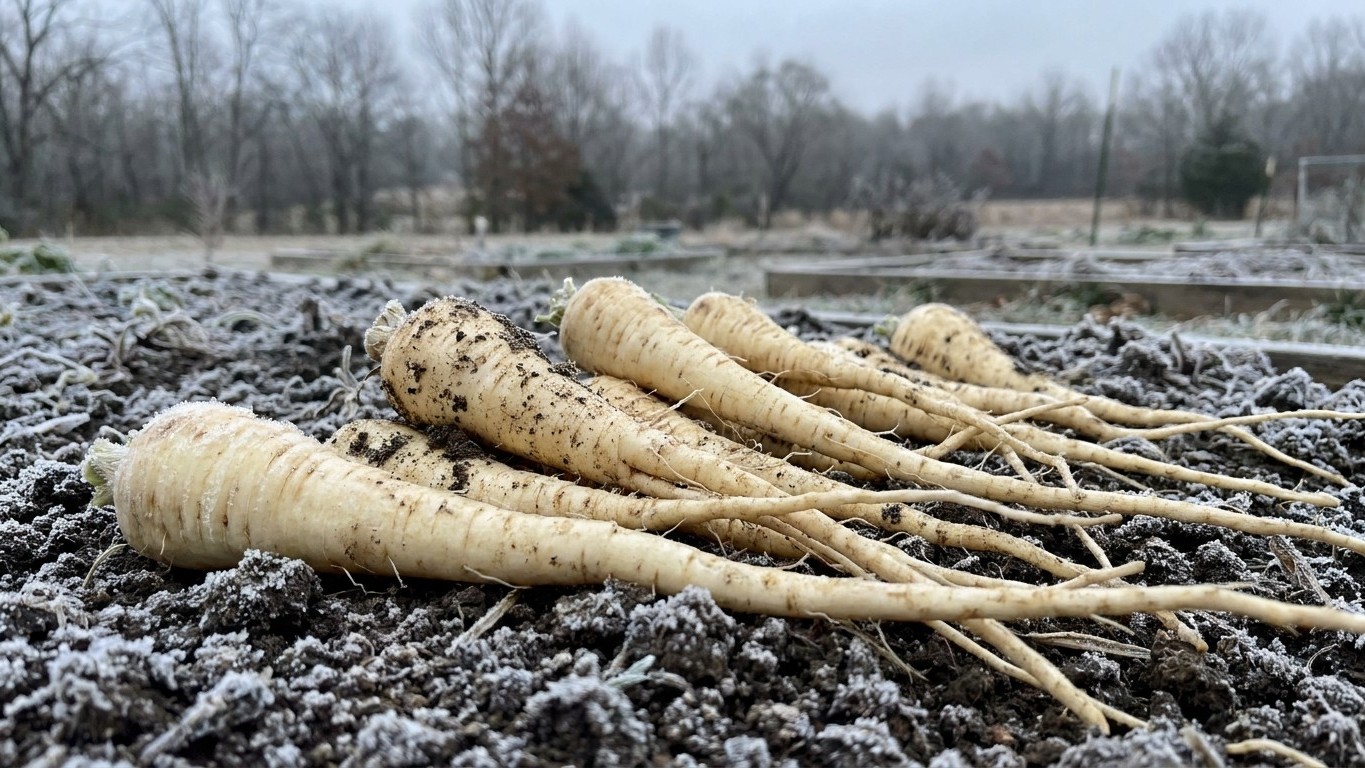

Yes, but only because of what happens in the ground, not on a map. Kansas winters deliver enough sustained cold to convert stored starch into sugar, so parsnips grown here don’t just mature, they sweeten. The catch is timing: pull them too soon, before the frost has done its work, and you’re eating a bland root that happened to grow in the right state.
The short answer
The question that actually decides this isn’t which hardiness zone Kansas sits in. It’s whether the territory delivers several weeks of genuinely frosty weather, cold enough and long enough to trigger the starch-to-sugar conversion inside the root. That’s a climate fact, not a zone label, and the two get confused constantly on garden advice pages.
Using the Wichita reference station, NOAA’s 1991-2020 Climate Normals put the mean daily minimum of the coldest month at 22.5°F. That’s not a record low from one unusual night. It’s the average low across the whole coldest month, which means nights consistently well below freezing are the norm, not the exception, for weeks at a stretch.
A single frosty night can nip foliage and maybe start some sugar conversion at the surface of the root. It won’t sweeten a parsnip all the way through. What does the job is repeated exposure over time, the root sitting in cold soil while the plant’s stored starches slowly break down into sugars. A mean minimum of 22.5°F for an entire month tells you this isn’t a marginal, borderline situation. It’s a solid, reliable cold snap that repeats itself night after night through the heart of winter.
That’s good news for anyone growing parsnips in Kansas. The climate here isn’t just cold enough to keep the plant alive underground (parsnips are hardy roots that tolerate freezing soil without dying), it’s cold enough, for long enough, to do the flavor work that separates a decent parsnip from a genuinely sweet one. Compare that to a milder climate where the coldest month might average in the mid-30s: the plant survives just fine, but it never gets the sustained chill needed to build sugar the way a Kansas-grown root will.
None of this depends on which USDA hardiness zone label Kansas carries. Hardiness zones describe the coldest extreme a plant can survive, useful for deciding whether a shrub lives through winter, but they say nothing about how much sustained frost exposure a spot actually gets during an average cold season. A parsnip grown in a zone with a comfortable winter classification can still fail to sweeten if the actual frost exposure is thin. Kansas doesn’t have that problem. The mean minimum here confirms real, repeated cold, which is exactly the mechanism the crop needs.
Does the season fit?
Parsnips are sown directly in the garden bed, not started indoors and transplanted, because the taproot resents disturbance. That means the full 100 to 120 days to maturity has to run its course from the day seed goes into the soil. Lining that up against Kansas frost dates shows exactly how much room there is to work with.
- Start the clock at sowing. Utah State University Extension recommends sowing parsnips 2 to 3 weeks before the last spring frost. With the Wichita-area last spring frost falling between April 4 and April 18, that puts seed in the ground sometime in the second half of March into the first days of April.
- Wait through slow germination. Parsnip seed is notoriously slow to show itself, typically 14 to 21 days before sprouts appear. A gardener who sows in mid-to-late March shouldn’t expect visible rows until early-to-mid April, and shouldn’t re-sow out of impatience.
- Run the full 100 to 120 days. Counting from a sowing date in late March, 100 days lands in early July; counting from a sowing date in early April, 120 days lands closer to the end of July. Either way, the root has reached full size well before autumn.
- Compare against the first fall frost. The Wichita-area first fall frost falls between October 23 and November 2. That leaves roughly three months between the crop finishing its growth and the ground seeing its first freeze.
- Read the gap correctly. The season fits comfortably here, with slack to spare. The real scheduling question in Kansas isn’t whether parsnips have time to mature. It’s resisting the urge to harvest at day 100 or 120, in the heat of summer, instead of leaving the mature root in the ground until frost has had weeks to work on it.
What goes wrong here
- Forked roots in heavy or stony Kansas clay. A taproot that hits compacted clay or a rock splits into two or three legs instead of growing straight down. Utah State University Extension calls for deep sandy soil and says heavy soil must be double dug before sowing, working the bed a full spade’s depth or more so the root meets no resistance.
- Forked roots from overwatering. This is a separate cause from heavy soil, and the two shouldn’t be lumped together. Saturated soil encourages the taproot to branch as it searches for air pockets. Water enough to keep the bed evenly moist through germination and growth, but avoid soaking it repeatedly once roots are established.
- Patchy, disappointing germination. A Kansas spring can swing from cool and wet to hot and dry within a week, crusting the soil surface before slow-germinating parsnip seed ever breaks through. Keep the seedbed consistently moist for the full 14 to 21 days it takes to sprout, and consider a light mulch or a board laid over the row to hold moisture until germination starts.
- Pulling the crop before frost has done its job. Because the Kansas season leaves so much slack, it’s tempting to harvest at day 100 while the weather is still warm. That skips the sweetening entirely. Leave mature roots in the ground through several weeks of real cold before digging.
Handle the harvest with care
Before you reach for that mature root, know this: North Carolina Extension Gardener Plant Toolbox states plainly, “All parts of this plant contain furocoumarins which can make skin sensitive to light causing burns so be sure to wear gloves, long sleeves and long pants when dealing with it.” That’s not limited to the leafy tops. It covers the whole plant, root included.
The mechanism is what makes this catch people off guard. Furocoumarins don’t burn skin on contact by themselves. The reaction needs both the sap and sunlight together, a plant-based photosensitivity rather than a simple chemical burn. That’s why it tends to show up after a bright afternoon of pulling tops or handling roots at harvest time, and why the redness or blistering often doesn’t appear until hours later, once sun exposure has had time to activate the compounds already on the skin.
Because the reaction depends on sunlight, washing exposed skin afterward doesn’t undo the damage the way it would with a simple irritant. The protection that actually works is preventing contact in the first place: gloves, long sleeves, and long pants any time you’re handling parsnip foliage or roots, especially on a clear, sunny day.
Checking this against your own county
The figures here come from a single reference station near Wichita, and frost dates shift by county, by elevation, and by whether a garden sits in a valley or on open ground. Rural and suburban gardens away from that station typically see the last spring frost arrive later and the first fall frost arrive earlier than the airport data shows, sometimes by a week or two.
Before locking in a sowing date, check local numbers with K-State Research and Extension. The service maintains county offices across Kansas and can supply frost data and soil guidance specific to your area rather than a single statewide reference point.
Common questions
Can I start parsnip seed indoors and transplant it later?
No. The taproot doesn’t tolerate disturbance well, and transplanting tends to trigger forking or stunted growth. Parsnips are sown directly into the garden bed where they’ll grow to maturity.
How do I know it’s actually cold enough to harvest for sweetness?
Rather than watching a calendar date, wait until the area has had several weeks of consistent frosty weather, the kind reflected in a coldest-month mean minimum well below freezing. A root pulled after that stretch will taste noticeably sweeter than one pulled in warm fall weather.
Should I mulch parsnips over winter instead of harvesting?
Parsnips tolerate being left in frozen ground and some gardeners leave part of the crop in place, harvesting through the fall and into winter as needed, since the cold soil itself helps preserve the roots.
Does slow germination mean my seed failed?
Not necessarily. Parsnip seed regularly takes 14 to 21 days to show sprouts. Resist the urge to re-sow the bed before that window has fully passed.