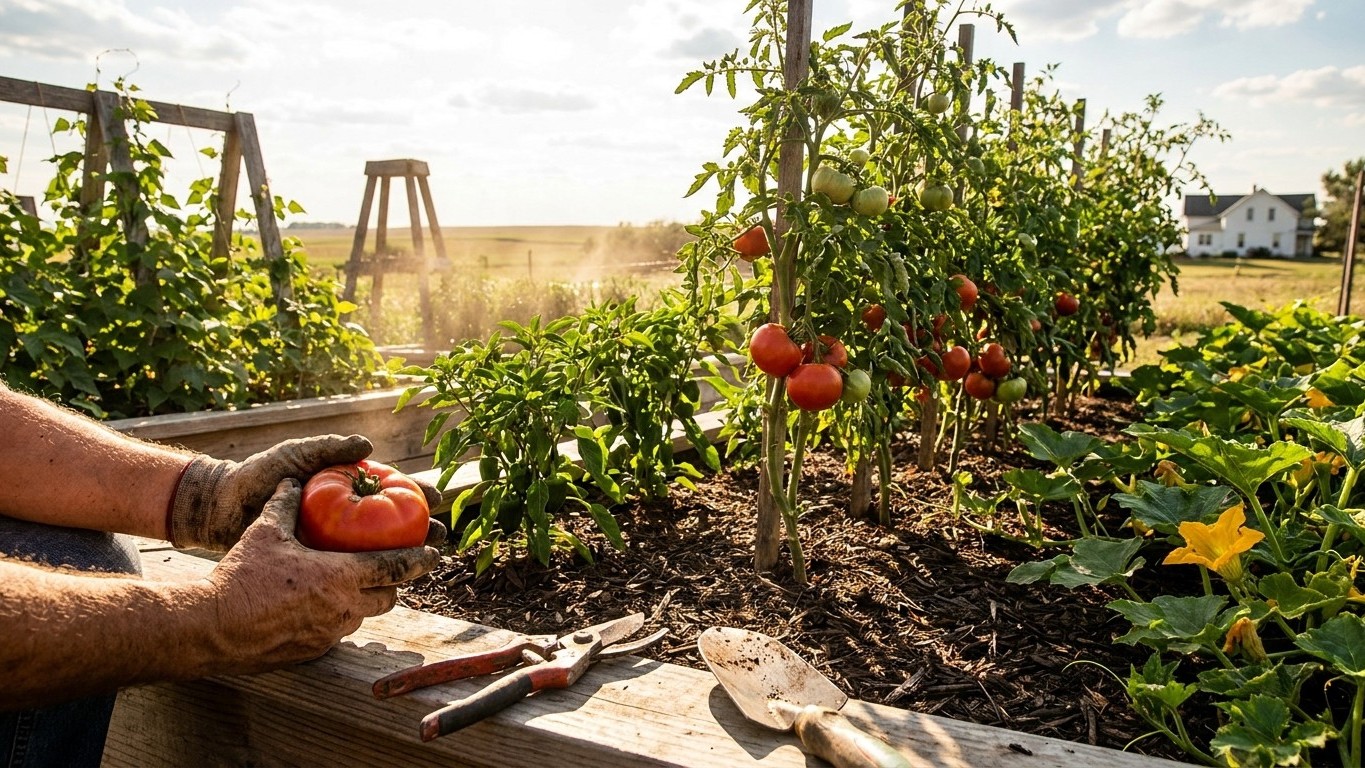

Kansas gardeners work with a frost-free window of roughly six to seven months, a USDA hardiness range spanning 5b to 7a, and summers that regularly climb past 90F for nearly two months combined. That combination allows a full run of warm-season vegetables and a decent shot at two rounds of cool-season crops, but it punishes anyone who ignores the midsummer heat wall or plants long-season varieties without checking their own county’s frost dates first.
How long your season really is

The USDA Plant Hardiness Zone Map places Kansas between zones 5b and 7a, a spread wide enough that a plant surviving winter in the southern part of the state may not make it through in the northwest corner. At the reference station used for the state’s climate normals, the average last spring frost falls between April 4 and April 18, and the average first fall frost lands between October 23 and November 2. Do the math on the tightest combination (latest spring frost, earliest fall frost) and you get a frost-free window of around 188 days. Take the loosest combination and it stretches closer to 212 days. Either way, that’s close to six and a half months of growing time, which is generous compared to much of the northern Midwest.
That window is what decides everything else. It’s long enough for full-season corn, most tomato varieties, Growing Peppers in Kansas, squash, and a second planting of beans after the first comes out. That same generous stretch is exactly what makes Growing Sweet Corn in Kansas so reliable, since even full-season varieties have plenty of room to mature before fall frost arrives. The same early-spring dates also set the calendar for Growing Potatoes in Kansas, since seed potatoes go in the ground weeks before the last frost and need that cool start to size up before summer heat sets in. That same cool window works in favor of Growing Beets in Kansas, another crop that thrives on an early start before the heat arrives, and it lines up just as well with Growing Carrots in Kansas, which also benefits from cool soil early on. That long early window is also what makes Growing Asparagus in Kansas such a solid perennial choice, since the crowns need those cool weeks to establish before summer heat arrives, and it fits the same logic behind Growing Spinach in Kansas, a crop that depends on getting into the ground while temperatures are still cool, not to mention Growing Parsnips in Kansas, a root crop that needs that same long cool stretch to develop its full flavor. It’s tight for the slowest pumpkin and winter squash varieties (the 120-day-plus types), and for melons that need a long, uninterrupted stretch of warmth to size up before fall cooling starts. Anyone attempting Growing Pumpkins in Kansas on the edge of the window is not gardening on a plan anymore, and it’s worth knowing When to Carve a Pumpkin in Kansas so a long-season crop like this actually reaches maturity before frost. They’re gardening on a gamble, and the odds aren’t great every year.
That last point matters more than it sounds. These frost dates are averages, not guarantees and not safe dates. By definition, roughly half of all years run colder or later than the average in spring, and half run colder or earlier than the average in fall. A gardener who plants tomatoes the week after the “average” last frost is playing a coin flip, not following a schedule. Add to that the fact that these dates come from an airport weather station, and that suburban yards and rural low spots typically see frost linger later in spring and arrive earlier in fall, sometimes by a week or two, and the safe move is to treat the window as a planning range, not a countdown clock.
What the summer does to a garden here
Kansas averages 57.6 days a year at or above 90F, concentrated in June, July, and August. That’s not just a discomfort for the gardener standing in the sun with a hose. Above roughly 90F, tomato blossoms drop without setting fruit, lettuce and spinach bolt and turn bitter within days, and most cool-season greens simply stop being worth growing outdoors. The result is a garden year that doesn’t behave like one long season. It behaves like two shoulder seasons, spring and fall, with a hot, mostly dead middle for anything that prefers cool roots and mild air.
Practically, that means lettuce, spinach, peas, and broccoli belong at the two ends of the calendar, not in the middle of it. Warm-season crops (tomatoes, peppers, squash, beans, corn) are the ones built for that long hot stretch, and they’re the reason the frost-free window matters as much as it does. A gardener who tries to keep lettuce alive through a Kansas July is fighting a temperature ceiling that no amount of watering fixes.
Winter sits at the other extreme. The coldest month’s average daily minimum runs around 22.5F at the reference station, a figure that reflects typical winter cold rather than a single record low night. That number is what actually decides whether a perennial, shrub, or fruit tree survives the winter here, more than any single cold snap does. It’s also consistent with the state’s 5b-7a hardiness range: plants rated hardy to zone 5 or 6 have a reasonable shot, while zone 7-only plants are living closer to the edge, especially in the northern half of the state.
What tends to go wrong in Kansas
K-State Research and Extension flags a specific set of insects that home gardeners in this state actually run into, and a handful of them show up often enough to plan around. Squash bugs and squash vine borers both target squash and pumpkin plants, typically appearing as the weather turns reliably warm in early to mid-summer; squash bugs suck sap and can collapse a plant’s vines, while squash vine borers tunnel into stems and cause sudden, unexplained wilting even when the soil is moist.
Colorado potato beetles show up earlier, often as soon as potato foliage is up in spring, and can strip leaves fast enough to cut yield if a patch goes unchecked. Bagworms are a different kind of problem entirely: they target evergreens and some shade trees rather than vegetables, building their small spindle-shaped bags through early summer, and by the time the damage is obvious in late summer the tree may have already lost significant foliage. Striped and spotted cucumber beetles round out the list that extension materials point to most often, feeding on cucumbers, melons, and squash leaves and also spreading bacterial wilt in the process.
None of this means every Kansas garden meets every one of these pests every year, and it’s not a complete inventory of everything that can chew a leaf in this state. It’s the short list that actually matters here, based on what the state’s own extension service reports seeing in home gardens. Anyone unsure what’s on a leaf or a stem is better off getting it identified locally than guessing from a general description.
Where to check before you plant
Everything above is a state-level average, and Kansas is wide enough, spanning multiple degrees of latitude and two hardiness zones, that a planting calendar built for one part of the state can run two to three weeks off at the other edge. The frost dates cited here come from one reference weather station, not from every county, and a garden thirty miles away, especially at a different elevation or in a low-lying spot, can see frost arrive on a noticeably different schedule.
That’s exactly what K-State Research and Extension exists to narrow down. As the state’s land-grant extension service, it publishes localized planting guides, pest identification resources, and soil testing programs through county offices across Kansas. Calling or visiting the extension office for a specific county turns a state-wide estimate into a number that actually applies to the yard in question, which matters most in the first and last weeks of the growing season, exactly when a garden is most exposed to a frost the calendar didn’t predict.
Three Crops Worth Getting Right
Once you’ve got a feel for the frost dates and freeze windows that shape a Kansas season, the next step is applying that timing to what’s actually going in the ground. Start with planting garlic ahead of winter, since the state’s cold runs deep and long enough to do the job of splitting bulbs into cloves the way garlic needs — a detail tied directly to Wichita’s fall frost window and what follows it. Above ground, though not a food crop, the same climate math applies to choosing and feeding a lawn that can survive Kansas’s split-personality weather, from nearly two months of 90°F-plus days down to winter lows averaging under 22°F — no single grass handles both extremes without help. And if you’re after something to actually eat in summer, timing a tomato planting means threading the narrow gap between Wichita’s last spring freeze, which typically falls between April 4 and April 18, and the risk of setting plants out too early or waiting so long you lose the front end of the season. Each of these pages works from the same underlying question: what does the calendar here actually permit.