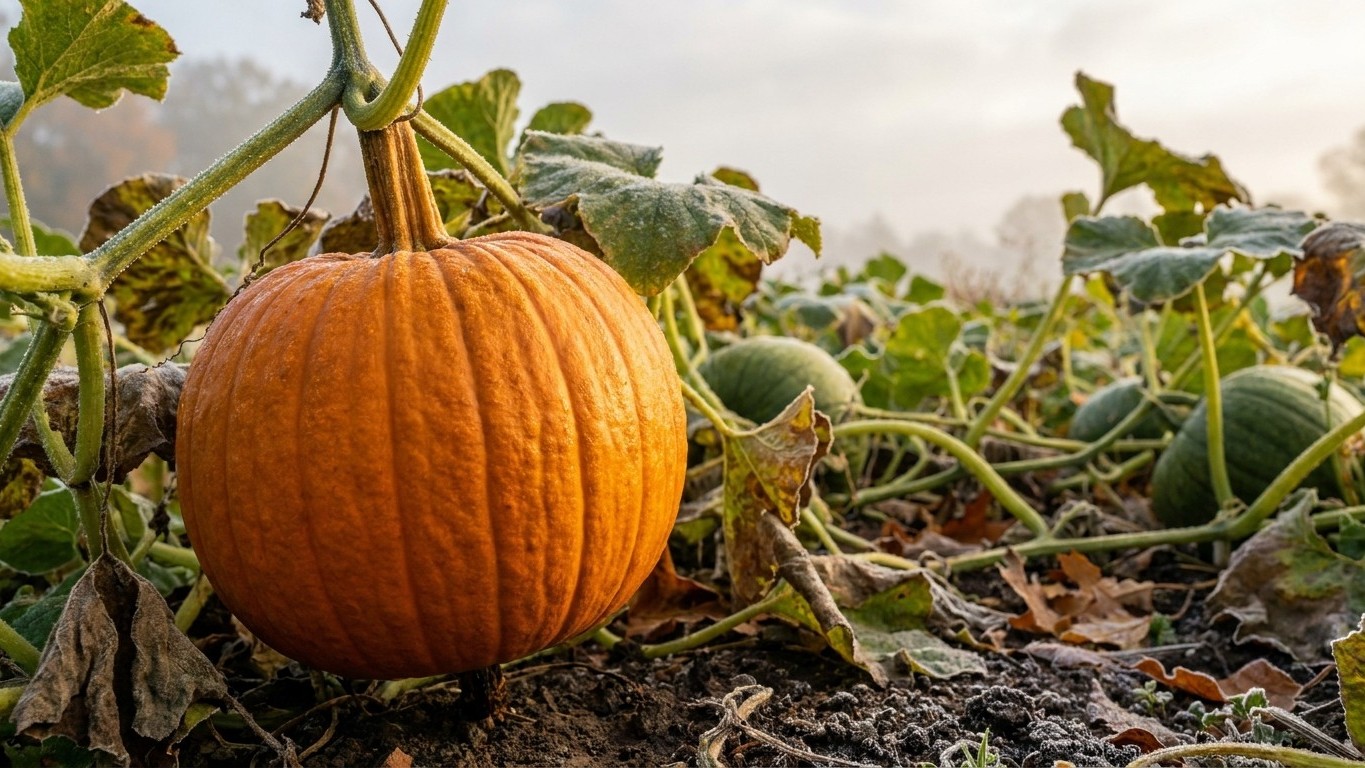

For the Houston area, a pumpkin flower needs to open by roughly early October to have a solid shot at ripening before the season’s first freeze. Wait until deep into November and the odds turn against you. That timing rests on two numbers most gardeners never actually calculate: the local fall frost window, and the 45-to-55-day clock that starts only when a flower opens, not when the seed goes into the ground.
The short answer
Houston’s first fall frost of the season lands somewhere between December 1 and December 19, based on three decades of NOAA climate data recorded at Bush Intercontinental Airport (station USW00012960). That’s the wall every pumpkin vine in the region is racing toward, and it’s a wider target than most people assume: nearly three weeks separate the earliest possible freeze from the latest one in that window.
Work backward from that using the clock pumpkins actually run on. According to Utah State University Extension, a pumpkin needs 45 to 55 days after its flower opens, not after the seed goes into the ground, but after the bloom, to finish ripening. Subtract that range from the frost window and the real deadline appears: a flower needs to open somewhere between roughly October 7 and November 4 to have a fair shot at coloring up before a freeze shuts the season down. Bloom earlier than that and there’s slack built in. Bloom later and the plant is running a countdown that may not finish.
That spread exists on purpose. If the first freeze lands on the early side (December 1) and the fruit is a slower, 55-day type, October 7 is the real cutoff. If frost holds off until December 19 and the fruit is a quicker 45-day type, flowering can push closer to November 4 and still finish clean. Nobody knows in August which version of the season they’ll get, which is exactly why treating this as one fixed date is the mistake. Treat it as a range, and lean toward the early side of it.
The Utah State University Extension guide behind this timeline names nine pumpkin varieties without attaching a specific maturity length, size, or color to any single one of them. That means the 45-to-55-day figure is a general range across types, not a number verified for whichever seed packet happens to be in your hand, so it’s worth checking your specific packet for its own days-to-maturity before locking in a flowering deadline.
One more wrinkle worth flagging: this window is specific to the Houston area, and even within Houston it shifts. The Bush Intercontinental station behind these figures runs roughly two weeks colder than Hobby Airport on the south side of the city, so a gardener near Hobby has more room than this window suggests. Zoom out past the Gulf Coast and the picture changes completely. Texas spans four USDA hardiness zones, and the Panhandle sees its first freeze months before Houston does, while North Texas and the Hill Country fall somewhere in between. None of those regions share this frost window, which is why it’s worth consulting a broader guide on When to Sow Pumpkins in Texas before settling on a planting date timeline, so anyone gardening outside Houston should work out their own local version of Will Pumpkins Ripen Before Frost in Texas? window, so none of them share this flowering deadline either.
When to sow here
Working out a sowing date means resisting the urge to plant the day frost risk passes. The last spring frost in the Houston area falls between February 4 and March 1, but seed dropped into cold soil just sits there. Pumpkin seed wants soil at 65 F, and soil warms slower than air, so that threshold typically arrives weeks after the frost window closes, not on the heels of it.
- Mark the last frost window first. February 4 to March 1 is when the air stops freezing in the Houston area, based on NOAA’s 30-year climate normals for Bush Intercontinental Airport. That date describes the air. It says nothing about the soil.
- Wait out the soil lag. Ground takes weeks longer than air to climb into pumpkin range. Sowing on the last-frost date itself, before soil has caught up to 65 F, means slow germination and a stunted start that eats into the season instead of extending it.
- Use row covers to buy roughly two weeks. A row cover held over the bed can push soil into the 65 F range about two weeks sooner than bare ground would reach it alone, which matters directly when the goal is leaving room for a plant to flower inside the October 7 to November 4 window worked out above.
- Count forward to the flowering deadline. Once seed sits in warm soil, track the calendar toward that flowering cutoff. If a variety typically needs several weeks to reach its first bloom, sowing late in the soil-warming stretch leaves no cushion at all.
- Treat the two dates as separate calculations. The last frost date tells you when the air is safe. The 65 F soil threshold tells you when the seed will actually grow. Confusing the two is the most common reason a Houston-area pumpkin patch starts three weeks later than it needed to.
What goes wrong here
The gap between a late flower and an early freeze is where most Houston-area pumpkin patches lose their harvest. Three failures show up again and again, and each one has a fix that starts well before the vine is in trouble.
- A flower opens too late and the fruit never colors. A bloom that opens in mid-November, past the flowering cutoff worked out above, is asking for 45 to 55 more growing days the calendar doesn’t have. The fruit sizes up but stays green or pale, because the pigment change that finishes a pumpkin’s rind needs that full stretch of warm, active growth. The fix is upstream: sow early enough, using the soil-warming steps above, that the plant flowers within its main window instead of gambling on a late bloom to finish the job.
- A near-finished fruit gets caught by an early freeze. Even a pumpkin most of the way through its 45-to-55-day clock can be damaged if a hard freeze lands on the early side of the December 1 to December 19 window. Watching that window closely through late fall, instead of assuming frost won’t show until deep in December, gives you the chance to harvest a few days early with the stem attached rather than lose the fruit overnight.
- The vine collapses before the skin has a chance to harden. Vines stressed by disease or by insect pressure, including the squash bugs and cucumber beetles covered on their own pages for this state, can die back weeks before the fruit is actually mature. A dead vine stops feeding the pumpkin, and a rind that never hardened stays vulnerable to rot and frost alike. Keeping the vine alive and green through the full maturation window matters just as much as getting the flowering date right in the first place.
Checking this against your own county
Everything above is calculated from a single weather station on the Gulf Coast, and Texas is too large a state for one frost window to apply everywhere. A gardener in the Panhandle is working with a fall frost date that arrives months earlier than Houston’s, and a Hill Country grower’s soil warms on its own separate schedule. Before locking in a sowing date, or convincing yourself a late-blooming vine still has time, check the current frost data and planting guidance for the county you’re actually gardening in.
Texas A&M AgriLife Extension (agrilifeextension.tamu.edu) runs county offices across the state and publishes planting guidance tuned to local conditions rather than to one Gulf Coast airport. A call or a visit to the county page for your area will tell you whether the October to November flowering window above needs to shift earlier, later, or stay right where it is for your soil and your microclimate.
Common questions
Can I still plant pumpkins in Houston in July?
It depends on the variety’s time to flowering plus the 45-to-55-day window after that bloom. Count forward from a July sowing to the expected flowering date, then add 45 to 55 days, and check the total against the December 1 to December 19 frost window above. If the math lands past mid-November for flowering, the odds are working against you.
Does the 45-to-55 day window start when I plant the seed?
No. Utah State University Extension counts that window from the day the flower opens, not from sowing or transplanting. A pumpkin plant can sit in the ground for weeks before it ever blooms, and none of that time counts toward the 45-to-55-day ripening clock.
Is 65 F soil the same as the last frost date?
They’re not the same measurement and shouldn’t be treated as interchangeable. The last spring frost in the Houston area falls between February 4 and March 1, but soil temperature lags air temperature by weeks, so 65 F soil typically shows up well after that frost window closes.
How should I store a pumpkin once it’s harvested?
The Utah State University Extension guidance behind these figures gives one instruction on storage: keep harvested pumpkins where they will not freeze. No specific temperature, humidity level, or keeping time is published in that source, so beyond frost protection, there’s no verified figure to pass along here.