
Georgia gardeners get one shot at timing this right: sow too early and cold soil stalls the seed, sow too late and the vine runs out of season before the fruit turns orange. The safe window sits between the last spring frost (March 11 to March 29) and the point where flowering has to happen for a pumpkin to ripen ahead of the first fall frost (November 13 to December 1). The rest of this guide unpacks that math, region by region.
The short answer
Start from the back end of the calendar. Georgia’s first fall frost falls somewhere between November 13 and December 1, depending on where the weather station sits and how far you are from Atlanta’s urban heat. A pumpkin needs 45 to 55 days after it flowers, not after it germinates, to size up, color out, and harden its skin. That single distinction, flowering versus seeding, is the whole game. Miss it and every date that follows is wrong.
Run the subtraction both ways and you get a window, not a single day. Take the earliest frost date, November 13, and subtract the full 55 days, and the last safe flower has to open around September 19. Take the latest frost date, December 1, and subtract the shorter 45-day cycle, and a flower opening as late as October 17 can still finish. So the real target for the last flowers of the season lands somewhere in that roughly four-week stretch between mid-September and mid-October, not on one fixed calendar square.
Where you fall in that stretch depends on geography as much as luck. North Georgia and the mountain counties see frost several weeks earlier than the Atlanta-area average, which pulls the flowering deadline earlier too. The coastal plain runs milder in fall, which stretches the deadline later, closer to that October 17 edge. Atlanta itself sits at an airport station that reads warmer than the shaded, low-lying yards a few miles away, so treat the November 13 to December 1 range as a starting point, not a guarantee for your particular lot.
None of this tells you when to put seed in the ground yet. That answer depends on soil, not air, and it’s a separate calculation covered next.
When to sow here
- Let the last frost window close first. March 11 to March 29 is when the air stops threatening a hard freeze across most of the state. That date range is a floor, not a target. Sowing on the last frost date itself still risks cold-damaged seedlings if a stray freeze arrives a few days behind schedule.
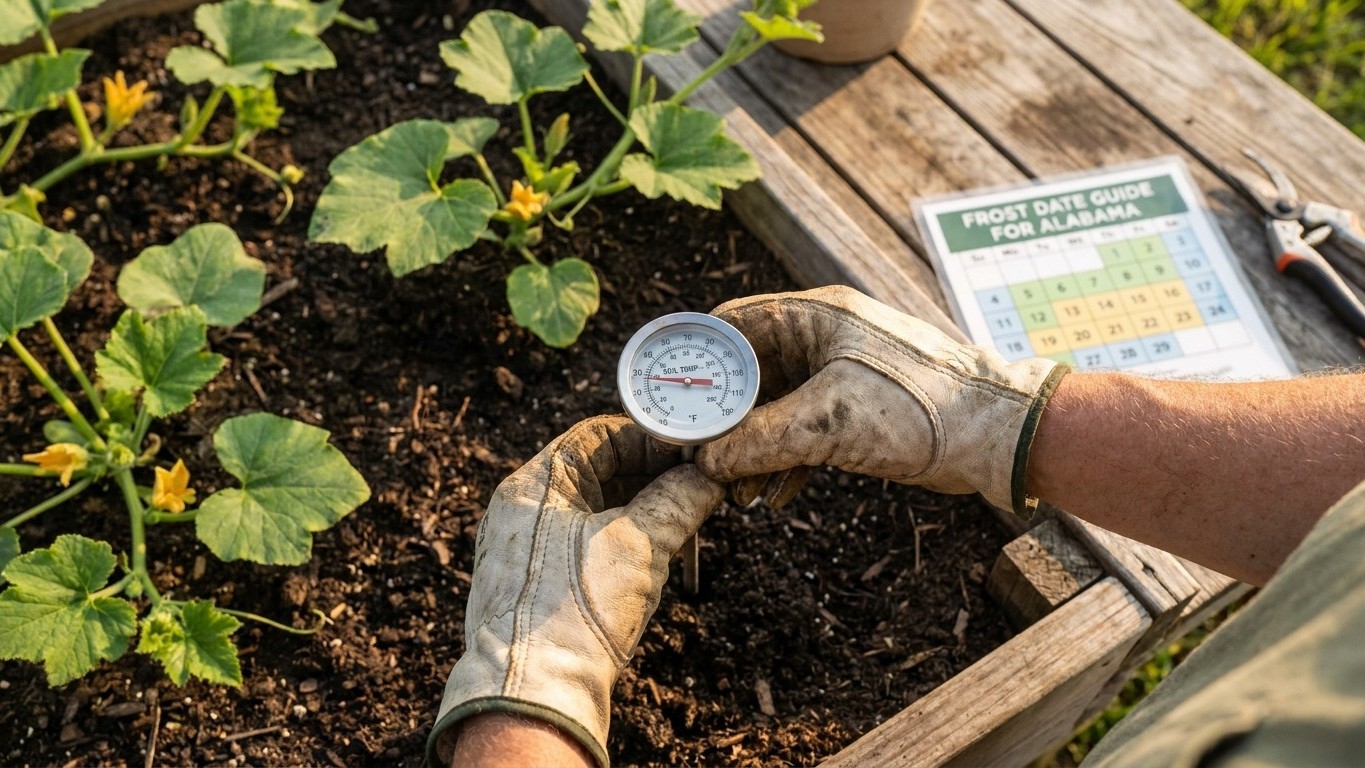
- Then wait on the soil, not the air. Pumpkins are sown once soil reaches 65°F, and soil lags behind air temperature by weeks, not days. A sunny 70°F afternoon in late March does not mean the ground four inches down has caught up. Push a soil thermometer into the bed rather than trusting the calendar or the forecast.
- Use row covers to buy back time. Clear or lightweight row covers trap solar heat over the bed and can shave roughly two weeks off the wait for that 65°F mark, letting you sow earlier than bare soil would allow. Pull them once seedlings are up and the weather has settled, since pumpkins need open pollination once they flower.
- Work backward from the flowering deadline. The short answer above puts the last workable flower date somewhere between mid-September and mid-October depending on your part of the state. Whatever sowing date you choose has to leave enough of the growing season for the vine to reach flowering with room to spare before that deadline, since the source material doesn’t publish a fixed number of days from seed to first flower, only the 45 to 55 days that follow flowering.
- Adjust for your region. Growers in the north Georgia mountains are working against an earlier fall frost, so they should lean toward the earlier end of their sowing options rather than the latest one. Coastal plain growers have more slack on the back end and can afford to sow a bit later without risking an unripe fruit at frost.
What goes wrong here
- A late flower that never colors. This happens when sowing gets pushed too far into early summer, either from a slow spring or a delayed soil warm-up, and the vine’s first flowers don’t open until after the safe window identified in the short answer. The remedy is tracking soil temperature early with a thermometer and using row covers to start the clock sooner rather than waiting on the calendar alone.
- A fruit caught by frost mid-ripening. A pumpkin that’s still green or pale when the first fall frost arrives will not finish coloring on the vine. Harvest with the stem attached before frost hits, even if the fruit looks slightly underripe, rather than gambling on a few more warm days that Georgia’s fall weather doesn’t guarantee.
- A vine that dies back before the skin hardens. Pest pressure, particularly from squash bugs and cucumber beetles, can collapse a vine weeks before the fruit’s rind has toughened enough for storage or a long display season. Scout the underside of leaves early and often through midsummer, since a vine that fails in August leaves no time to start over within Georgia’s flowering window.
Common questions
What is the latest date to sow pumpkins for a Halloween harvest in Georgia?
The source material doesn’t publish a fixed seed-to-flower interval, so there’s no single sowing date that applies statewide. What’s documented is the flowering deadline: a flower needs to open between roughly mid-September and mid-October, depending on your region’s frost timing, to leave the full 45 to 55 days needed to ripen before frost.
Does soil temperature matter more than the last frost date?
For sowing, yes. The last spring frost (March 11 to March 29) tells you when the air has stopped threatening a freeze, but pumpkins are sown once soil reaches 65°F, and soil warms weeks behind the air. Treating the frost date as your sowing date is one of the most common timing mistakes in Georgia gardens.
Should north Georgia and coastal Georgia gardeners follow the same schedule?
No. North Georgia and the mountain counties see frost several weeks earlier in fall than the state average, which shortens the safe flowering window and pushes sowing earlier. The coastal plain runs milder, giving more room on the back end of the season.
Which pumpkin varieties are commonly grown in Georgia gardens?
Home gardeners across the state plant a range of named varieties, including Connecticut Field, Jack Be Little, Baby Pam, Howden, Big Max, Cinderella, Lumina, Casperita, and Wolf. No days-to-maturity, size, or color data for these specific varieties is covered here; check seed packaging for variety-specific figures before planning your sowing date.