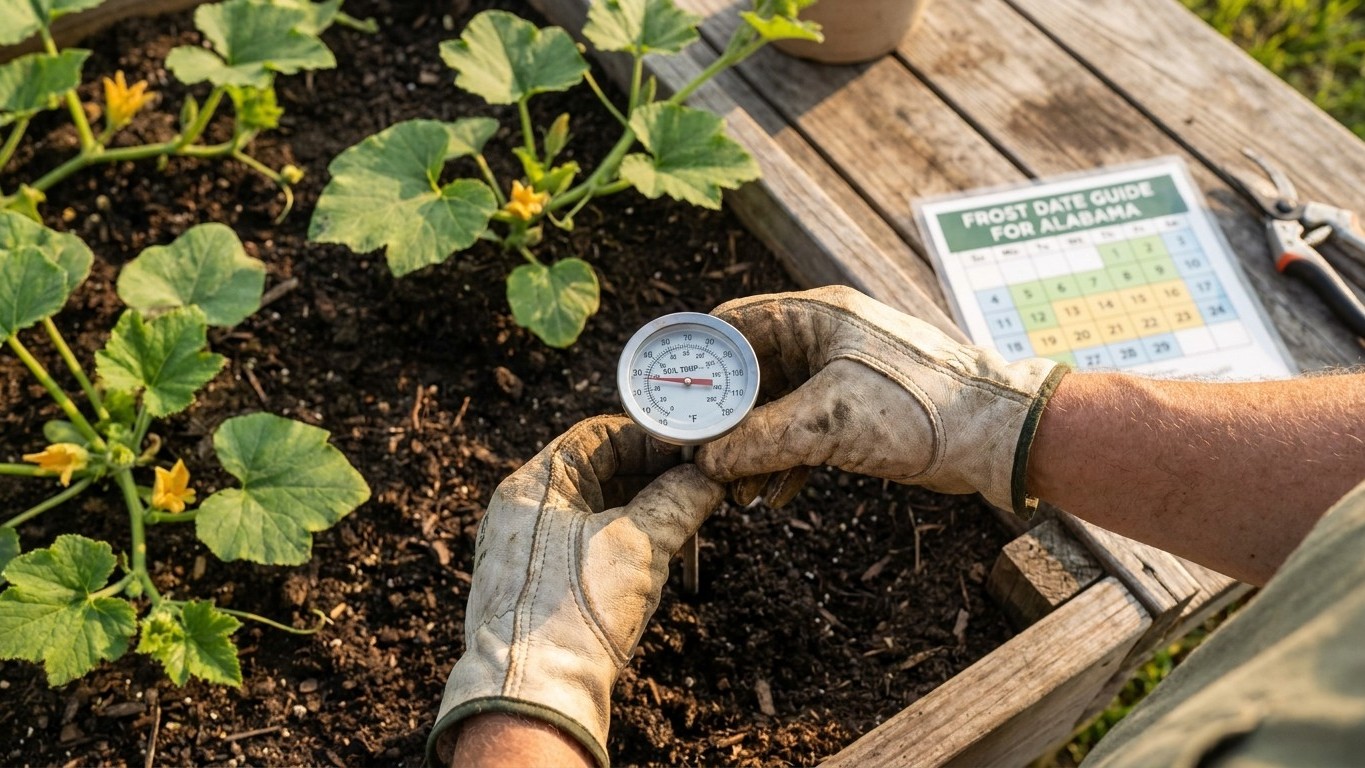

In the Boise area, pumpkin seeds go into the ground once the soil warms to 65 F, generally sometime between mid-May and early July depending on elevation and how far east or north you garden. Wait too long, though, and fall frost arrives before the fruit finishes ripening. The real limit isn’t the date you sow. It’s the date the vine flowers.
The short answer
Around Boise, station USW00024131 puts the first fall frost between October 7 and October 21, based on NOAA NCEI’s 1991-2020 Climate Normals. That’s the hard stop. Everything about when to sow works backward from it, because a pumpkin needs 45 to 55 days after flowering, not after seeding, to go from blossom to a ripe, hard-skinned fruit, according to Utah State University Extension.
Run the math both ways. Take the earliest frost date, October 7, and subtract the longest maturation window, 55 days, and you land on August 13. Take the latest frost date, October 21, and subtract the shortest window, 45 days, and you land on September 6. That gives a range: the last flower that still has a shot at ripening opens somewhere between August 13 and September 6. Gardeners who want a safety margin should treat mid-August as the real cutoff and count anything blooming after Labor Day as a gamble.
This is where the Boise number needs a hard caveat. USW00024131 sits in a low valley, one of the warmest and longest-season spots in the state. Most of Idaho sits higher and colder, whether that’s the Panhandle, the Magic Valley benches, or the mountain towns of central Idaho. A shorter growing season there means the safe flowering window closes earlier than August 13, and this page doesn’t carry frost data for those elevations. If you garden above the valley floor, treat the Boise dates as the loose end of the rope, not the norm.
What this means in practice: a pumpkin plant that’s still setting new flowers in the first week of September, in the Boise area, is racing a clock it will likely lose. Those late blossoms may open, may even set small green fruit, but they won’t have enough days left before frost to finish coloring or hardening the rind.
When to sow here
- Start with the last spring frost. In the Boise area it falls between April 23 and May 7, per the same NOAA NCEI normals. That date tells you when the air stops freezing. It does not tell you when to plant pumpkins.
- Wait for the soil, not the air. Soil temperature lags behind air temperature by weeks, not days. A yard can clear its last frost in late April and still have cold, wet soil that won’t support pumpkin germination for some time afterward. Sowing into 60 F soil instead of 65 F soil typically means slower, patchier germination and weaker seedlings.
- Expect the realistic sowing window to fall well into May, often later. Given the lag between the April 23-May 7 frost date and the point soil actually holds at 65 F, most direct sowing in the Boise area happens from mid-May onward, sometimes not until early June in a cool, wet spring.
- Use row covers to move that date earlier. Clear or lightweight row covers trap solar heat over the bed during the day, warming the soil faster than open air alone. Gardeners who use them can often sow roughly two weeks earlier than they could with bare soil, though the covers need venting or removal once seedlings emerge and daytime temperatures climb.
- Never sow by the frost date alone. Treating April 23 or May 7 as “planting day” is the single most common mistake here. The seed can go in the ground and simply sit, cold and unresponsive, until the soil catches up.
- Count backward from your latest safe flowering date. Section one puts that at roughly August 13 to September 6 in the Boise area. Utah State University Extension doesn’t publish a fixed number of days from seed to first flower, so there’s no single figure to plug in here, but sowing any later than early July leaves little room for the plant to grow, vine out, and bloom before that flowering deadline arrives.
What goes wrong here
- A late flower that never colors. A vine that keeps producing new blossoms into late August or September, in the Boise area, is setting fruit that won’t get the full 45 to 55 days it needs before frost. The fruit may size up but stay pale green and soft-skinned. The fix is to pinch off new flowers and small, unlikely-to-finish fruit once you pass the safe flowering window, so the plant redirects energy into the pumpkins that still have time.
- A fruit caught by frost before harvest. Even a fruit that colored up properly can sit exposed once the first fall frost hits between October 7 and October 21. Harvest with the stem attached before frost arrives, and if a frost is forecast while fruit is still finishing, cover the plants overnight with blankets or tarps rather than risk losing the crop outright.
- A vine that dies back before the skin hardens. Foliage can collapse from disease, drought stress, or pest pressure well before the fruit is ready, leaving pumpkins to ripen on a dead or dying vine with a soft rind that won’t store well. Squash bugs and cucumber beetles are common culprits behind early vine collapse in Idaho gardens; see this site’s dedicated pages on squash bugs on pumpkins in Idaho and cucumber beetles on pumpkins in Idaho for identification and control specific to those pests.
- Fruit stored the wrong way after a clean harvest. Even a properly ripened pumpkin, pulled before frost with its stem intact, needs somewhere it won’t freeze afterward. Utah State University Extension’s guidance stops there and doesn’t publish a specific storage temperature, humidity level, or keeping time, so beyond keeping pumpkins away from freezing conditions, there’s no further documented figure to follow here.
Common questions
Can I start pumpkin seeds indoors to get ahead of the Boise soil temperature lag?
Starting seeds indoors and transplanting once soil conditions allow is a common way to sidestep the wait for 65 F soil, though transplants still need hardening off before they go outside, and the same flowering deadline of roughly August 13 to September 6 still applies once they’re in the ground.
What happens if a flower opens right at the edge of that August 13 to September 6 window?
It’s a genuine toss-up. A flower opening on the early end, closer to August 13, has the full 55-day cushion working in its favor. One opening in early September is relying on the latest possible frost date, October 21, arriving on schedule, and Idaho’s actual frost date varies by 14 days within that documented range alone.
Does gardening above the Boise valley change these numbers?
Yes, and this page doesn’t carry frost or soil-temperature data for higher elevations. Higher, colder parts of Idaho see later last-spring frosts, earlier first-fall frosts, or both, which compresses the whole calendar and pushes the safe flowering window earlier than what’s documented here for the Boise station.
Is there a way to keep a nearly ripe pumpkin from freezing on the vine?
Covering the plant overnight with blankets, tarps, or similar material when frost is forecast can buy a fruit a few more days to finish coloring. Once the fruit is fully colored with a hardened rind, harvesting it with the stem attached and moving it somewhere it won’t freeze is the documented next step.