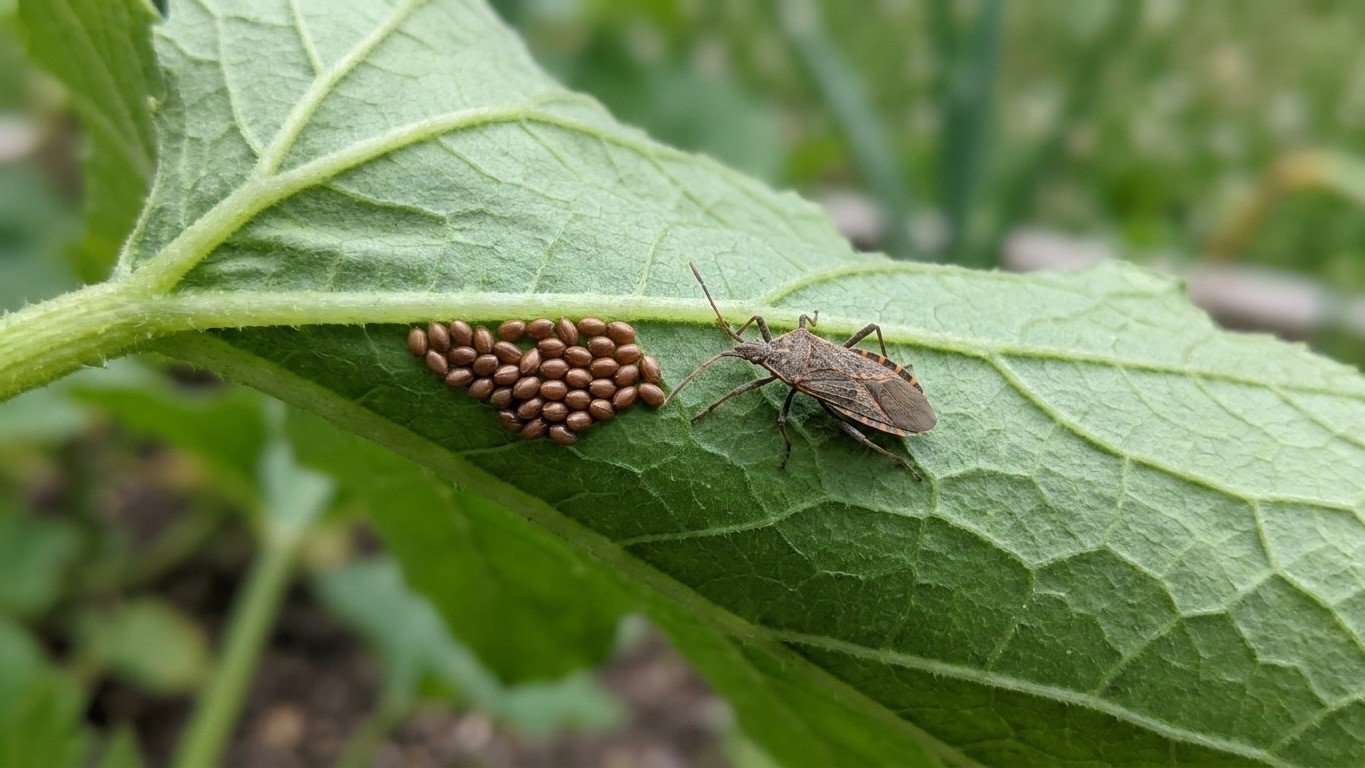

Squash bugs show up in Idaho gardens right around late June, once soil temperatures climb and squash and pumpkin vines start putting out real growth. The insects overwinter as adults in leaf litter, garden debris, and wood piles, then emerge when daytime temperatures hold steady above 70°F for several days in a row. In the Treasure Valley, that often means the first week of June; in higher-elevation spots like the Wood River Valley or parts of eastern Idaho, expect a two-to-three week delay. Once they’re active, the fastest way to stop damage is a combination of early scouting, egg removal, and trap cropping before populations explode in August.
What a Squash Bug Actually Looks Like

Adult squash bugs (Anasa tristis) run about five-eighths of an inch long, flat-backed, and brownish-gray with faint orange stripes along the abdomen edge. They’re often mistaken for stink bugs, but squash bugs are narrower and move faster when disturbed. Nymphs are the stage most gardeners never notice until it’s too late: gray, spider-legged, clustered in tight groups on the undersides of leaves. They go through five molts before reaching adulthood, and a single cluster can strip a leaf of its sap in days.
Eggs are the easiest identifier. They’re bronze-copper, laid in neat rows or diamond clusters, almost always tucked into the V formed by leaf veins on the underside. A female can lay over 200 eggs across a season, which is why one missed cluster in early July can mean forty adult bugs patrolling your pumpkin patch by Labor Day.
Squash Bug vs. Squash Vine Borer
Idaho gardeners frequently confuse the two, but the damage patterns differ. Squash bugs suck sap from leaves and stems, causing yellow speckling that turns brown and crispy, a condition sometimes called “anasa wilt.” Squash vine borers tunnel inside the stem near the base, and you’ll usually spot a small pile of frass (sawdust-like debris) at the entry hole. Both pests target the same host plants, but squash bugs are the more common and more manageable problem across most Idaho counties.
Idaho’s Growing Season and Squash Bug Timing
Idaho spans USDA hardiness zones 3 through 7, and that range matters more than most pest guides admit. In zone 6 and 7 areas around Boise, Nampa, and Caldwell, squash bugs can complete two generations in a single season if summer heat holds through September. Farther north in zone 4 territory, around Coeur d’Alene or Sandpoint, gardeners typically deal with just one generation, with adults appearing later, closer to mid-June, and nymph populations peaking in late July rather than early July.
Elevation adds another layer. Gardens above 4,500 feet, common in parts of Custer or Blaine County, see delayed emergence and a shorter window of nymph activity because cooler nights slow molting. That’s a genuine advantage for mountain gardeners: fewer generations mean less pressure by the time squash and pumpkins are sizing up for harvest.
Statewide, the highest-risk window falls between mid-July and late August, when first-generation nymphs mature into egg-laying adults. This is also when squash and zucchini plants are under the most stress from summer heat, which makes them more vulnerable to the wilt squash bugs cause. A plant that could shrug off light feeding in June sometimes collapses under the same pressure in August simply because it’s already stretched thin by irrigation demands and heat.
Why Squash Bugs Favor Certain Idaho Gardens
Squash bugs aren’t picky about variety, but they show clear preferences. Yellow summer squash and zucchini get hit hardest, followed by pumpkins and winter squash like butternut and acorn. Cucumbers and melons, though in the same plant family, tend to see lighter pressure. Gardeners who rotate crops within the same small plot, planting squash in the same corner of the yard every year, tend to see worse infestations because overwintering adults emerge close to where they fed last season.
Mulch and garden debris play a bigger role than most people expect. Squash bugs love hiding under straw mulch, old boards, and dense ground cover during the day, then move out to feed at dusk. Idaho’s dry summer climate actually works against gardeners here in one specific way: the insects seek out the humidity and cover that mulch provides, so heavily mulched squash beds sometimes host higher populations than bare-soil plantings, even though mulch is otherwise good practice for water retention in the state’s arid climate.
Monitoring: Catching the Problem Before It Spreads
Checking the undersides of leaves twice a week starting in early June gives Idaho gardeners the best shot at controlling squash bugs without pesticides. Look specifically at the base of the plant and the crown, where the stem meets the soil, since that’s where adults congregate before egg-laying begins in earnest.
A simple trap works well here: lay a flat board or a piece of cardboard near the base of squash plants in the evening. Squash bugs gather underneath overnight seeking shelter, and in the morning you can lift the board and remove them by hand or drop them into a bucket of soapy water. This method, low-tech as it is, remains one of the most effective options for home gardens because it targets adults before they reproduce.
Yellow sticky traps placed near the base of plants can help detect early activity, though they’re better for monitoring than for actual population control since squash bugs aren’t strongly attracted to yellow the way aphids or whiteflies are.
Cultural and Physical Controls That Work in Idaho’s Climate
Row covers are one of the most reliable tools available, especially useful given Idaho’s relatively short frost-free window in many regions. Covering young squash plants at transplant time and keeping them covered until flowering starts (when pollinators need access) blocks adult squash bugs from finding host plants during the critical early establishment period. Once flowers appear, covers need to come off for pollination, which is exactly when scouting should intensify.
Removing garden debris each fall matters more in Idaho than in milder climates, because the state’s cold winters mean overwintering adults are concentrating in fewer, more sheltered spots: under boards, in dense mulch, inside hollow plant stems left standing. Clearing squash and pumpkin vines completely after harvest, rather than tilling them under, removes a major overwintering site and can measurably reduce the following year’s population.
Crop rotation helps too, even in small home gardens. Moving squash plantings to a different section of the yard each year, ideally at least 20 feet from the previous year’s site, forces emerging adults to search farther for host plants, and some simply won’t find them before dying off.
Companion Planting: What Actually Holds Up
Nasturtiums and marigolds get mentioned constantly as squash bug deterrents, but the research support is thin. What does have some backing is interplanting squash with radishes or icicle radish varieties left to bolt, since the strong-smelling foliage can mask host-plant cues that squash bugs use to locate their targets. Results vary by garden, and this shouldn’t replace scouting and hand removal as the primary defense.
Biological and Chemical Options
Natural enemies of squash bugs exist in Idaho, including the tachinid fly Trichopoda pennipes, which parasitizes adult squash bugs by laying eggs on their bodies. Gardeners who avoid broad-spectrum insecticides give these natural predators a better chance to establish. Encouraging general beneficial insect populations through diverse plantings supports this kind of biological control, though it won’t eliminate an established infestation on its own.
For chemical control, insecticidal soap and neem oil work best against young nymphs, ideally applied in the first two weeks after eggs hatch, before nymphs harden and become harder to kill with contact sprays. Adult squash bugs have a tough exoskeleton that makes them resistant to many of the same products. Timing sprays for early morning or evening, when bees are less active, protects pollinators visiting squash blossoms during the day.
Products containing pyrethrins or carbaryl offer stronger knockdown for heavy infestations, but Idaho State University Extension recommends reserving these for cases where cultural controls have already failed, since they also kill the parasitic flies and other predators working against squash bugs naturally. Always check current label instructions and preharvest intervals before applying anything to plants intended for food.
What to Do If You’re Already Seeing Damage
Wilting leaves that don’t recover overnight, even after watering, are the clearest sign of established feeding damage. At that point, remove and destroy the most heavily infested leaves rather than trying to save them, since they’re already compromised and serve mainly as a breeding ground for the next generation of nymphs.
Plants under three weeks old are far more vulnerable to squash bug damage than mature vines, which can often tolerate moderate feeding without significant yield loss. If squash bugs show up on young transplants, that’s the moment for the most aggressive intervention: hand removal twice daily, soap sprays on nymph clusters, and board traps set every evening until the population visibly drops.
One detail that surprises a lot of Idaho gardeners: squash bug eggs can survive brief exposure to duct tape removal, the trick of pressing tape over an egg cluster and peeling it off. It works reasonably well on smooth leaf surfaces but often leaves a portion of the eggs intact on textured or hairy leaves, common on many squash varieties. Scraping with a fingernail directly into a cup of soapy water remains the more reliable method for anyone dealing with a serious infestation.