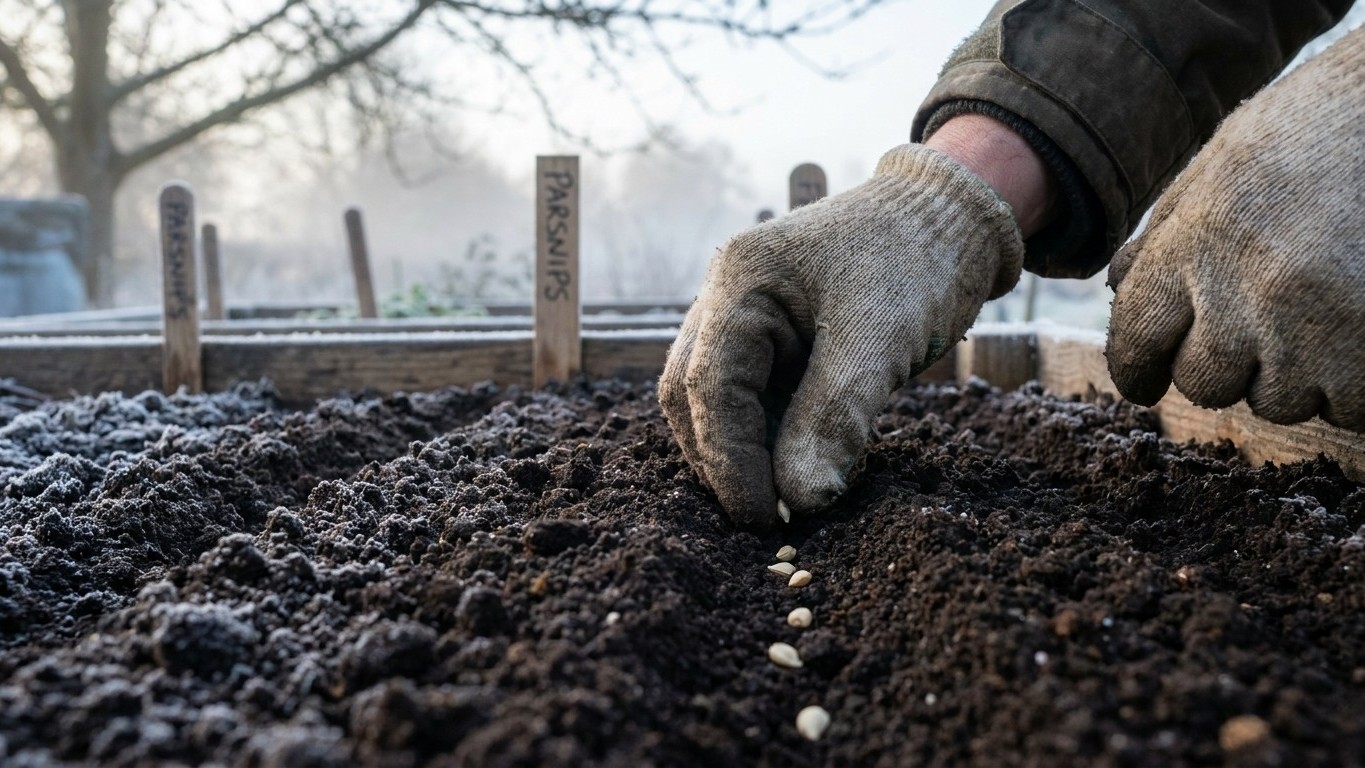

Sow parsnip seed directly in the ground in central Iowa between late March and mid-April, roughly two to three weeks before the last spring frost. That window lets seedlings emerge before the soil warms too far, gives the 100- to 120-day root crop time to mature well ahead of the first fall frost, and still leaves several cool, frosty weeks in October for the roots to sweeten before harvest.
The short answer
The question that actually decides whether a parsnip patch is worth the bed space isn’t the calendar, it’s the cold. Does this stretch of Iowa deliver several genuinely frosty weeks, or just a handful of light dips before winter backs off? At the Des Moines reference station, the mean daily minimum of the coldest month sits at 13.8°F. That’s not a record low from some unusual cold snap, and it’s not a monthly average either. It’s the typical low temperature the coldest month produces, night after night, across three decades of data. A figure that far below freezing tells you winter here isn’t a formality.
That matters for parsnips specifically because the crop’s flavor doesn’t come from the root simply reaching size. It comes from exposure to real frost, which converts stored starch into sugar as the plant’s cells respond to cold stress. A garden where winter barely dips below freezing can still grow a fine-looking parsnip, but the root stays starchy, never quite crossing into that sweet, nutty flavor gardeners plant the crop for in the first place. A mean coldest-month minimum in the mid-teens is the opposite problem. It’s cold enough, reliably enough, that roots left in the ground after fall growth slows will get the sustained chill they need.
So the answer isn’t just “yes, you can grow parsnips in Iowa.” It’s that Iowa’s winter does the specific job parsnips require. A hardiness zone number alone wouldn’t tell you that, because zone ratings describe whether a perennial plant survives, not how many frosty weeks a biennial root crop like this gets exposed to before harvest. The 13.8°F figure is the more useful number here: it confirms this is a climate where the crop sweetens rather than one where it merely grows. The sowing date decision that follows exists to make sure the root reaches full size in time to actually receive that cold exposure, rather than getting caught immature when the ground freezes solid.
Does the season fit?
Parsnip seed goes into the ground where it will grow, since the crop doesn’t transplant well, and the whole 100- to 120-day clock starts at seeding, not at the point seedlings finally break the surface. Here’s how the arithmetic works out against Iowa’s frost dates.
- Start with the last spring frost window for this reference station: April 12 to April 24.
- Subtract two to three weeks for the recommended sowing timing, which puts seed in the ground somewhere between March 22 and April 10.
- Add the germination lag. Parsnip seed is notoriously slow, taking 14 to 21 days to emerge, so seedlings won’t actually show above ground until roughly early April at the earliest, or as late as the start of May for a later sowing.
- Add the 100 to 120 days the crop needs from seeding, not from emergence, to reach full size. A March 22 sowing reaches maturity somewhere between late June and mid-July. An April 10 sowing lands between mid-July and early August.
- Compare that maturity window against the first fall frost dates for this station: October 14 to October 25.
- The gap between “root reaches maturity” and “first fall frost arrives” runs to roughly ten to twelve weeks, even for the later sowing date.
That’s a comfortable fit, not a tight one. Iowa’s growing season doesn’t just barely accommodate the 100 to 120 days parsnips need. It leaves a wide cushion of additional weeks where the mature root sits in cooling soil, absorbing exactly the frost exposure that builds sweetness, before the ground finally freezes hard enough to force harvest. Gardeners in shorter-season territories often have to gamble on an early sowing and hope frost holds off; that calculation isn’t the pressure point in Iowa.
What goes wrong here
- Forked roots from heavy or stony ground. Much of Iowa’s native soil runs heavy and clay-rich, which is exactly the texture parsnip roots split and fork against as they push down. Utah State University Extension recommends deep, sandy soil as the ideal, and says heavy ground has to be double dug, loosened well past the twelve-inch mark, before seed goes in.
- Forked roots from overwatering. This is a separate cause from soil texture, not the same problem restated. Keeping the bed consistently soggy, rather than evenly moist, encourages the taproot to split as it searches for a path through waterlogged ground. The fix is steady, moderate watering, not heavy soaking on a rare schedule.
- Sowing too late and running the season short. Push seeding past mid-April and a 120-day root can land its maturity date uncomfortably close to the first fall frost, trimming away the buffer weeks that would otherwise let the crop sit through repeated cold snaps before harvest.
- Giving up on germination too early. Parsnip seed can take a full three weeks to show itself. Gardeners who disturb or re-sow a bed after ten days of bare soil are often undoing seed that simply hadn’t broken the surface yet.
- Harvesting before the frost does its work. Iowa’s winter is cold enough to sweeten the crop, but only if the roots are left in the ground long enough to feel it. Pulling parsnips right at first frost, rather than after several weeks of continued cold exposure, still leaves the flavor underdeveloped.
Common questions
How early can I sow parsnip seed in Iowa?
Somewhere between roughly March 22 and April 10, based on the two-to-three-week window ahead of this station’s last spring frost dates of April 12 to April 24. Waiting past mid-April narrows the buffer between root maturity and the first fall frost.
Why haven’t my parsnip seeds come up yet?
Give it time before assuming failure. Germination takes 14 to 21 days for this crop, considerably longer than most root vegetables, so bare-looking soil at the two-week mark is normal, not a sign the seed didn’t take.
Do I need frost before harvesting parsnips?
Yes. The sweetness gardeners grow parsnips for comes from several weeks of frosty exposure, which converts the root’s stored starch into sugar. Pulling roots too soon after they reach size, before that cold has had time to work, leaves the flavor starchier than expected.
What kind of soil do parsnips need in Iowa gardens?
Deep, sandy soil is the ideal. Iowa’s naturally heavier clay-loam ground needs to be double dug well below the twelve-inch mark before sowing, or the taproot is liable to hit resistance and fork rather than grow straight down.