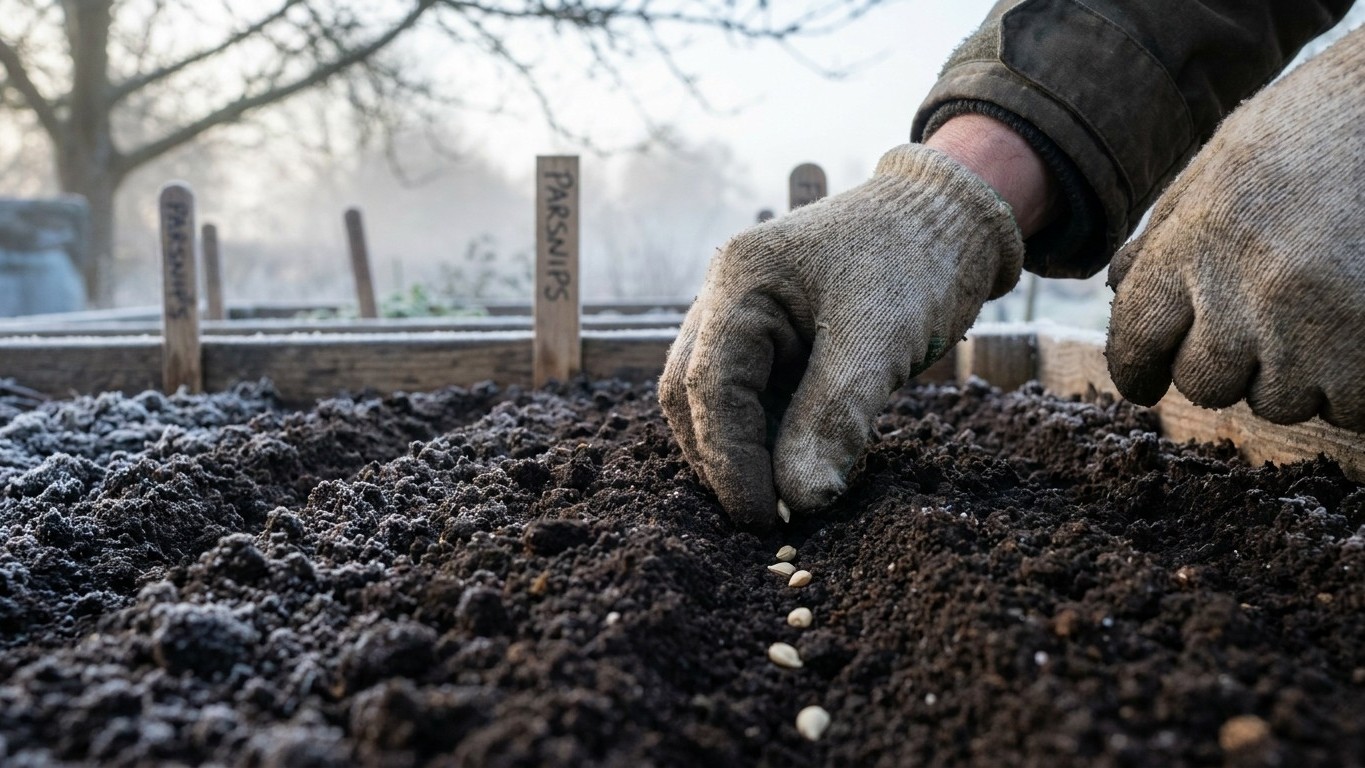

In Kansas, sow parsnip seed two to three weeks before the last spring frost, directly into the garden bed where it will grow. Using the Wichita reference station, that last frost falls somewhere between April 4 and April 18, which puts most sowing dates in mid-March to early April. The seed is slow: germination takes 14 to 21 days, and nothing shows above ground before then. The real question isn’t only when to sow, though. It’s whether Kansas cold runs deep enough to turn a bland root into a sweet one.
The short answer
Does Kansas hand a parsnip several weeks of real frost, or just a mild dip that passes for winter? At the Wichita reference station, the mean daily minimum temperature for the coldest month sits at 22.5°F, according to NOAA NCEI Climate Normals covering 1991-2020. That figure isn’t a record low pulled from one unusually bad night. It’s the average nightly floor across the entire coldest month, and it sits well below freezing.
That number matters more than any hardiness zone printed on a seed packet. Hardiness zones describe whether a perennial survives winter in the ground; parsnip sweetening runs on a different clock entirely. The starch stored in the root only converts to sugar after the plant sits through several weeks of cool, frosty weather, according to Utah State University Extension. A garden could sit in a zone mild enough to keep a fig tree alive year-round and still never deliver that conversion, because the nights never dip cold enough for long enough.
Kansas doesn’t have that problem. A mean minimum of 22.5°F across an entire month means freezing nights aren’t a rare event here, they’re the routine. Roots left in the ground once they reach full size get weeks of that cold exposure before the soil locks up hard enough to stop a shovel. That’s the mechanism that turns a parsnip from merely edible into the sweet, nutty root most gardeners are actually chasing.
So the short answer splits in two. Will a parsnip grow in Kansas? Yes, easily, given the season length covered below. Will it sweeten? Also yes, and here Kansas has an edge over a genuinely mild-winter state. The cold isn’t marginal. Gardeners where the coldest month barely dips below freezing on average have to hope for an unusually harsh cold snap just to get any sweetening at all. Kansas gardeners don’t need that kind of luck. A routine winter here does the job the sugar conversion needs, provided the roots stay in the ground rather than getting pulled the day they look full-sized.
Does the season fit?
Parsnips take 100 to 120 days from seeding, not from transplant, since the crop goes straight into the ground as seed and never tolerates having its taproot disturbed. Lay that requirement against the Wichita frost window and the arithmetic works out generously for Kansas gardeners.
- Start with the reference last spring frost window: April 4 to April 18.
- Move back two to three weeks to find the sowing window: seed goes into the ground roughly mid-March to early April, ahead of that frost date.
- Add the germination lag. Parsnip seed is notoriously slow, taking 14 to 21 days to sprout, so a mid-March sowing might not show a single seedling until early April.
- Add the 100 to 120 days to maturity, counted from the sowing date itself. A mid-March sowing reaches full root size somewhere between late June and mid-July. An early-April sowing lands closer to mid-July through late July.
- Compare that maturity window against the reference first fall frost: October 23 to November 2. Roots reach full size roughly three to four months before that first frost even arrives.
That gap is the whole story. In a short-season territory, the sowing date and the frost window sit close enough that a late spring frost or an early fall freeze can wreck the crop before it matures. Kansas isn’t that tight. The season fits comfortably, with enough slack that roots can sit fully grown in the bed for weeks before the first freeze even shows up, then keep sitting through however many frosty weeks it takes to sweeten, before the ground turns too hard to dig. Gardeners in the western part of the state, where frost tends to arrive earlier and soil warms later at elevation, should check their own county’s dates rather than assume the Wichita numbers apply everywhere; suburban and rural gardens typically see frost land a week or two earlier in fall and later in spring than an airport station does.
What goes wrong here
Kansas soil and Kansas weather don’t sink a parsnip crop often, but when they do, it’s usually one of these four problems.
- Forked roots from heavy or stony ground. Kansas prairie soils run heavy on clay in many counties, and a parsnip taproot forks the moment it hits compacted subsoil or a buried rock. Utah State University Extension recommends deep sandy soil, or heavy soil double dug to loosen it well below the depth the root will reach; skipping that step is the single most common cause of a stubby, split harvest.
- Forked roots from overwatering. This is a separate cause, not the same problem in different clothes. Too much water, especially inconsistent watering that swings from soggy to dry, pushes the root to split as it searches for an easier path downward. Even a well-loosened bed forks if it’s kept waterlogged; water evenly and let the top inch dry between waterings.
- A season that runs out. Rare in Kansas given the arithmetic above, but it happens when seed goes in late, often because a gardener waits too long hoping to dodge a late frost. Sowing right at the front edge of the window, mid-March to early April, keeps the full 100 to 120 days available before fall frost closes in.
- A winter too mild to sweeten. Unlikely given a coldest-month mean minimum of 22.5°F, but it still happens when roots are pulled too early, right after reaching size, before any real frost exposure. The fix isn’t climate, it’s patience: leave mature roots in the ground through several frosty weeks before digging, mulching lightly if needed to keep the soil workable for harvest.
Common questions
Can I start parsnip seed indoors and transplant it in Kansas?
No. Parsnips are sown directly in place because the long taproot doesn’t tolerate transplanting; disturbing it produces the same forked, stunted root that heavy soil causes on its own. Seed goes straight into the bed during the mid-March to early-April window.
My county’s last frost date isn’t the same as Wichita’s. Does that change my sowing date?
Yes. The April 4 to April 18 window comes from a single reference station, and rural or suburban gardens commonly see their last frost land a week or two later, sometimes more at higher elevation. Check local frost records before committing seed to the ground.
How long before parsnip seed actually sprouts?
Fourteen to 21 days, which is unusually slow for a garden vegetable. Don’t disturb the bed or re-sow during that stretch; bare-looking soil at day 10 is normal, not a failed planting.
Do I need to protect parsnips before the first Kansas freeze in fall?
Not from the freeze itself, since that cold is exactly what sweetens the root. The only protection worth adding is a light mulch layer once the ground starts to firm up, which keeps soil workable enough to dig roots out through the frosty weeks rather than fighting frozen dirt with a shovel.