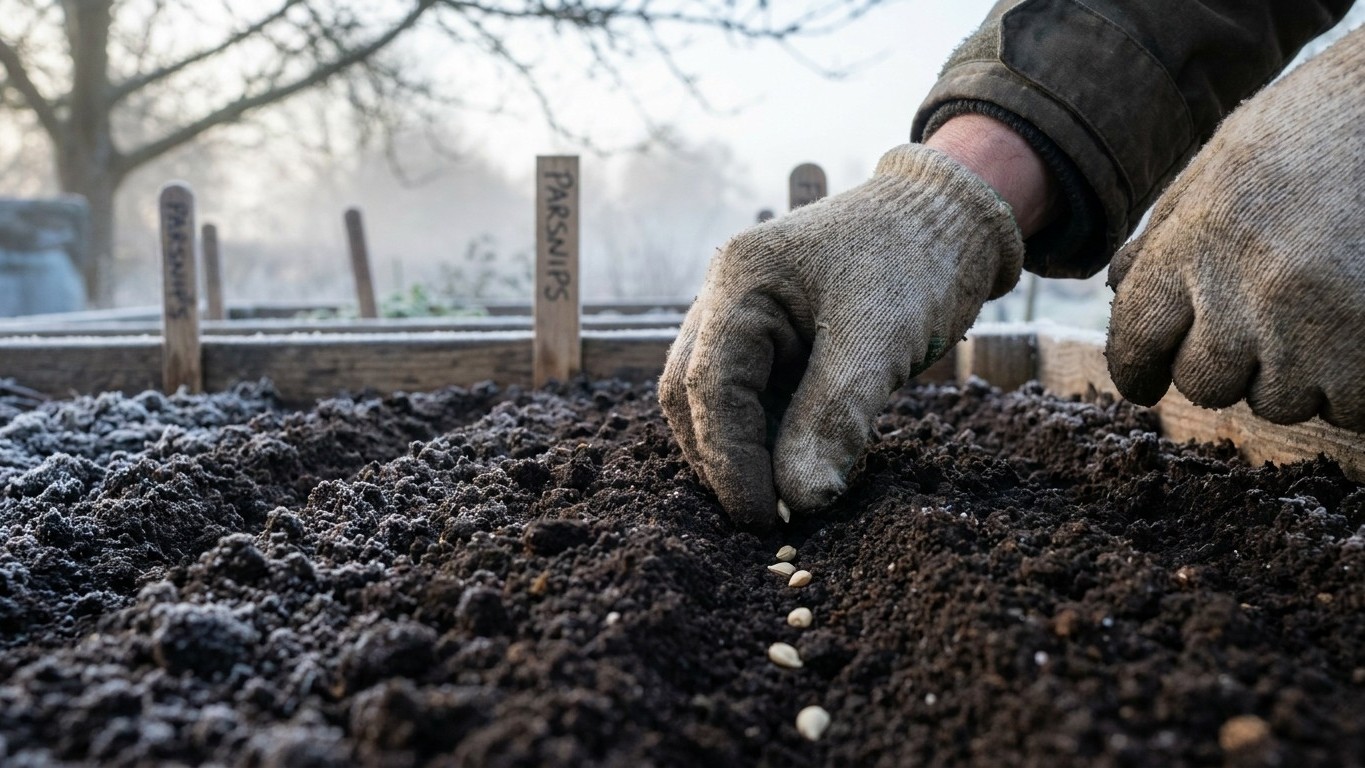

The safe window for sowing parsnip seed in Montana runs from mid to late April, roughly two to three weeks ahead of the last spring frost. Germination is slow, so patience matters here more than in most vegetable beds. Left in the ground through the fall’s frosty weeks, the roots convert their starch to sugar, which is the whole point of growing this crop at all.
The short answer
The number that matters most for parsnips is not the hardiness zone printed on a seed packet. It is the mean minimum temperature of the coldest month, and in the Billings area that figure sits at 17.9°F, drawn from NOAA NCEI Climate Normals covering 1991-2020. That is a genuinely cold reading, not a borderline one, and it settles the question of whether this state gives parsnips what they need.
Parsnips do not just tolerate frost. They require repeated exposure to it. According to Utah State University Extension, the roots taste best only after several weeks of cool, frosty conditions, because that cold is what triggers the conversion of stored starch into sugar. A parsnip pulled from warm soil is edible but bland, sometimes almost woody. The same root left in place through a string of freezing nights turns noticeably sweeter, closer to what people expect from a well-grown parsnip.
A coldest-month average minimum near 18°F means Montana winters deliver far more than a token frost or two. This is not a state where gardeners have to worry about a mild season shortchanging the crop. The cold arrives, it sticks around, and it does the work the plant is built for. That distinction is worth being precise about, because a comfortable growing zone and a genuinely frosty stretch of weather are two different things, and only the second one sweetens a parsnip. A zone rating tells you whether a perennial survives winter. It says nothing about whether an annual root vegetable gets its flavor payoff, and in Montana’s case, the frost exposure itself is the deciding factor, not any zone number.
So the practical takeaway is straightforward: sow in mid to late April, let the crop grow through summer, and resist the urge to harvest everything before the first hard frosts of fall. The cold that follows is not a threat to the crop at this stage, it is the final step in growing it. Gardeners who dig parsnips the moment they reach size, before the frosty weeks have had a chance to work, are leaving the best part of the payoff in the ground.
Does the season fit?
Parsnips need 100 to 120 days counted from the day the seed goes into the ground, since they are sown directly in place and never transplanted. Working out whether that timeline fits Montana’s frost calendar takes a few simple steps.
- Start with the last spring frost. For the Billings reference station, NOAA NCEI puts the 30-70% probability band for the final 32°F freeze between April 29 and May 10.
- Move the sowing date back two to three weeks. That places seed in the ground from roughly mid-April through the last week of April, ahead of the last frost, which parsnip seed tolerates well since it germinates slowly regardless of soil temperature.
- Add the germination lag. Utah State University Extension notes parsnip seed is slow to sprout, and gardeners should expect 14 to 21 days before seedlings appear. This is not a sign of failed seed. Digging up the row and resowing at this stage wastes a second batch of seed for nothing.
- Count forward 100 to 120 days from sowing. From a mid-April sowing date, the 120-day mark lands in mid-August, well before autumn cold sets in.
- Check that against the first fall frost. The same NOAA NCEI data set places the first 32°F freeze at the Billings station between October 1 and October 14.
- Compare the two ends. From a mid-April sowing to an early-October frost is roughly 170 days, and even to the later October 14 date it runs close to 180 days. Against a crop that only needs 100 to 120 days, that leaves a wide, comfortable margin, not a tight one.
That margin is what makes Montana workable for parsnips despite its short summers by national standards. The growing window is not just adequate, it runs 50 to 80 days longer than the crop strictly requires, and that surplus is exactly what allows roots to sit in the ground through the first frosty weeks of fall without any risk of the season ending before they mature. Mountain valleys away from the Billings area see frost dates shift earlier and later, sometimes by weeks, so gardeners in higher, colder pockets of the state should treat this window as a starting point rather than a guarantee.
What goes wrong here
- Forked or split roots from heavy or stony ground. Parsnips send a single taproot straight down, and anything that blocks that path, compacted clay, buried rocks, or a hardpan a foot down, forces the root to split into two or three legs. Utah State University Extension recommends deep, sandy soil and says heavy ground needs to be double dug before sowing, loosening the bed 12 to 18 inches deep and pulling out stones as they turn up.
- Forked roots from uneven watering. This is a separate cause from soil texture, and it happens even in good ground. Alternating between a bone-dry bed and a heavy soak stresses the taproot and can cause it to fork or grow stubby side roots. Even, moderate moisture through the growing season, rather than infrequent deep soakings, keeps the root growing straight.
- A shortened season in colder mountain valleys. The Billings-area frost dates used above describe one of the milder valleys in the state. Elsewhere in Montana, frost can strike in any month, and a garden sitting in a cold-air pocket may get a much narrower window than the arithmetic above suggests. Sowing at the earliest safe date and picking the warmest available microsite in the yard helps close that gap.
- Frozen ground blocking harvest. Because Montana’s coldest month averages a minimum near 18°F, soil can lock up hard well before a gardener gets around to digging the crop. A heavy layer of straw mulch spread over the bed before the ground freezes solid keeps the soil workable, so the sweetened roots can still be pulled through late fall and into early winter instead of being trapped under frozen earth.
Common questions
Can I start parsnip seed indoors and transplant it later?
No. Parsnips are sown directly where they will grow. The taproot is easily damaged by transplanting, which is one of the more common causes of forked or stunted roots.
Why hasn’t my parsnip seed sprouted after two weeks?
That is normal. Utah State University Extension notes germination takes 14 to 21 days, considerably slower than most garden vegetables. Digging up the row to check often does more harm than waiting it out.
Should parsnips stay in the ground over a Montana winter?
Yes, for flavor. The roots need several weeks of frosty weather to convert starch to sugar. Mulching heavily before the ground freezes keeps the bed diggable so the crop can still be harvested once that sweetening has happened.
What kind of soil should I prepare before sowing?
Deep, sandy soil is what Utah State University Extension recommends. Where the ground is heavier, double digging the bed and removing stones before sowing gives the taproot a clear, straight path and avoids the forking that heavy or rocky ground otherwise causes.