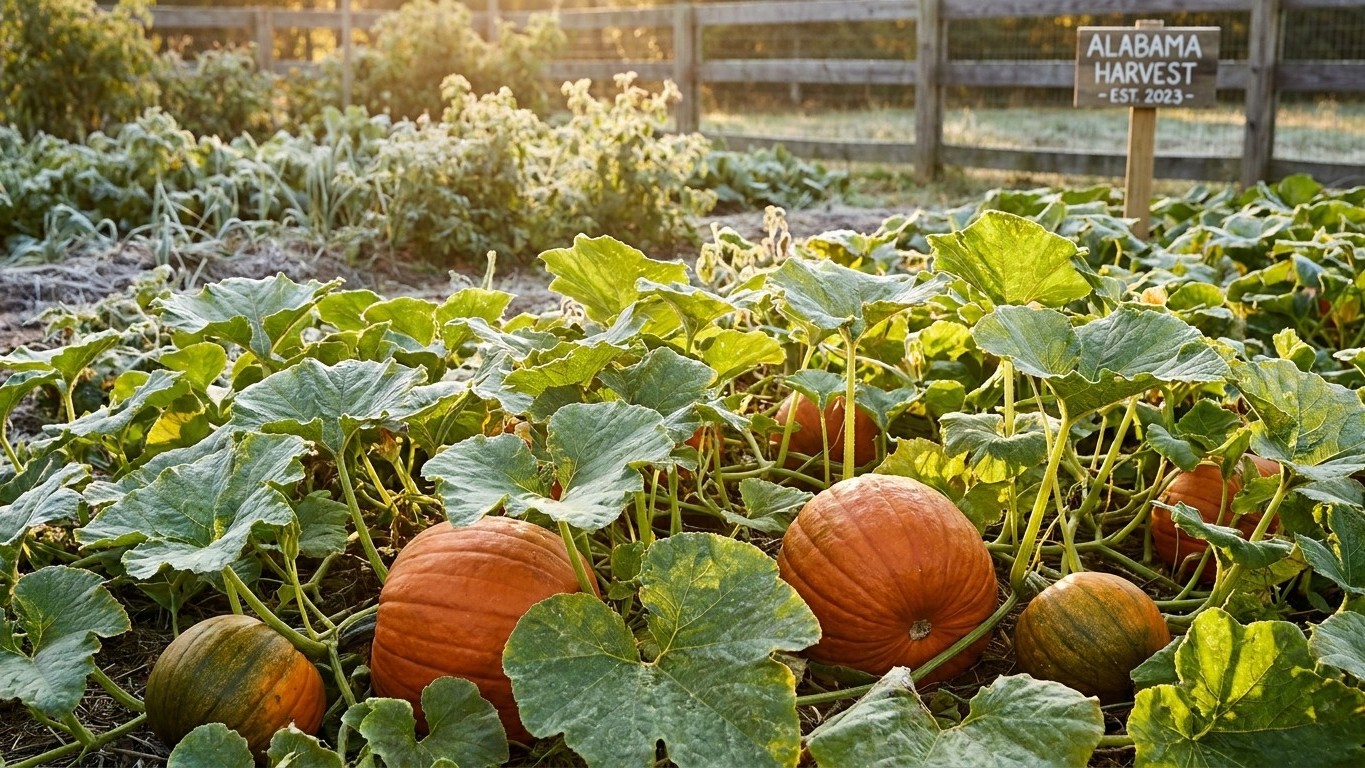

In Montana’s milder valleys, the fall frost usually arrives between October 1 and October 14. Count back 45 to 55 days from that window and you get the latest date a pumpkin flower can open and still finish ripening. Plant early enough, and yes, pumpkins will Ripen Before Frost here. Plant late, and the odds turn against you fast.
The short answer
Start with the frost data itself. NOAA’s 1991-2020 Climate Normals put Billings’ first fall frost somewhere between October 1 and October 14, based on the 30-70% probability band for a 32°F freeze. That’s not a single day on a calendar. It’s a two-week window, and the actual date in any given season could land anywhere inside it, or, in a rough year, slip outside it entirely.
Now work backwards. Utah State University Extension’s guidance on pumpkins in the garden puts the maturation clock at 45 to 55 days after flowering, not after sowing, not after transplanting. That distinction matters more than almost anything else on this page. A pumpkin plant can sit in the ground for weeks before it ever opens a female flower, and none of that time counts toward the ripening clock. Only the days after flowering do.
Run the subtraction using the earlier, safer edge of the frost window first. October 1 minus 55 days lands you around August 7. That’s the conservative cutoff: if your flower opens by early August, you’ve given the fruit the full 55-day cushion and there’s still buffer room before the earliest frost risk.
Now run it the other way, using the later frost date and the shorter maturation window. October 14 minus 45 days lands closer to August 30. That’s the riskier edge, the latest possible flowering date if everything goes right and frost holds off until the tail end of its normal window.
So the real target sits somewhere between early and late August. Flower before August 7, and you’re working with real margin. Flower after August 30, and you’re gambling on a late frost and a fast finish, two things you don’t control.
This is why the phrase “before frost” undersells the problem. It’s not one date you’re racing. It’s a window on one end (frost) and a window on the other (flowering), and the whole growing plan has to fit inside the gap between them. In a mountain valley elsewhere in the state, where frost can show up in any month, that gap shrinks further, and the calculation gets tighter still.
When to sow here
Sowing date and frost date are not the same conversation, and treating them as one is the most common mistake in a pumpkin plan. The last spring frost in Billings falls between April 29 and May 10. But pumpkin seed doesn’t care about air temperature at planting depth. It cares about soil temperature, and Utah State University Extension is specific: 65°F soil, not 65°F air, not “frost-free,” is the trigger for sowing.
Soil warms slower than air. It holds cold longer into spring and releases it more slowly once the sun starts doing its work, which means the date soil actually reaches 65°F sits well past the last frost date on the calendar, often by several weeks rather than days. That gap is exactly why growers who plant “right after the last frost” so often end up with seed sitting in cold, slow soil instead of germinating.
- Let the last spring frost window (April 29 to May 10) pass completely before assuming the ground is ready. This date tells you the air is safe. It tells you nothing about the soil.
- Check soil temperature directly at planting depth with a soil thermometer rather than guessing from the air. Don’t sow until it holds at 65°F, not just touches it on a warm afternoon.
- If the calendar is working against you, row covers buy roughly two weeks. That’s the figure to plan around: a cover can move your effective sowing date up by about fourteen days by warming the soil and protecting young seedlings from a late cold snap.
- Once seed goes in the ground, start tracking toward flowering, not toward harvest. The 45-to-55-day clock only starts once the plant opens its first flowers, so sowing date matters mainly for getting the plant established and flowering early enough to fit the window described above.
The arithmetic, in words: soil at 65°F arrives measurably later than the last frost date, a row cover can pull that forward by about two weeks, and every extra week gained at sowing is a week of margin banked against the August flowering deadline. None of that time is guaranteed. It’s earned by checking soil directly instead of trusting the frost date alone.
What goes wrong here
- A late flower that never colors. When flowering slips past late August, the fruit may set but run out of the 45 to 55 days it needs before frost. Remedy: sow as early as soil temperature allows, use row covers to gain that two-week head start, and track your first female flowers on a calendar rather than guessing at harvest time.
- A fruit caught by frost before it’s ready. Even a well-timed flower can meet an early frost if the season runs short. Utah State University Extension’s guidance is direct on this point: harvest with the stem attached, and do it before frost hits, moving fruit somewhere it will not freeze rather than leaving it in the field to gamble on a few more days of color.
- A vine that dies back before the skin hardens. Vines under stress from pests or disease can collapse weeks early, leaving fruit exposed and soft-skinned right when it needs those final weeks to toughen up. Squash bugs and cucumber beetles are common culprits behind this kind of early dieback; if that’s the issue, this site’s dedicated pages on squash bugs and cucumber beetles in Montana cover identification and management in more depth.
- Soil that never truly reaches 65°F on schedule. A cool, wet spring can push that soil milestone later than usual, compressing the whole season on the back end. Remedy: check soil temperature weekly starting a few weeks after the last frost window closes, and lean on row covers rather than the calendar alone to force an earlier start.
Common questions
Can I still plant pumpkins in June in Montana?
It depends entirely on when the plant flowers, not when it goes in the ground. A June sowing that flowers by late August can still fit inside the 45-to-55-day window before the October 1-14 frost range. Track flowering directly rather than assuming June is too late or early enough on its own.
What happens if frost hits before the pumpkin turns fully orange?
Utah State University Extension’s guidance covers harvesting before frost and storing fruit somewhere it will not freeze, but it does not publish a storage temperature, humidity level, or keeping time for fruit harvested green. That detail simply isn’t part of the published guidance here.
Does a mountain valley change this timeline?
Significantly. The October 1-14 and April 29-May 10 frost windows reflect a milder valley location. Mountain valleys elsewhere in Montana can see frost in any month, which shrinks the flowering window this whole calculation depends on and demands even earlier sowing and flowering.
How do I know when my pumpkin plant actually flowered?
Look for the first female flowers, distinguishable by the small swelling at the base that will become the fruit, and mark that date. That’s the anchor point for the entire 45-to-55-day maturation clock described by Utah State University Extension, not the sowing date and not the date fruit first appears.