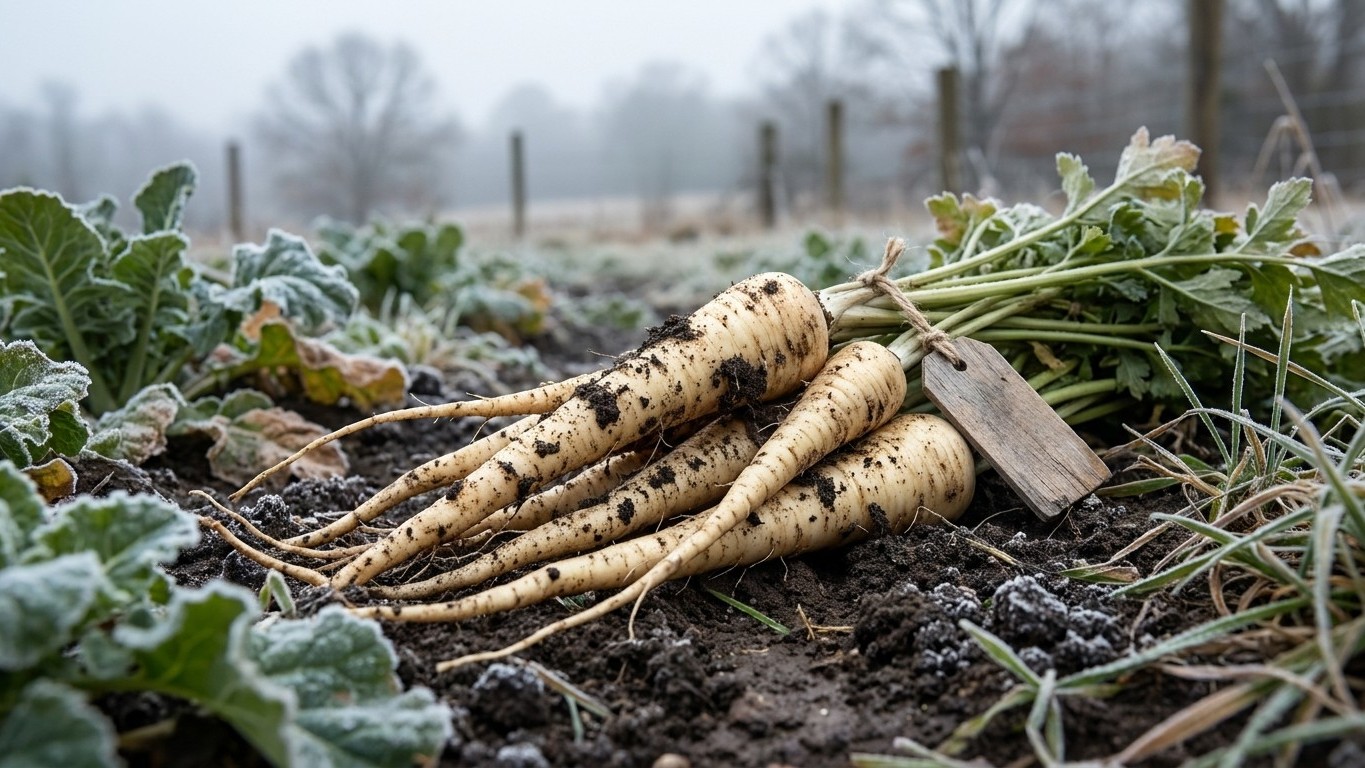

Yes, parsnips will sweeten in Ohio. The state’s winters deliver the extended stretch of frosty weather this root crop needs to convert stored starch into sugar, and the growing season lines up well enough to get a mature root in the ground before that cold arrives. The catch is timing the sowing and understanding what “cold enough” actually means here.
The short answer
The question that decides sweetening isn’t whether Ohio gets a light frost now and then. It’s whether the territory delivers several consecutive frosty weeks, cold enough and long enough to trigger the starch-to-sugar conversion that gives parsnips their signature flavor. A single overnight dip below freezing does very little. What the root needs is sustained exposure, week after week of near-freezing nights, so the enzymatic process has time to work through the whole root.
Ohio delivers that. Using the reference station at Columbus, NOAA NCEI Climate Normals for 1991-2020 put the mean daily minimum of the coldest month at 22.0 degrees Fahrenheit. That’s not a record low and not a single freak cold snap. It’s the average low temperature across an entire month, which means nights in the low 20s are routine, not exceptional, through the heart of winter. That kind of sustained cold is exactly what converts a bland, starchy parsnip into a sweet one.
This matters because a lot of gardeners confuse frost exposure with hardiness zone, and the two aren’t the same thing. A hardiness zone tells you the average annual extreme minimum temperature, useful for deciding whether a perennial survives winter. It says nothing about how many frosty weeks a location actually experiences, or how cold those weeks get on a typical night. A parsnip grown in a zone that rarely dips much below freezing might survive the winter just fine and still never sweeten, because the plant simply never got the sustained cold exposure it needs. Ohio’s coldest-month average of 22.0 degrees rules that problem out. Nights here spend real time below freezing, repeatedly, across weeks, not days.
So the plain answer: a parsnip grown in Ohio soil, left in the ground through the cool part of fall and into the early winter cold, will sweeten. It won’t just grow here. It will develop the flavor gardeners specifically plant parsnips for. The bigger practical question isn’t whether the climate cooperates. It’s whether the calendar does, since parsnips are slow to mature and need to be in the ground well before that cold arrives.
Does the season fit?
Parsnips are sown directly in place, never transplanted, and the clock starts the day seed goes into the soil. Utah State University Extension puts the full maturation window at 100 to 120 days from seeding, with sowing recommended 2 to 3 weeks before the last expected spring frost. Ohio State University Extension’s Ohio Gardening Calendar puts that last spring frost, for zone 6a, between May 5 and May 15. Stack those two figures together and the arithmetic works out clearly.
- Sowing window: 2 to 3 weeks before May 5 to May 15 lands seeding sometime between mid-April and the first days of May.
- Germination: parsnip seed is notoriously slow, taking 14 to 21 days to emerge. A mid-to-late April sowing won’t show green until early to mid-May.
- Maturation: add the full 100 to 120 days from the seeding date, not the emergence date, and roots reach maturity somewhere between late July and late August.
- First fall frost: Ohio State University Extension puts this, for zone 6a, between October 5 and October 15.
- The gap: mature roots sitting in the ground from late summer until that first October frost gives a buffer of roughly six to ten weeks before any cold arrives at all.
That buffer is the key number. It means Ohio’s season doesn’t just barely accommodate parsnips, it fits comfortably. Roots have time to reach full size well before the first frost, and then plenty of time afterward to sit through the frosty weeks that trigger sweetening, all before hard ground-freeze makes digging impractical. A gardener who sows on time, respects the slow germination, and doesn’t rush the harvest gets both a full-sized root and a sweet one.
What goes wrong here
- Forked roots from heavy or stony ground. Ohio’s clay-heavy soils in many counties resist the long, straight taproot a parsnip wants to send down, and any rock or clump of dense clay in the way splits the root into forks. Utah State University Extension recommends deep sandy soil for this crop and notes that heavy soil must be double dug before sowing. Loosen the bed a full 12 to 15 inches deep and remove stones before seed goes in.
- Forked roots from overwatering. This is a separate cause from soil texture, not the same problem in disguise. Excess moisture, especially uneven watering that swings from soggy to dry, encourages the root to branch as it searches for a consistent moisture supply. Water on a steady schedule instead, keeping the bed evenly moist rather than alternating between drenched and parched.
- A season that runs out. Sowing later than early May, whether from a late-arriving seed order or a wet spring that delays garden work, eats directly into the 100-to-120-day window. A root sown in June may not reach full maturity before the ground hardens, leaving an undersized harvest. Treat the April sowing window as firm, and germinate an indoor test batch if timing is uncertain, so seed goes into the ground the moment soil is workable.
- A winter too mild to sweeten. This isn’t Ohio’s typical problem, given a coldest-month average minimum of 22.0 degrees, but a garden bed tucked against a south-facing wall, near pavement, or otherwise sitting in a warmer microclimate can blunt frost exposure even in a cold state. If a bed reliably runs warmer than the open garden, expect a milder sweetening effect and consider a more exposed location for parsnips specifically.
Common questions
Can I sow parsnips earlier than April in Ohio?
Sowing follows the last spring frost date, not the calendar month. Ohio State University Extension puts that date between May 5 and May 15 for zone 6a, so working 2 to 3 weeks earlier than that puts sowing in mid-to-late April. Sowing much earlier risks seed sitting in cold, wet soil without germinating, since parsnip seed already takes 14 to 21 days to emerge under decent conditions.
How long can parsnip roots stay in Ohio ground over winter?
The figures available here cover the coldest month’s mean minimum (22.0 degrees Fahrenheit) and the first fall frost window (October 5 to October 15), but no published figure in these sources gives an exact date the ground freezes solid enough to block digging. Most gardeners harvest in stages through the frosty weeks after that first frost, since the flavor keeps improving the longer roots sit in cold soil, and stop once the ground becomes too hard to dig.
Does Ohio’s clay soil affect parsnip shape?
It can, but it’s a starting point for attention, not a guaranteed problem. Heavy or stony ground is one of two documented causes of forked roots, alongside overwatering, and Utah State University Extension specifically recommends double digging heavy soil before sowing to give the taproot a clear path downward.
What parsnip variety sweetens best in Ohio?
No variety is named in the sourced material for this page. The sweetening effect described here comes from frost exposure acting on the crop generally, not from a specific cultivar, so no variety recommendation can be made without inventing one.