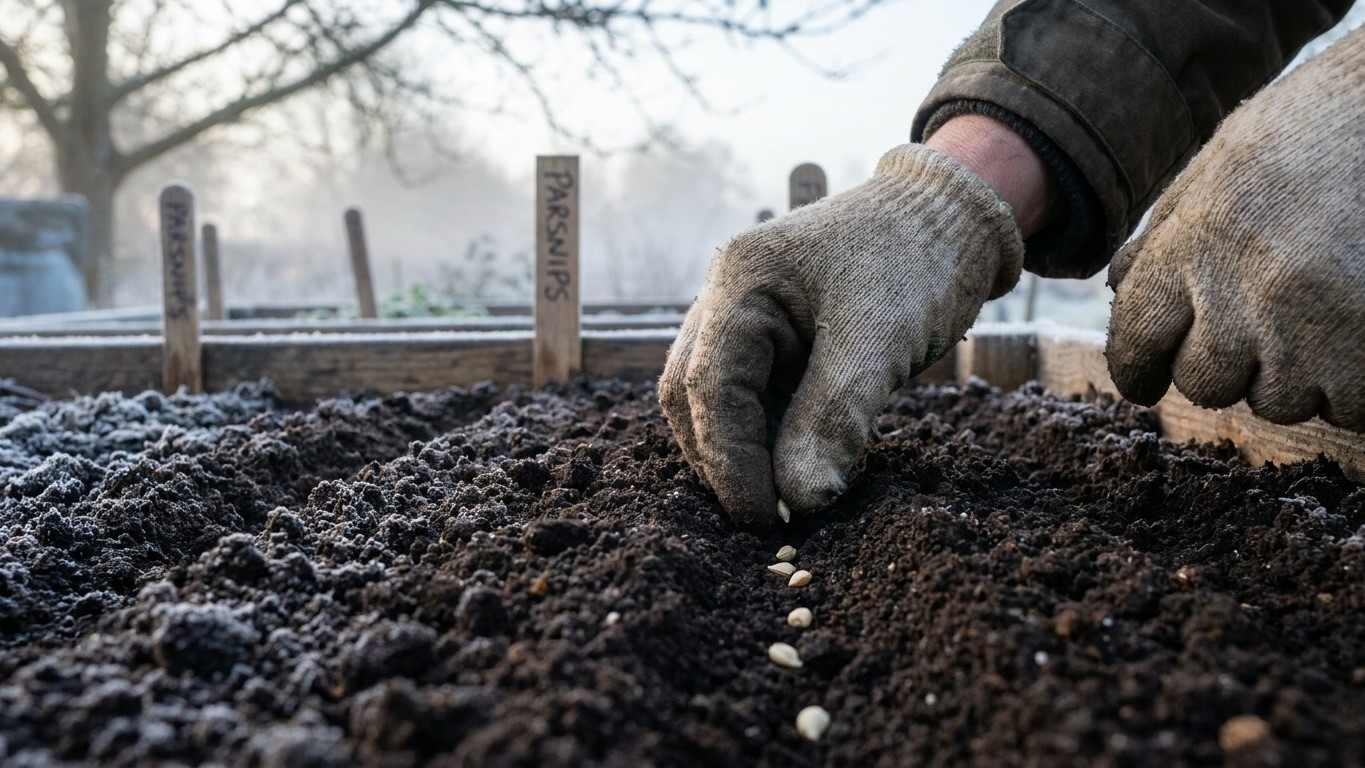

Sow parsnip seed directly in the ground two to three weeks before Ohio’s last spring frost, which lands between May 5 and May 15 across the state’s zone 6a areas. That puts the sowing window at roughly mid to late April. Miss it by much and the math for a full-flavored, mature root stops working.
The short answer
The number that actually settles this question isn’t the hardiness zone. It’s the mean minimum temperature of the coldest month, and for Ohio that figure sits at 22.0°F, based on NOAA NCEI Climate Normals for 1991-2020 using Columbus as the reference station. That’s not a record low or a one-night dip. It’s the average low across the coldest month of the year, and it tells you something a hardiness zone map never will: whether the ground here actually delivers sustained cold, not just an occasional freeze.
A mean minimum of 22°F means Ohio isn’t flirting with frost. It’s living in it for weeks at a stretch. That distinction matters more for parsnips than for almost any other root vegetable, because the crop’s flavor doesn’t come from careful watering or rich soil. It comes from cold. Parsnips store their sugars as starch through the growing season, and only repeated exposure to freezing temperatures triggers the conversion of that starch into sugar. A parsnip pulled in September tastes like a bland, slightly bitter carrot. The same root left in frozen ground through several weeks of hard cold tastes sweet, almost nutty.
This is where a lot of garden advice gets sloppy. People assume that if a zone map lists a region as “cold enough” to grow parsnips, the sweetening will happen automatically. It won’t. A territory could sit in a chilly-sounding zone and still deliver only a handful of light frosts before winter turns mild and wet, which does nothing for starch conversion. Ohio doesn’t have that problem. A 22°F average minimum in the coldest month is a strong signal that the state routinely produces the kind of sustained, repeated freezing that parsnips need, not just an occasional overnight dip that thaws by noon.
So the short answer has two parts, and both matter. Sow in the mid to late April window, two to three weeks ahead of the last frost date. And trust that Ohio’s winter climate, at least based on the Columbus reference data, gives you the frosty weeks the crop actually needs to turn from merely edible into genuinely sweet. Growing a parsnip here is not the hard part. Timing the sowing and then having the patience to leave it in the ground through the cold is.
Does the season fit?
Parsnips need 100 to 120 days from seeding to maturity, according to Utah State University Extension, and that clock starts the moment seed goes into the ground, not from transplant, since parsnips are always sown in place. Laying Ohio’s frost dates against that timeline shows whether the season has room to work or whether it’s a squeeze.
- Start with the sowing window. Ohio’s last spring frost falls between May 5 and May 15 in zone 6a. Sowing two to three weeks ahead of that puts seed in the ground somewhere between April 14 and May 1.
- Account for germination before counting maturity. Parsnip seed is notoriously slow to sprout, taking 14 to 21 days to emerge. A gardener who sows April 20 shouldn’t expect to see rows until early to mid-May, and shouldn’t assume a bare bed at day 10 means failure.
- Add the 100 to 120 day maturity window from the seeding date, not from emergence. A sowing on April 14 reaches maturity between July 23 and August 12. A later sowing on May 1 matures between August 9 and August 29.
- Compare that maturity date to the first fall frost, which arrives in Ohio between October 5 and October 15. Even the latest maturity date, August 29, lands roughly five to seven weeks before the first fall frost.
- Read the gap. That five-to-seven-week buffer isn’t wasted time. Mature roots can sit in the ground through that stretch, then keep sitting through the frosty weeks that follow the first freeze, which is exactly what triggers the starch-to-sugar conversion the crop depends on for flavor.
The arithmetic says the season fits comfortably in Ohio, with weeks to spare on both ends. There’s no need to rush a sowing date to squeeze the crop in, and no risk of an early fall frost catching an immature root. The bigger risk, if there is one, is impatience: pulling parsnips right at the 100-day mark instead of leaving them through a few hard freezes first.
What goes wrong here
- Forked roots from heavy or stony ground. Parsnips push a long taproot straight down, and any compacted clay, rock, or clod splits that root into forks. Ohio’s clay-heavy soils in many areas make this a real risk. The remedy is to double dig the bed to loosen soil well below the expected root depth, or to work in enough organic matter that the ground stays friable a foot or more down.
- Forked roots from overwatering. This is a separate cause from soil texture, and it’s easy to blame the ground when the real problem is a hose. Excess moisture encourages lateral rootlets to sprout off the main taproot, producing the same forked shape as compacted soil. The fix is steady, moderate watering rather than heavy soakings, especially once roots are established and pushing downward.
- A stand that looks like it failed but hasn’t. Because germination takes 14 to 21 days, gardeners often assume a bare bed at the two-week mark means the seed was bad, then till it under and resow. Mark the rows and wait the full three weeks before making that call.
- Sowing too late to matter. Pushing the sowing date past the two-to-three-week-before-last-frost window doesn’t leave enough runway for the 100 to 120 day maturity cycle to finish comfortably before harvest gets rushed. Stick to the mid-to-late April window and the season has margin built in.
- Harvesting before the cold has done its work. A root pulled the day it hits 100 days old will taste flat. Ohio’s 22°F average minimum in the coldest month means the frosty weeks are there for the taking. Leave mature roots in the ground through several hard freezes before digging, and mulch over them if a longer harvest window into winter is the goal.
Common questions
Can you start parsnip seeds indoors in Ohio?
No. Parsnips form a single long taproot that doesn’t transplant well once disturbed. Utah State University Extension describes the crop as sown directly in place, and that holds regardless of region.
How do you know when to harvest parsnips for the sweetest flavor?
Wait until the roots have reached the 100 to 120 day maturity mark and have then been exposed to several weeks of frosty weather. The cold converts stored starch into sugar, which is what gives parsnips their characteristic sweetness rather than a flat, starchy taste.
What happens if parsnips are sown too late in Ohio?
A late sowing eats into the buffer between maturity and the first fall frost, which normally runs five to seven weeks in this state. Push sowing much past early May and that cushion shrinks, raising the risk that roots are still immature when the ground starts to freeze hard.
Do parsnips survive an Ohio winter in the ground?
The soil data used here doesn’t extend to overwintering survival rates. What the Columbus reference figures do confirm is that the coldest month averages a 22°F minimum, cold enough to deliver the repeated frost exposure parsnips need for flavor, though gardeners planning to leave roots in through deep winter should mulch heavily and check local conditions rather than assume.