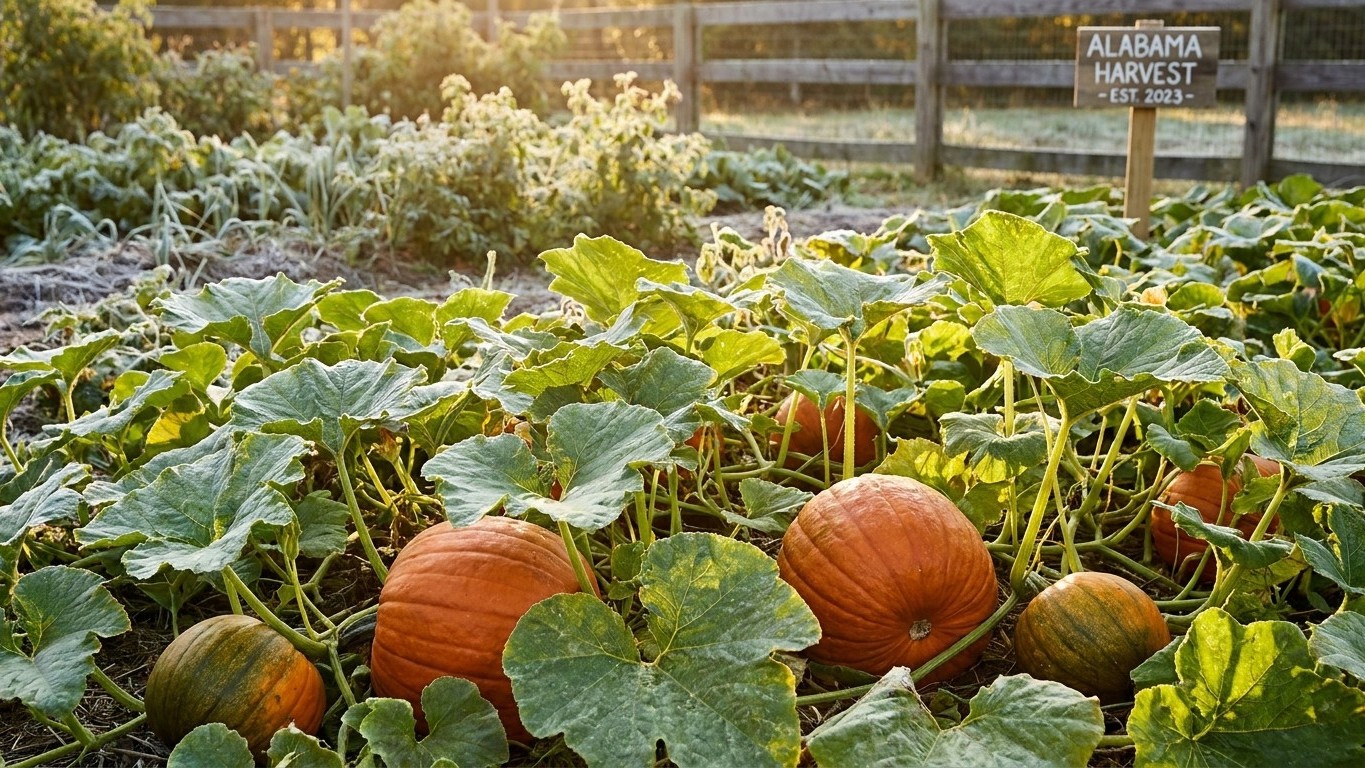

The window is tight but not impossible. With Pennsylvania‘s first fall frost landing between November 5 and November 16, and a pumpkin needing 45 to 55 days from the day it flowers to the day it’s ripe, the flower has to open by roughly mid-September at the latest in most of the state. Miss that window and you’re harvesting green fruit.
The short answer
Start with the frost date itself: NOAA’s climate normals for this region put the first fall freeze somewhere between November 5 and November 16, depending on the year. That’s the hard stop. Everything else in a pumpkin’s season gets measured backward from that date.
Utah State University Extension’s pumpkin guidance is specific on one point that gardeners often get wrong: the 45-to-55-day maturity clock starts at flowering, not at seeding and not at transplanting. A vine can sprawl for weeks, throw male flowers, drop them, and only later open the female flowers that actually turn into fruit. Those are the flowers that matter for this math.
Run the arithmetic against the earliest edge of the frost window. If frost arrives November 5 and a pumpkin needs the full 55 days, the flower has to open by around September 12. If the fruit only needs the shorter 45-day stretch, that pushes the deadline to around September 21. On the later edge of the frost window, November 16, those same two figures land closer to September 22 and October 2. So the honest answer isn’t one date. It’s a range: the latest a flower can open and still deliver a ripe pumpkin in Pennsylvania sits somewhere between the second week of September and the first days of October, depending on where in the state you’re growing and how much margin you want to leave.
Location matters more than most gardeners assume. The frost data cited here comes from a station representing the milder, southeastern corner of the state. NOAA’s own caution on that dataset notes that Pennsylvania’s northern tier and the Allegheny highlands run two to four weeks later in spring than that reference point, and the same seasonal lag logically compresses the growing window from the other direction in fall, with frost arriving that much sooner. A grower near the New York border or up in the mountains should treat the earlier end of every date range here as the safer bet, not the later one.
None of this means a pumpkin that flowers in early October is doomed. It means the odds shift hard against it. A fruit that sets late is racing a clock it’s likely to lose, and the next two sections explain how to avoid putting it in that position.
When to sow here
The last spring frost across most of Pennsylvania falls between March 29 and April 6, but that date is almost irrelevant to a pumpkin seed sitting in the ground. Air temperature recovers first. Soil takes longer, and pumpkins won’t germinate reliably until the soil itself reaches 65°F, a threshold that arrives weeks after the frost risk has already cleared. Treating the last frost date as the green light for sowing is one of the most common mistakes in a Pennsylvania pumpkin patch.
- Mark the last frost window (March 29 to April 6) as the earliest point air temperatures stabilize, not as a sowing date.
- Watch the soil, not the calendar. Soil temperature lags the air by a meaningful stretch in spring, so the 65°F mark typically doesn’t arrive until well into that following window has passed. A soil thermometer pushed a few inches down gives a more honest reading than guessing from air temperature alone.
- Use a row cover to buy time. A floating row cover over the bed traps solar heat and can push the soil to that 65°F threshold roughly two weeks sooner than bare ground would reach it, which matters when the growing season is already tight.
- Sow once the soil holds 65°F consistently, not just on a single warm afternoon. A cold snap after an early warm spell can stall germination or rot the seed outright.
- Count forward from the actual flowering date, once flowers appear, and check that adding 45 to 55 days still lands before the first week of November. If it doesn’t, that fruit is behind schedule and needs the season-extension steps described below.
Variety choice plays into this timeline, even though Utah State University Extension’s guidance doesn’t break down days-to-maturity by name. Pennsylvania gardens commonly grow Connecticut Field, Howden, Autumn Gold, Cinderella, Jack Be Little, Baby Boo, Big Max, Prizewinner, and Sugar Pie. These are names seed racks and garden centers use, not a ranked list of which ripens fastest. Without maturity-day data attached to each one in the sourced guidance, the safest approach is to sow early enough that any of them has room to finish, rather than betting on a specific variety to outrun the frost.
What goes wrong here
- A late flower that never colors. This is the most common failure, and it traces straight back to sowing too late or a cold spring that delayed germination past the ideal window. The fruit sets, sizes up some, and then simply runs out of warm days before it turns from green to orange. The remedy is upstream: sow as soon as soil hits 65°F, using a row cover to get there sooner, so flowering happens with enough runway left before November.
- A fruit caught by frost before harvest. Even a pumpkin that colored up nicely can get nipped if it’s left on the vine too long into a cold snap. Harvest with the stem attached once the fruit has hardened and colored, rather than waiting for a “perfect” moment that risks overlapping with the first freeze.
- A vine that dies back before the skin hardens. Foliage can collapse from disease pressure or an early cold snap while the fruit itself is still soft-skinned. A soft rind won’t store or handle well. If the vine is failing early, cut the fruit and move it somewhere it won’t freeze, since the source material is clear that freezing is the one condition to avoid, without giving a specific storage temperature or humidity target beyond that.
- Insect pressure stretching the season further than it can bear. Squash bugs and cucumber beetles both slow plant vigor at exactly the point when every remaining warm day counts. Rather than re-covering that ground here, see this site’s dedicated pages on squash bugs in Pennsylvania and cucumber beetles in Pennsylvania for management specific to this state.
Common questions
Can I still plant pumpkins in July in Pennsylvania?
Run the math first. A July sowing needs time to grow, flower, and then another 45 to 55 days after that flowering before the first fall frost, which arrives between November 5 and November 16. A late-June or July planting leaves very little margin, and any flower that opens after the second week of September is already fighting the calendar described above.
What happens if frost hits before my pumpkin turns orange?
A green pumpkin caught by frost generally won’t finish ripening off the vine the way a tomato might. The safest move is watching the forecast closely once fruit has sized up, and harvesting ahead of a hard freeze even if the color isn’t complete, rather than risking total loss.
How do I know a pumpkin is actually ready to harvest?
Utah State University Extension’s guidance points to full color and a hardened rind, harvested with the stem left attached. A rind that still gives under light thumb pressure hasn’t finished hardening yet.
Does the frost date differ much across Pennsylvania?
Yes. The November 5 to November 16 window reflects data from the milder, southeastern part of the state. Gardeners in the northern tier and the Allegheny highlands should expect frost arriving closer to the earlier end of that range, or even sooner, since that same region also holds onto spring frost two to four weeks longer than the reference station.