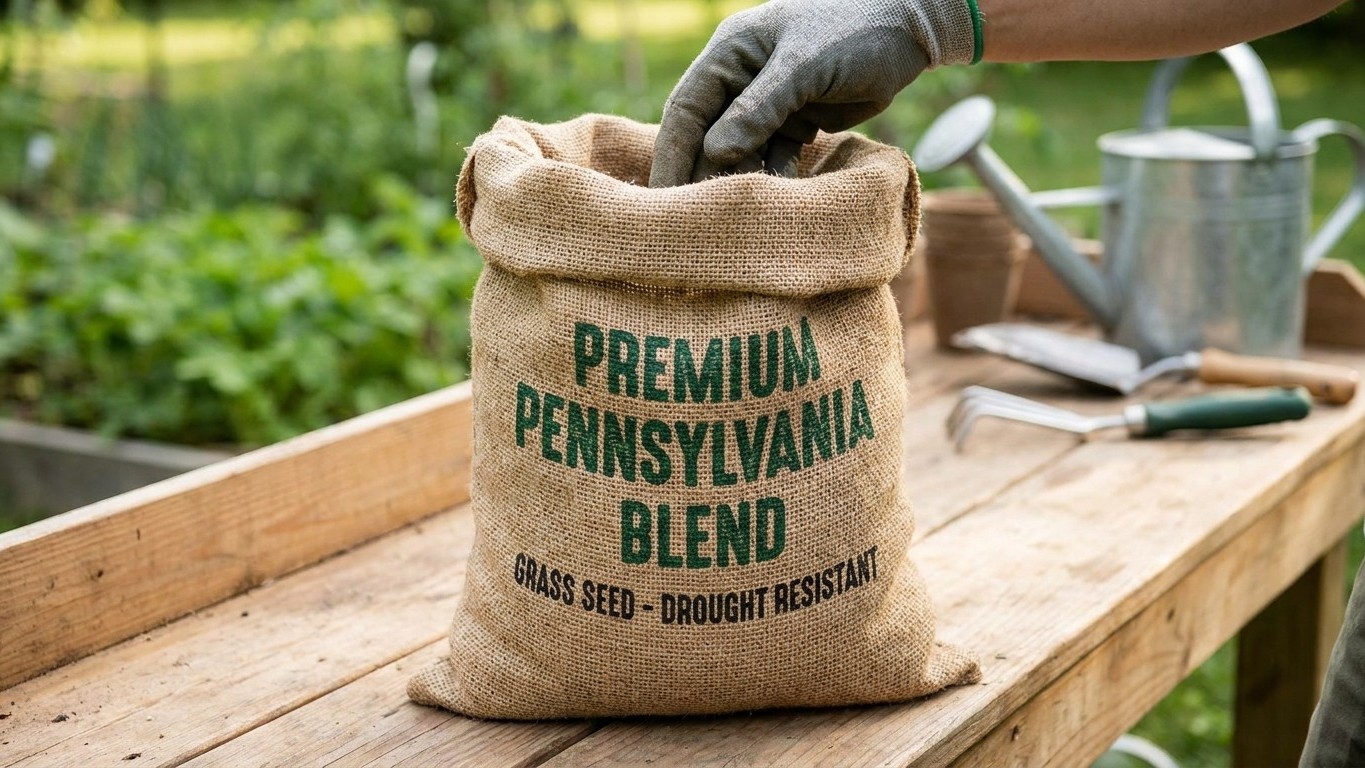

There’s no one grass that wins here, and that’s actually good news: your yard tells you which way to go, not a bag on a shelf. If you’re willing to ride out a rough patch of thinning grass in the worst of July heat, plant a cool-season lawn — tall fescue, Kentucky bluegrass, or perennial ryegrass — and it’ll stay green through the rest of the year. If a long stretch of brown, dormant lawn from the first fall frost into spring doesn’t bother you, a warm-season grass like zoysia or bermuda will shrug off the heat instead. Start by figuring out which trade-off you can actually live with looking at every day.
The short answer for Pennsylvania
Cool-season versus warm-season
For most of Pennsylvania, a cool-season lawn is the practical default. Tall fescue, Kentucky bluegrass and perennial ryegrass are the three species Penn State Extension works with for the state, and they stay green from fall through spring, which covers most of the year a Pennsylvania homeowner actually looks at the lawn. Their weak point is mid to late summer, when heat and dry spells can thin them out even with irrigation.
Zoysiagrass and bermudagrass, the two warm-season grasses Clemson Cooperative Extension lists in HGIC 1214 for transition zone lawns, do the opposite. They green up late in spring, hold their color and density through the hottest weeks, then turn brown at the first fall frost and stay that way until the following spring. In Philadelphia, NOAA’s 1991-2020 climate normals put that first freeze between November 5 and November 16, so a warm-season lawn here is out of color for roughly five months of the year.
Anyone starting Pennsylvania lawn care from scratch is really choosing between those two trade-offs, not between a good grass and a bad one. Which one costs you less depends on whether you can tolerate a few rough weeks in August or a long stretch of brown from November to April.
Working through the year

Once you have picked a side, the calendar you follow depends entirely on which grass you planted. Clemson Cooperative Extension publishes a separate maintenance calendar for each species, and mixing them up is the fastest way to hurt a lawn you are trying to help.
If you have a cool-season lawn
Tall fescue, Kentucky bluegrass and perennial ryegrass are worked on the schedule in Clemson Cooperative Extension’s HGIC 1219 Tall Fescue Maintenance Calendar, which sets the general pattern cool-season lawns in this climate follow: fall is the main feeding and seeding window, spring gets a pre-emergent pass and a light feeding, and summer is largely about staying out of the grass’s way while it fights the heat. Mowing height, nitrogen rate and irrigation amount all vary by which of the three species you have and how the season is running, so check the calendar directly rather than guessing at a number.
If you have a warm-season lawn
Bermudagrass follows Clemson Cooperative Extension’s HGIC 1216 Bermudagrass Maintenance Calendar, and zoysiagrass follows the separate HGIC 1217 Zoysiagrass Maintenance Calendar. Both put the feeding and aggressive mowing work into late spring and summer, the exact opposite of a cool-season lawn, and both call for the lawn to be left alone once it starts shutting down for dormancy in fall.
The table below lines up the five species side by side. It is a starting point, not a verdict, since the right answer changes with what you are willing to trade.
| Species | Season type | Strongest trait | What it costs you |
|---|---|---|---|
| Tall Fescue | Cool-season | Deep roots, most heat-tolerant of the cool-season three | Still fades in a long July dry spell |
| Kentucky Bluegrass | Cool-season | Spreads by rhizome, self-repairs bare spots | Slower to establish, least heat-hardy of the three |
| Perennial Ryegrass | Cool-season | Fastest germination | Does not spread, bare spots need reseeding |
| Zoysiagrass | Warm-season | Dense, drought-tolerant once established | Brown from first frost into spring |
| Bermudagrass | Warm-season | Best heat and drought tolerance | Least cold-hardy, can die out in a hard winter |
For the exact order these tasks run in against Philadelphia’s frost window, the Pennsylvania Lawn Care Calendar, Month by Month lays out each month so you are not cross-referencing three separate Clemson documents on your own.
What changes across Pennsylvania
Philadelphia is the mild edge, not the middle
Every date and figure above comes from Philadelphia, and Philadelphia is the mildest corner of the state, not a stand-in for all of it. NOAA’s 1991-2020 climate normals note that the northern tier counties and the Alleghenies run two to four weeks later than Philadelphia in spring green-up, and the same elevation and latitude that delay spring there tend to bring the first fall freeze on sooner as well.
That matters most for the warm-season half of the choice. A bermudagrass lawn that is a genuine option in Philadelphia’s longer, milder season is a much bigger gamble in the higher ground of the Alleghenies or the far northern counties, where a harder, longer winter raises the odds of it thinning out or dying back entirely rather than just going dormant. Zoysiagrass tolerates cold better than bermudagrass, but it is still a warm-season grass first, and the same regional cold pushes against it too.
Cool-season lawns are less sensitive to this shift because tall fescue, bluegrass and ryegrass are already built for a longer cold season. The practical effect of moving north or up in elevation in Pennsylvania is less about whether cool-season grass will work, since it generally will, and more about compressing the calendar: fall seeding windows close sooner, and spring work starts later, than the dates a Philadelphia-based calendar implies.
The mistakes this climate punishes
The transition zone is unforgiving of timing mistakes because both grass types have a narrow, opposite window that works, and the penalty for missing it does not show up right away.
- Feeding a warm-season lawn in autumn as if it were cool-season pushes new growth right before dormancy. The damage does not show until the following spring, as a thin, patchy green-up instead of a full one.
- Seeding cool-season grass in late spring or early summer puts tender seedlings into the ground just before the heat that kills them. The failure shows up as bare, dead patches by the height of summer, not at seeding time.
- Mowing a cool-season lawn too short during a hot, dry stretch removes the leaf area the plant needs to shade its own roots. The stress shows within a couple of weeks as browning and thinning that looks like disease but is not.
- Overseeding too close to the first fall frost, which NOAA’s 1991-2020 normals put between November 5 and November 16 in Philadelphia, leaves seedlings without enough time to root before the freeze. The gaps left by that failed seeding are visible the moment growth resumes in spring.
None of these mistakes are obvious in the moment. A lawn fed at the wrong time or seeded at the wrong time looks perfectly fine for weeks, which is exactly why the calendar matters more than instinct in this climate.
Checking this against your county
Every figure here is anchored to Philadelphia, and Pennsylvania is a long state with real differences in elevation and latitude. Before you commit to a seed mix or a feeding date, check it against Penn State Extension, the land-grant extension service for the state, which can point you to county-level advice and soil testing that this page cannot.
That is especially worth doing if you are near the northern border, in the Alleghenies, or otherwise well above the elevation of the Philadelphia area, since the spring and fall windows quoted here run later and sooner respectively the further you get from that reference point.
Common questions
Can I grow bermudagrass in Pittsburgh?
You can try it, but it is a bigger gamble than in Philadelphia. Pittsburgh and the surrounding Alleghenies run colder than the Philadelphia reference climate used for this page, and bermudagrass is the least cold-hardy of the two warm-season options, so a hard winter can thin or kill it outright rather than just leave it dormant.
My zoysiagrass turned brown after the first frost. Is it dead?
No, that is normal dormancy, not death. Warm-season grasses like zoysiagrass and bermudagrass are supposed to go brown once cold weather sets in, and they green back up on their own once the soil warms in spring.
Can I mix cool-season and warm-season seed in the same lawn?
Not as a permanent mix. The two grow on opposite calendars, so one will dominate and shade or outcompete the other depending on the season, leaving you with an uneven lawn rather than a blended one.
When’s the best time to seed a new lawn in Pennsylvania?
It depends on which grass you’re planting. Cool-season species like tall fescue do best seeded in late summer to early fall so they can root before the ground freezes, while warm-season species need to go in once the soil has warmed in late spring. Check the month-by-month calendar for the exact order these tasks run in against your local frost dates.