
Short answer: yes, sweet corn can ripen in Massachusetts, but the growing window is tighter and later-starting than most gardeners assume. The state’s mild coastal stretch gives a season long enough for even a slower variety, while inland valleys and hill towns cut that margin down fast. For a full breakdown of the frost dates and heat totals behind this answer, see Will Sweet Corn Ripen in Massachusetts? The soil temperature threshold matters more than the calendar date on your last-frost app, and that’s where most planting mistakes start.
The short answer
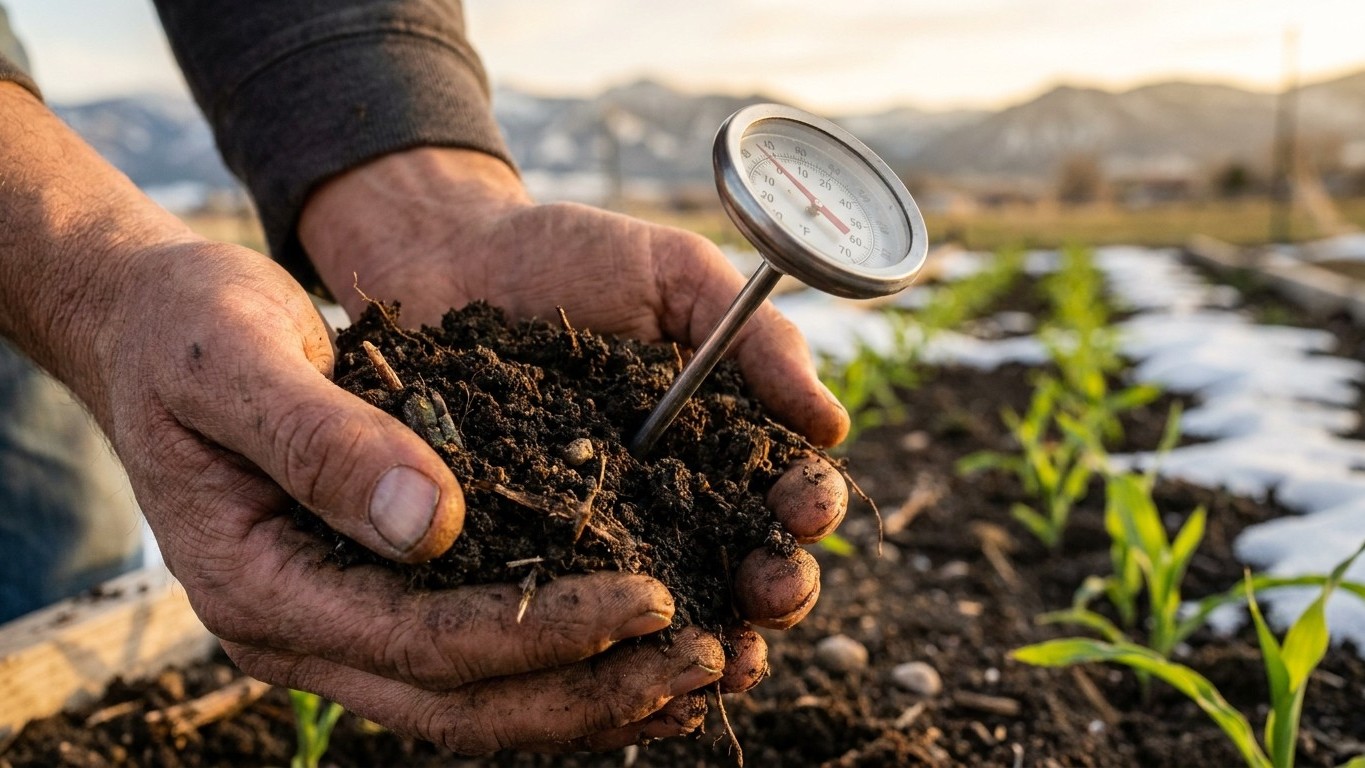
Sweet corn germinates reliably once the soil itself, not the air, holds above 60 F. That threshold arrives well after the last spring frost, which at the state’s mildest reference point runs from April 1 to April 8. Soil doesn’t warm at the same pace as air. A morning without frost doesn’t mean the ground six inches down is ready for a corn seed, and pushing seed into cold, wet soil is one of the most common ways this crop fails here before it even sprouts. For a closer look at getting the timing right, see When to Sow Sweet Corn in Massachusetts.
Once the soil clears that 60 F mark, the clock that actually decides whether corn will ripen starts running: 60 to 90 days from planting to harvest, depending on the variety. The other side of that window is the first fall frost, which at the same mild reference station falls between November 3 and November 14. Stack those two dates together and the frost-free stretch at that location runs somewhere around seven months, more than enough room for even the slower end of the 60-to-90-day range, once you account for the later soil start.
That’s the mild end of the state, though. The same source that gives these frost dates flags plainly that its reference station sits on the waterfront in a dense urban setting, the warmest spot Massachusetts has to offer. Inland suburbs and the Berkshires see frost arrive noticeably earlier in fall and linger later in spring, which shortens both ends of the usable window at the same time. A gardener in a river valley or at higher elevation isn’t just losing a few days, they’re losing them twice, once on the planting side while waiting for soil to warm, and again on the harvest side as fall frost closes in sooner.
Summer heat load plays a role too. The reference station averages 10.2 days a year at 90 F or above, a modest but real stretch of genuine heat that pushes corn through pollination and kernel fill faster than a cool, damp summer would. Fewer of those hot days inland or at elevation means growth slows down, stretching a 60-day variety closer to its outer limit and putting real pressure on anything rated near 90 days.
Does a late variety fit here?
The honest answer depends on where in the state you garden, and the two ends of the maturity spectrum behave very differently once you run the numbers against the frost dates above.
A 60-day variety
A fast, 60-day type is the safer bet almost everywhere in Massachusetts. Even allowing for soil that takes its time reaching 60 F, and even at inland sites where fall frost lands earlier than the coastal norm, a 60-day corn has room to plant, grow, and ripen with margin left over. This is the variety that tolerates a late spring, a cool July, or a garden tucked into a valley that catches frost first.
A 90-day variety
A 90-day type is a different story. At the state’s mildest, longest-season location, the math works: the gap between warm soil and the first fall frost (November 3 to 14) leaves enough runway. But that math assumes the best conditions the state offers. Move to a colder valley or higher ground, where the caution attached to these frost dates warns of earlier fall freezes and later spring warming, and a 90-day variety loses its cushion fast. In those spots, a late variety does not reliably fit the season, and gardeners there are better served treating 90 days as a ceiling to avoid rather than a target to plant toward.
| Variety type | Days needed | Fits at mildest coastal sites | Fits inland valleys / higher elevation |
|---|---|---|---|
| 60-day | 60 days | Yes, comfortable margin | Yes, generally still fits |
| 90-day | 90 days | Yes, if soil warms promptly | Often does not fit reliably |
Worth separating two different clocks here, since they get confused often. The 60-to-90-day figure counts from planting to harvest and answers whether the crop fits the season at all. A second, much shorter clock, roughly 17 to 24 days after the silks first appear on the ear, per the same Utah State Extension guidance on sweet corn, tells you which week to actually pick. Don’t merge the two. And when that picking window arrives, judge ripeness by three signs together, never one alone: the silks have dried and turned brown, the husk itself is still moist and green, and a punctured kernel releases milky juice rather than clear liquid or a dry, starchy paste.
What goes wrong here
- Soil sown too cold. Seed goes into ground that’s still below 60 F because the gardener planted off the last-frost date instead of the soil temperature. The seed rots or germinates weak and uneven. Remedy: check soil temperature directly with a soil thermometer before planting, and wait for a stretch of several consecutive warm days rather than trusting a single mild afternoon.
- A variety too late for the season. A 90-day type goes into a garden where fall frost arrives early, inland or at elevation, and the ears are still filling out when the first hard cold hits. Remedy: match variety maturity to your actual local frost window, not the state’s mildest reference point, and lean toward a shorter-season type if there’s any doubt.
- Sweetness lost to tasseling timing. This one has nothing to do with climate. Sweet corn types (su, se, and sh2) cross-pollinate freely, and if two different types tassel at the same time nearby, the sweetness of the crop is compromised regardless of how well the season went. Remedy: plant only one type per season, or stagger plantings so the different types don’t tassel together, and always plant in blocks of three or more rows rather than single rows, since corn is wind-pollinated and needs that block shape to pollinate itself properly.
Checking this against your own county
Everything above comes from a single reference station representing the mildest conditions the state has, and the source itself warns that inland and higher-elevation areas run noticeably colder on both ends of the season. Before committing to a variety, check local conditions with the University of Massachusetts Amherst Extension, which maintains current, county-level guidance for home gardeners across the state. Their staff and published resources can confirm typical frost dates and soil-warming timing for your specific area, rather than the coastal average used here. A quick call or visit to their site (ag.umass.edu) is the fastest way to turn this general answer into one that fits your actual garden.
Common questions
Can I plant sweet corn before the last frost date if I use row cover?
Row cover protects against a light air frost, but it doesn’t warm the soil itself. Since germination depends on soil temperature reaching 60 F, cover alone won’t fix cold, wet ground, and seed planted too early may still rot or sprout weakly.
Do I need to worry about field corn grown nearby crossing with my sweet corn?
Cross-pollination happens between different sweet corn types (su, se, sh2) or between sweet corn and field corn when they tassel at the same time. The published guidance doesn’t specify a distance to keep them apart, only that they must not tassel simultaneously, so timing your planting to avoid overlapping tassel periods is the practical fix.
Why did my corn ears fill out unevenly?
Uneven kernel fill is often a pollination issue tied to block shape. Corn is wind-pollinated, and single rows or very small plots don’t distribute pollen evenly across the ears. Planting in blocks of three or more rows, as noted in university extension guidance, gives much more even pollination.
How do I know for sure my corn is ready to pick, without cutting into every ear?
Look for all three signs together: silks that have turned dry and brown, a husk that’s still moist and green rather than dried out, and, if you check one ear, milky rather than clear juice from a punctured kernel. Any single sign alone can be misleading.