
Yes, sweet corn can ripen in the Houston area of Texas, and the growing season here is long enough to give it real room to work. The catch isn’t frost. It’s soil temperature, summer heat, and a pollination rule that has nothing to do with the weather at all.
The short answer
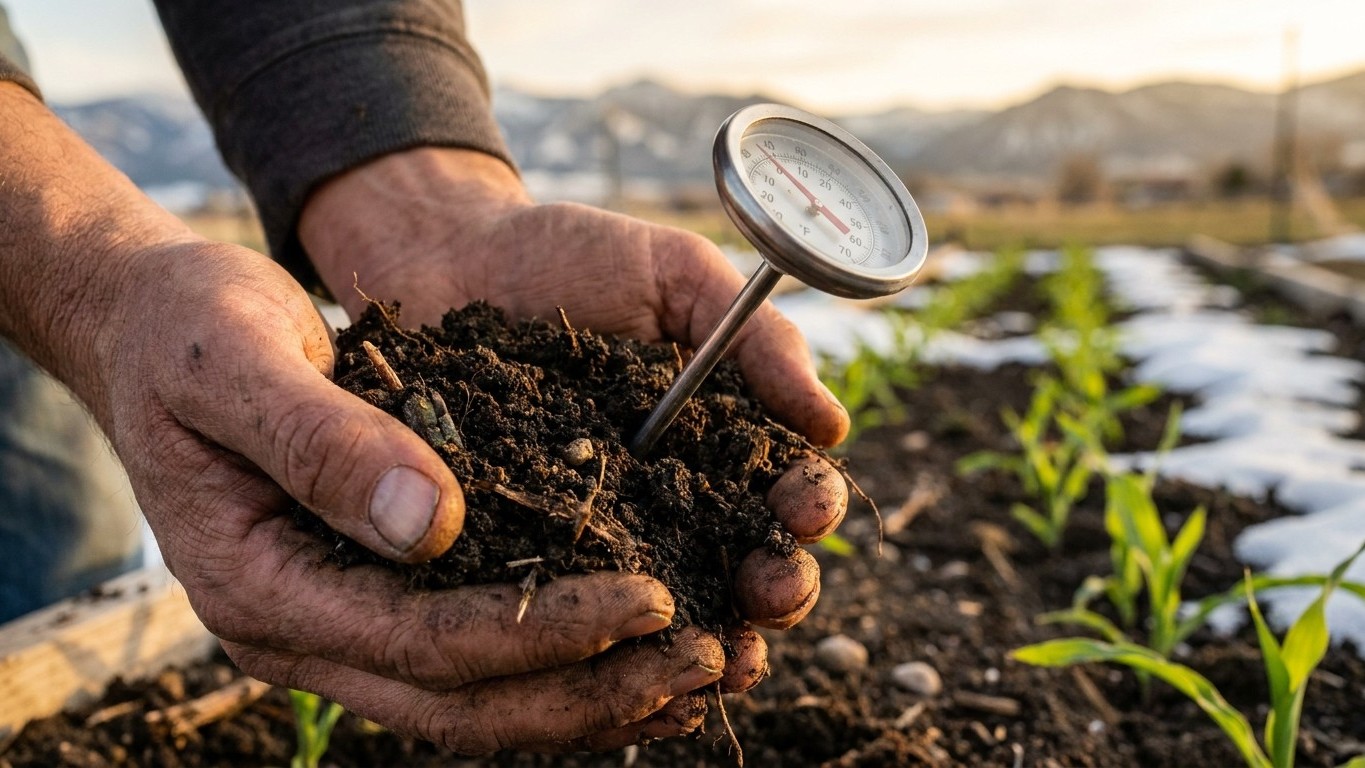
Start with the number that actually matters for planting: soil temperature, not frost date. NOAA’s 1991-2020 Climate Normals for station USW00012960 (Houston/IAH) put the last spring frost somewhere between February 4 and March 1. That’s useful for knowing when the freeze risk ends, but it is not the day to put corn seed in the ground. Soil warms slower than air, and it typically takes several more weeks after that last frost before the ground reaches the 60 F mark sweet corn needs to germinate reliably. For a closer look at When to Sow Sweet Corn in Texas, that pushes viable planting into March for most of the Houston area, sometimes later depending on how the spring runs.
Once soil crosses 60 F, the clock that matters is the one Utah State University Extension lays out for sweet corn everywhere: 60 to 90 days from planting to maturity. That’s the window a variety needs to fill, and it has to land before the ground freezes again in fall. Here, the first fall frost doesn’t typically arrive until December 1 to December 19, again based on NOAA’s Climate Normals for the same Houston station. Count forward from a March planting and there is an enormous cushion. Even a slow start in April still leaves seven or eight months before frost returns, far more than the 90 days the longest sweet corn varieties need.
That cushion is why the honest answer to Will Sweet Corn Ripen in Texas? is yes, provided the seed goes in once soil is actually warm rather than by a date on a calendar. The harder question isn’t whether the season is long enough. It’s what happens in the middle of it. Houston averages 102.4 days a year at 90 F or hotter, according to NOAA’s Climate Normals. That’s not a temperature average, it’s a count of how many days the heat load gets extreme, and it lands squarely in the same stretch when a spring-planted crop would normally be tasseling and filling ears. Season length isn’t the obstacle in this part of Texas. Heat timing is, and that’s the piece a planting calendar alone won’t tell you.
None of this changes by much across a single county, but it changes a great deal across the state. Texas spans four USDA zones, and the Houston frost dates above describe the mild Gulf end of that range, not the Panhandle, not Hill Country, not North Texas. Even inside the Houston area, Hobby Airport runs about two weeks milder than IAH. Treat these figures as a Gulf coast reference point, not a statewide planting calendar.
Does a late variety fit here?
“Fit” here means two things at once: does the maturity length fit inside the frost-free season, and does the plant’s most sensitive stage, tasseling and silking, land somewhere other than the worst of summer’s heat. A variety can pass the first test and fail the second.
A 60-day variety
Plant once soil hits 60 F, likely sometime in March for most of the Houston area, and a 60-day variety matures around mid-May. That lands the crop’s pollination window in spring, generally ahead of the stretch when the region racks up its 102.4 average days above 90 F. There’s also plenty of slack before the first fall frost arrives in December, so a short-season variety planted in early spring has room to spare on both ends. This is the straightforward case: the calendar works, and the heat load hasn’t ramped up yet when the ears need to fill.
A 90-day variety
Plant a 90-day variety at the same time, in March, and it matures closer to mid-June, right as Houston’s hottest stretch is building toward its heaviest days above 90 F. Extreme heat during tasseling and silking can interfere with pollination, which is the stage that decides whether ears fill out at all. So planted on a spring schedule alongside a short-season variety, the 90-day type plainly does not fit this territory’s heat window, even though the frost-free season is technically long enough to contain it.
The frost dates do offer a way around that, though. Because the first fall frost here doesn’t arrive until December 1 to December 19, there’s a long back half of the year available. A 90-day variety planted in late summer, once the worst of the 90-plus-degree stretch has started to ease, can still mature well before frost. It’s a different planting window than the short-season corn, not a simultaneous one, and that timing gap matters for more than heat, as the next section explains.
What goes wrong here
Most sweet corn failures in this part of Texas trace back to one of three things, and only one of them is about climate at all.
- Soil sown too cold. Planting on the last-frost date instead of waiting for 60 F soil is the most common mistake. Cold, damp soil rots seed before it can germinate, or produces a thin, uneven stand. The remedy is simple: check the soil itself, with a thermometer if needed, rather than counting days from the last frost.
- A variety too late for the season’s heat, not its length. As covered above, a 90-day variety planted on the same March schedule as a short-season type will silk during the hottest stretch of the year and can lose ears to poor pollination. The remedy isn’t a different variety, it’s a different planting date, pushing the long-season corn toward late summer so it fills ears after the heat load eases rather than during its peak.
- Sweetness lost because two types tasselled together. This one has nothing to do with Houston’s climate. Utah State University Extension is clear that su (sugary), se (sugary enhanced) and sh2 (supersweet) types cross-pollinate if they tassel at the same time, and the result is starchy, disappointing corn regardless of how well the season went. There’s no published isolation distance to lean on here, so the fix is timing and layout: stagger plantings so different types don’t tassel in the same week, and always grow corn in blocks of three or more rows rather than a single line, since that shape is what gives ears reliable pollination in the first place.
Checking this against your own county
Everything above is built on Houston-area figures from a single NOAA station, and Texas is too large a state for one frost calendar to cover it. A grower in the Panhandle is working with a completely different freeze window, and Hill Country and North Texas each have their own timing again. Before locking in a planting date, check the numbers for your own county rather than assuming the Gulf coast figures travel.
Texas A&M AgriLife Extension maintains county-level offices across the state and is the resource built for exactly this kind of local check. Their agents can confirm local frost dates, soil warming trends, and any variety notes specific to your part of Texas. Start at agrilifeextension.tamu.edu and search for your county’s office.
Common questions
When should I plant sweet corn near Houston?
Once soil reaches 60 F, generally sometime in March in this area, rather than on the last frost date itself. Frost typically ends between February 4 and March 1, but soil takes additional weeks to catch up to the temperature corn actually needs.
Can I grow a sugary type and a supersweet type in the same garden?
Only if they don’t tassel at the same time. Utah State University Extension notes that su, se and sh2 types cross-pollinate and lose sweetness when they tassel together, so staggering planting dates matters more than distance between rows.
How do I know when an ear is actually ripe?
Check for all three signs together: dry, browned silks; husks that are still moist and green; and milky juice when a kernel is punctured. Any one sign alone can be misleading, since silks can brown before the kernels are ready.
Is the 60-to-90-day figure the same as the time from silk to harvest?
No, and mixing them up leads to bad timing. Sixty to ninety days is measured from planting and tells you whether the variety fits the season at all. Harvest timing within that season is a separate, shorter window measured from when silks first appear, and the two shouldn’t be treated as one figure.