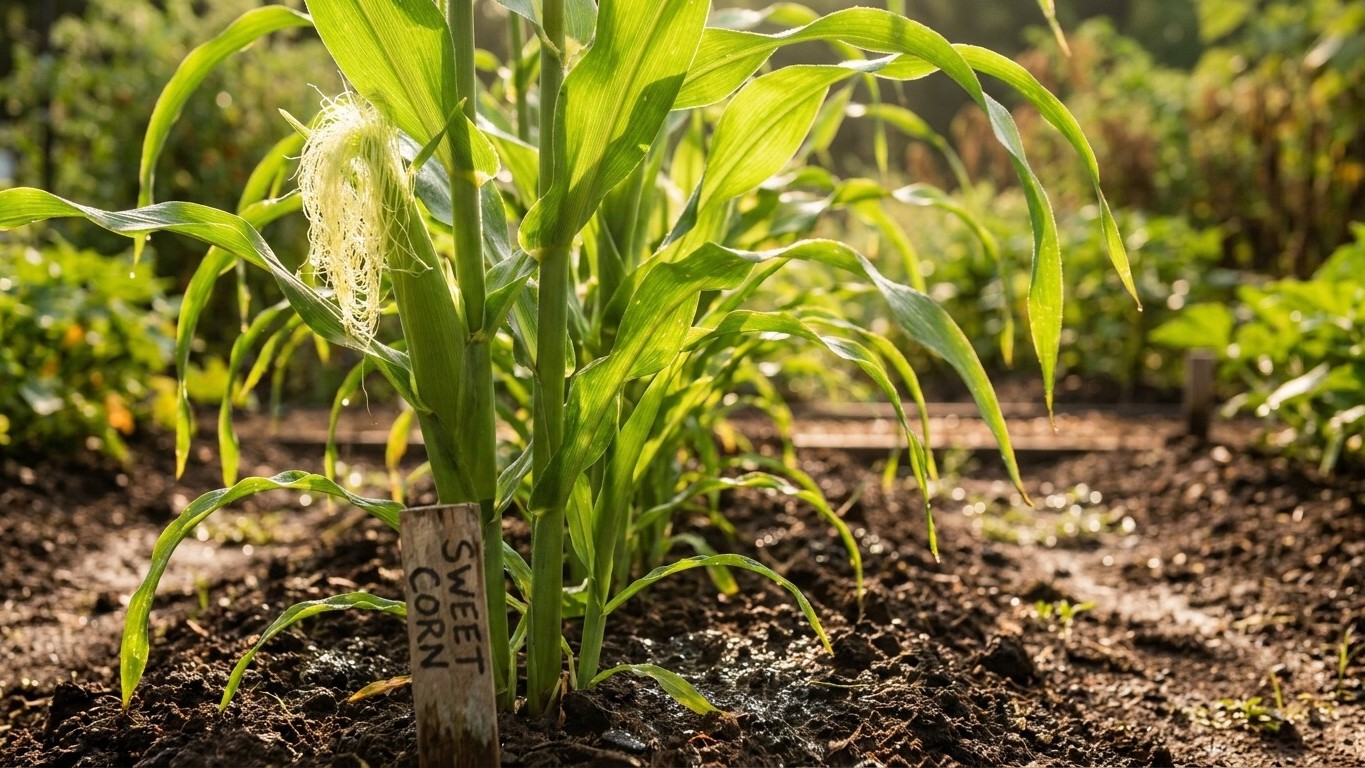

In the Boise-area valley, sweet corn ripens most seasons but the timing runs tighter than gardeners expect. Soil needs to climb above 60°F before planting even makes sense, and that threshold arrives well after the last spring frost. Once you account for the 60 to 90 days sweet corn needs to mature, and the first fall frost landing sometime between October 7 and October 21, the window is workable, but not generous.
The short answer
Start with what the calendar actually tells you. The last spring frost in the reference valley (NOAA NCEI data, station USW00024131) falls somewhere between April 23 and May 7. That date matters for tender transplants and early frost risk, but it does not tell you when to plant corn. Soil temperature does that job, and soil takes weeks to catch up to air temperature after a frost-free stretch begins. Sweet corn needs soil consistently above 60°F to germinate reliably, per Utah State University Extension guidance, and that threshold typically arrives well into May in a valley like this one, sometimes not until early June depending on how cool or wet the spring runs.
That gap between last frost and warm-enough soil is the part gardeners miss most often. Planting the day after the last frost feels responsible, but if the soil is still sitting in the 50s, the seed just sits there too, rotting slowly or germinating unevenly. The safer approach is to check the soil itself, several inches down, rather than trust the frost date as a planting signal.
Once soil clears 60°F, the clock that matters is the 60 to 90 days sweet corn needs from planting to harvest. Count forward from whenever the soil actually warms, then compare that finish line to the first fall frost window of October 7 to October 21. In most seasons, a planting in late May or early June finishes well before October arrives, leaving real breathing room. That margin is what makes the answer to whether sweet corn ripens here a workable yes, not a guarantee.
Heat load plays a supporting role. The reference station averages 47.5 days a year at 90°F or hotter, which is a strong summer push for a warm-season crop like corn. That heat helps push the plant through its growth stages, but it also raises water demand sharply during tasseling and ear fill. A crop that ripens on schedule can still disappoint if it runs short on water during the hottest stretch of summer.
One caution matters more than any single date: this frost and soil data reflects a low valley location. Most of Idaho sits higher and colder, with growing seasons that run shorter in both directions, later last frost, earlier first frost. Anyone gardening outside the valley floor should treat these numbers as an upper bound on what is possible, not a statewide guarantee.
Does a late variety fit here?
The 60 to 90 day range covers a lot of ground, so it is worth running the math on both ends separately rather than assuming the whole range fits equally well.
A 60-day variety
Plant once soil is reliably above 60°F, likely late May to early June in this valley. Add 60 days and harvest lands somewhere in late July to early August. Compare that to the first fall frost window of October 7 to October 21, and the buffer is enormous, roughly two months of slack. A 60-day type is about as low-risk as sweet corn gets in this climate. Even a slow, cool spring that delays planting by a couple weeks still leaves plenty of room before frost becomes a concern.
A 90-day variety
Run the same math with 90 days instead of 60. Planting in late May to early June, harvest lands in late August to early September. That still finishes before the earliest fall frost date of October 7, but the margin shrinks to roughly a month, sometimes less if the planting date slips or a cool stretch slows growth mid-season. In the valley itself, a 90-day variety fits, but with far less room for error than a 60-day type enjoys.
Outside the valley, the picture changes. Higher, colder parts of Idaho warm their soil later in spring and see frost arrive earlier in fall, both trends working against a long-season variety. In those locations, a 90-day sweet corn may not have enough season to reliably mature before frost, even in a favorable year. The safer call in anything but a warm valley setting is to lean toward the shorter end of the 60 to 90 day range, since it carries a buffer the longer varieties simply do not have here.
What goes wrong here
- Soil sown too cold. Planting right after the last spring frost, before soil actually reaches 60°F, leads to slow or failed germination. The remedy is simple: check soil temperature directly rather than counting days from the frost date, and hold off planting until it holds steady above 60°F.
- A variety too late for the season. A 90-day type planted late, or grown outside the valley where the season runs shorter, can still be maturing when the first fall frost arrives between October 7 and October 21. The remedy is to plant as early as soil conditions allow, or choose a shorter-season variety if you are gardening anywhere colder than the valley floor.
- Sweetness lost through tasseling overlap. This one has nothing to do with climate. Su, se, and sh2 sweet corn types cross-pollinate when they tassel at the same time, and the result is starchy, disappointing kernels regardless of how well the season otherwise went. The remedy is timing, not distance: stagger planting dates so different types tassel in separate windows, or grow only one type per season. Blocks of three or more rows help with pollination within a single type, but they do nothing to prevent cross-pollination between different types tasseling together.
Common questions
When should I plant sweet corn in Idaho? Wait until soil is reliably above 60°F, which typically arrives weeks after the last spring frost window of April 23 to May 7 in the valley. Checking soil temperature directly is more reliable than counting days from the frost date.
How do I know sweet corn is ripe? Look for three signs together: silks that have turned dry and brown, husks that are still moist and green, and milky juice when you puncture a kernel. Any one sign alone is not enough to confirm ripeness.
Can I grow two sweet corn varieties in the same garden? Only if their tasseling periods do not overlap. Su, se, and sh2 types cross-pollinate when they tassel together, which turns sweet kernels starchy. Stagger planting dates so tasseling happens in separate windows.
Will a 90-day sweet corn variety work in higher-elevation parts of Idaho? Likely not as reliably as in the valley. Higher, colder areas warm their soil later and see frost arrive earlier, shrinking or eliminating the margin a 90-day variety needs. A 60-day type carries far more safety margin in those conditions.