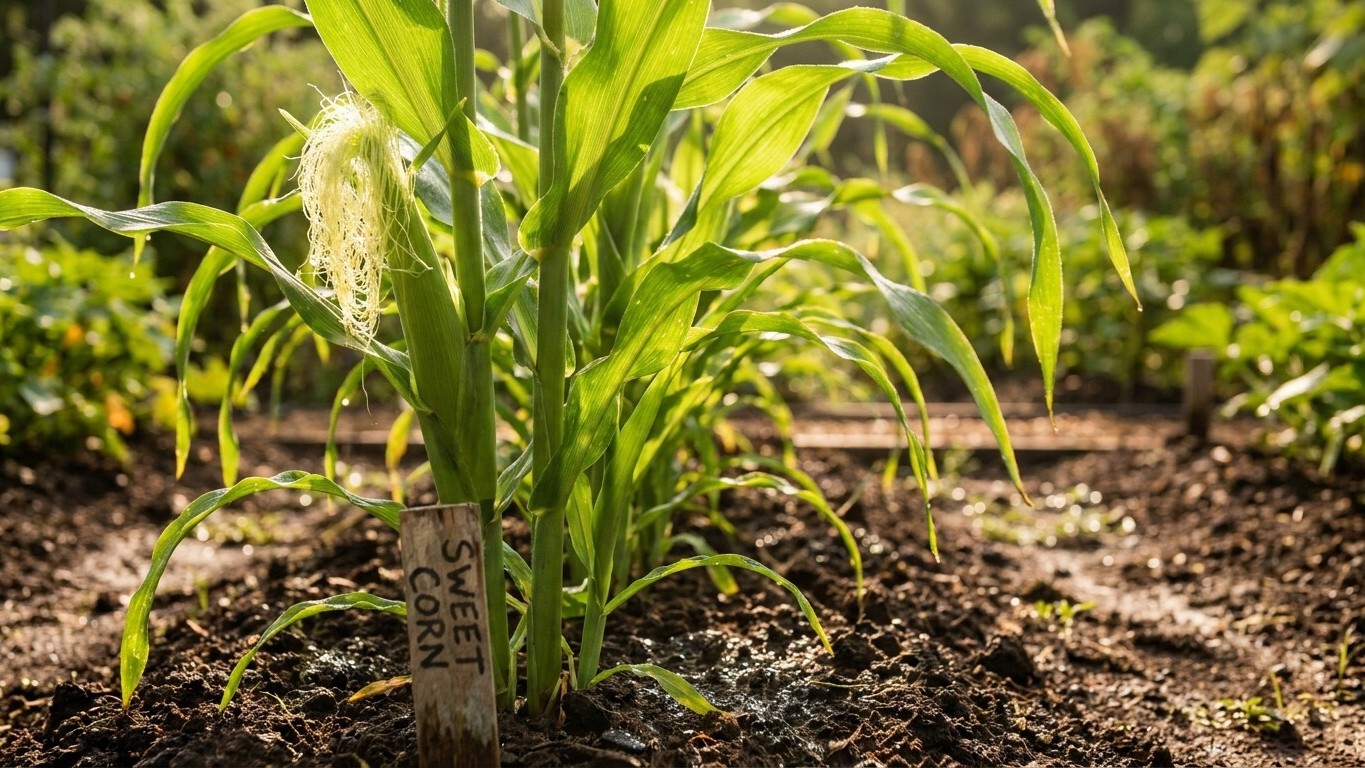

Yes, sweet corn can ripen in parts of Nevada, but the answer depends heavily on where in the state you garden. Low desert valleys with long, hot seasons give sweet corn plenty of room to mature. Higher elevation valleys around Reno, Carson City, and much of the rural interior have a much tighter window, and a late-season variety may not have time to finish before frost returns.
The short answer
Sweet corn doesn’t care about the calendar date of your last frost. It cares about soil temperature, and that number arrives well after the frost has passed. Seed planted into cold ground simply sits there, rotting or germinating unevenly, until the soil warms past roughly 60 F. That threshold, not the frost date, is the real starting gun for the sweet corn clock, and it’s a distinction a lot of home gardeners miss.
This matters more in Nevada than in most states because the gap between “frost is over” and “soil is finally warm enough” can stretch out for weeks in a cold spring, especially at higher elevation where nights stay chilly long after daytime highs look pleasant. A gardener who plants the day after the last frost, thinking they’ve gotten a head start, may actually be planting into soil that’s still too cold for corn to germinate reliably.
Once the soil clears that 60 F mark, sweet corn needs 60 to 90 days to go from planting to harvest, depending on the variety. That’s the second half of the equation, and it’s where Nevada’s geography makes this question genuinely hard to answer with one number for the whole state. NOAA’s climate normals for the Las Vegas airport show a last spring freeze probability window of January 7 to February 1, and a first fall freeze arriving December 8 to December 23. That’s an extraordinarily long frost-free stretch, but it’s also a poor stand-in for the rest of Nevada.
The Las Vegas airport site sits in a desert basin with a strong urban heat island effect, and it runs warmer than almost anywhere else in the state, in both directions of the calendar. Reno, Carson City, and pretty much any garden at elevation will see their last spring frost weeks or months later, and their first fall frost weeks or months earlier. That means the 60-to-90-day window that fits comfortably in the low desert basins can shrink dramatically, or disappear entirely, once you move into higher, cooler valleys.
Because of that spread, there’s no single planting date or frost window that applies honestly across Nevada. The state’s climate runs from Mojave Desert to alpine-adjacent valley floor, sometimes within a couple hours’ drive. The only reliable way to pin down your actual frost-free season is to check with your county extension office, which tracks local data instead of relying on a single reference station at the far southern tip of the state.
Does a late variety fit here?
Once you know roughly how long your frost-free season runs, the next question is whether a given sweet corn variety’s maturity length actually fits inside it. Utah State University Extension frames sweet corn maturity in a 60-to-90-day range from planting to harvest, and where your garden falls in that range determines what you can grow.
A 60-day variety
A fast, 60-day variety is the safer bet almost anywhere in Nevada. Even accounting for soil that takes its time warming past 60 F in spring, a 60-day corn generally has enough runway to mature before the first fall frost in most valleys around the state, low desert or higher elevation. It’s the variety length that gives the widest margin for error if the season runs a little cool or a planting gets delayed by a stretch of chilly nights.
That margin matters because Nevada springs aren’t always predictable. A cold snap that keeps soil below 60 F for an extra couple of weeks eats directly into the growing window, and a shorter-season variety absorbs that delay far better than a longer one.
A 90-day variety
A 90-day variety is a much tighter fit, and in a lot of the state it simply doesn’t work. In the low desert basins, where the frost-free season runs long, there’s likely enough time even after accounting for the lag before soil hits 60 F. But in higher-elevation valleys, where the frost-free season is compressed on both ends, a 90-day corn is asking for more time than the season is built to give. Between a late soil warm-up in spring and an early frost return in fall, the math often doesn’t close.
This is exactly the kind of detail worth confirming locally rather than guessing. A gardener at elevation who plants a 90-day variety may find themselves with a stand of corn that’s still filling out ears when the first hard frost of the season shows up. Checking your county extension office’s local frost data before committing to a longer-season variety is the difference between a full harvest and a field of unfinished ears.
What goes wrong here
- Soil sown too cold. Planting right after the last frost, before soil has actually cleared 60 F, is the most common mistake. Seed sits in cold, often damp ground, germinates unevenly or not at all, and any early stand that does come up struggles compared to corn planted a couple weeks later into properly warmed soil. The remedy is patience: wait for the soil itself to hit that threshold rather than counting days off the frost date.
- A variety too late for the season. Choosing a 90-day variety in a shorter, higher-elevation season sets up a race the corn can’t win, especially once the delay before 60 F soil is factored in. The remedy is matching variety length to your actual local frost-free window, confirmed through your county extension office rather than a statewide average that doesn’t reflect where you garden.
- Sweetness lost to tasseling timing. This one has nothing to do with Nevada’s climate at all. Su, se, and sh2 sweet corn types lose their sweetness if they tassel at the same time nearby, because cross-pollination between types changes the kernel’s sugar content. The remedy is to plant a single type in a given season, or to stagger plantings so different types don’t tassel together, and to plant sweet corn in blocks of three or more rows rather than a single thin row, which improves pollination within that block.
Common questions
Does the last frost date tell me when to plant sweet corn?
No. Sweet corn needs soil above 60 F to germinate well, and that threshold typically arrives after the last frost has passed. Planting on the frost date alone risks putting seed into ground that’s still too cold.
Why is Nevada’s frost data so hard to pin down for gardeners?
The state’s terrain ranges from low desert basins to high-elevation valleys, and frost timing shifts by weeks or months between them. A single reference station, like the Las Vegas airport, reflects an extreme desert heat-island climate that doesn’t represent Reno, Carson City, or rural elevation gardens.
Can I grow different sweet corn types in the same garden?
You can, but su, se, and sh2 types must not tassel at the same time, or cross-pollination will affect the sweetness of the kernels. Stagger plantings or grow one type per season instead.
How many days does it take for corn to ripen after the silks appear?
That’s a separate clock from the planting-to-harvest maturity length. Once silks emerge, check for three signs together before picking: dry brown silks, husks that are still moist and green, and milky juice from a punctured kernel.