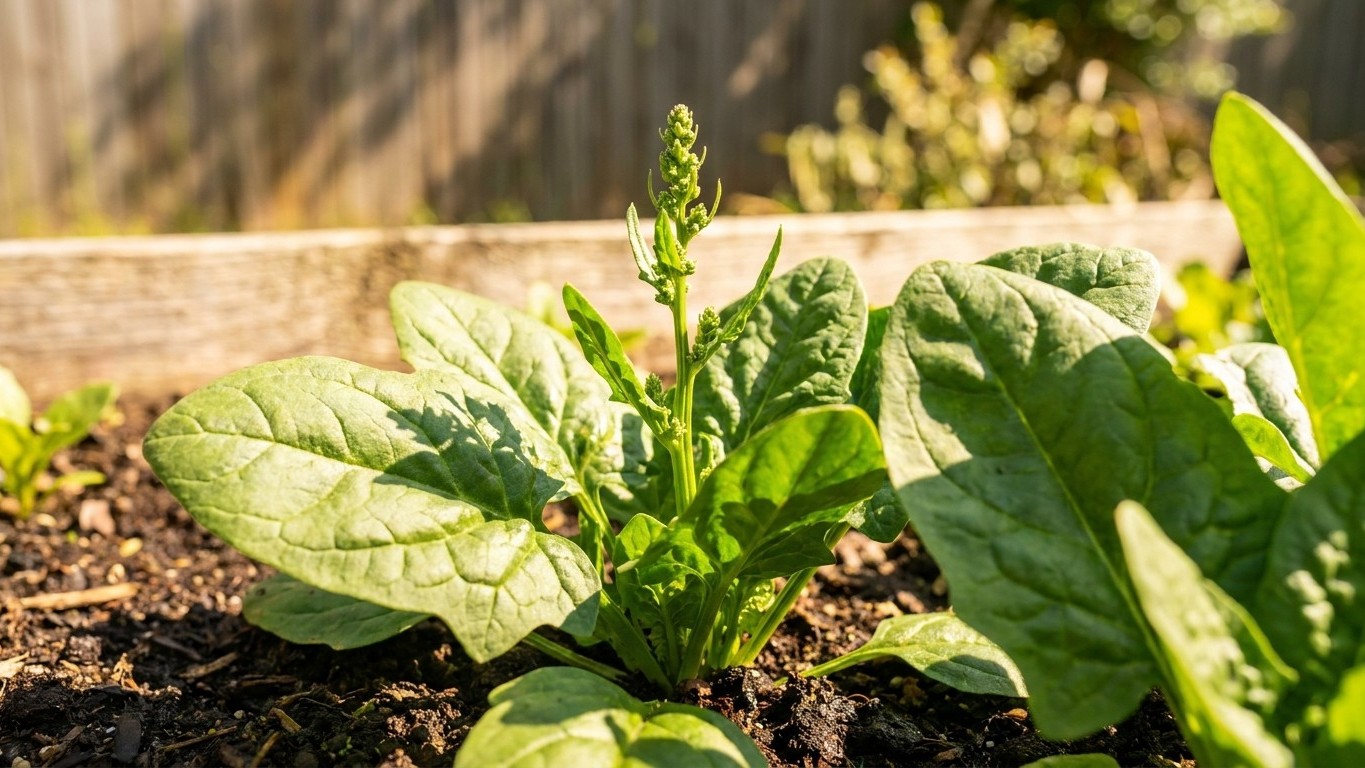

In Nova Scotia, spinach bolts early most years not because summers get hot, but because the days stay long right when the plant is still young. The province’s cool coastal summers barely slow it down: day length, not heat, is doing most of the damage here. That leaves gardeners with two short windows, spring and fall, rather than one long season.
The short answer
On the longest day of the year, Nova Scotia sees 15 hours and 25 minutes of daylight. That’s the number to keep in mind before anything else, because spinach reads day length as a signal to stop making leaves and start making a flower stalk. It doesn’t wait for a heat wave to do it. Once the days stretch out past a certain point in late spring, the plant shifts into reproduction mode whether the thermometer cooperates or not.
This is where Nova Scotia’s climate gets interesting, and a little misleading. The reference station at Halifax Stanfield averages exactly 0.0 days a year at 90°F or hotter. Zero. That’s about as low a heat load as a vegetable garden in eastern Canada can have, and it means the province almost never delivers the kind of scorching stretch that fries lettuce and spinach in a hot-summer state. So if the question is “will the heat push spinach past its 75°F comfort zone and make it bitter and stalky,” the answer here is: rarely, and not for long.
But that’s not the same as saying spinach gets a longer season in Nova Scotia. The daylight clock runs on its own schedule, independent of temperature, and 15 hours 25 minutes near the solstice is plenty of light to trigger bolting in a crop that’s sensitive to long days. A cool, gentle Nova Scotia June does not cancel that signal. The plant can be growing in perfectly comfortable temperatures and still send up a flower stalk because the days are simply too long for it to keep behaving as a leaf crop.
So the honest way to describe the limit here is that day length sets the deadline, and the region’s mild heat load only softens one part of the problem. Heat is not really working against Nova Scotia gardeners in summer. Day length is. That distinction matters because it changes what you can actually do about it: no amount of shade cloth or extra watering will hold back a plant that’s responding to sunlight duration, not soil temperature. The only real lever is timing, getting the crop planted and harvested before the days get long enough to flip the switch, or waiting until they’ve started shortening again in late summer.
How long the spring window really is
Work through the numbers for the Halifax Stanfield reference station and the spring window comes into focus, though it’s narrower than a lot of gardeners expect for a place with such mild summers.
- The average last spring frost falls on May 7. That’s a mean date, not a guarantee, so in roughly half the years frost arrives later than that, sometimes by a week or two, and later in colder inland or upland parts of the province.
- Spinach seed is normally started 2 to 3 weeks before the last frost date, which puts a realistic sowing window somewhere around mid to late April in most seasons, and later still if a cold snap pushes the frost date back.
- From that sowing point, the plant has to grow through the weeks when daylight is lengthening quickly toward the June solstice. Because Halifax records essentially no days above 90°F, heat isn’t cutting this window short, day length is doing that job on its own as the calendar rolls toward late June.
- Once daylight approaches that 15-hour-25-minute peak, the bolting signal strengthens regardless of how mild the temperatures have stayed, which means the practical spring harvest needs to happen well before the solstice rather than after it.
- That leaves a usable spring stretch of roughly six to eight weeks, from a mid-to-late April sowing through to a harvest sometime before the days get uncomfortably long, a window that’s shaped almost entirely by the clock rather than the thermometer.
The mild heat load does buy one small advantage: plants that are cutting it close to the bolting point aren’t also fighting bitterness from a heat spike, since the region rarely gets hot enough to push past that 75°F ceiling in a serious way. It’s a small consolation, since the day-length trigger arrives on schedule either way.
The autumn crop, and when the soil lets you sow
Nova Scotia gardeners get a second shot in late summer, but it’s bracketed by two very different obstacles, one at each end of the calendar.
Soil still too warm to germinate
Spinach seed germinates poorly once soil temperatures climb above 80°F, according to Utah State University Extension. In a province where the air rarely tops 90°F, this sounds like it shouldn’t be an issue, but soil holds heat longer than air does, and a run of sunny August afternoons can still keep the top few inches warm enough to slow germination even after the hottest days have passed. The practical fix is patience: wait until soil has cooled from its late-summer peak before putting seed in the ground, rather than sowing on a fixed date. A soil thermometer pushed a couple of inches down gives a better answer than the calendar does.
The first fall frost
The average first fall frost at Halifax Stanfield lands on October 18, again a mean date rather than a firm line, with roughly half of all years pushing later than that. Working backward from an October 18 harvest target, and using the 50-to-75-day window Utah State gives for planting a fall spinach crop, sowing should happen sometime between roughly early August and late August. Sow around August 4 for the long end of that range, or as late as August 29 for the short end, and the harvest lines up close to that average frost date. Because frost dates are averages and not guarantees, gardeners who want a cushion should lean toward the earlier end of that window rather than the later one, especially away from the immediate coast where frost tends to arrive sooner than at the Halifax airport station.
Variety choice matters here too, though the available data stops short of details. Bloomsdale, Melody, Teton, and Olympia are the four varieties named by Utah State University Extension’s spinach guidance, without published figures on days to maturity or bolt resistance for any of them. That’s a gap worth knowing about rather than papering over with a number pulled from somewhere else. Seed packets from different suppliers will list their own maturity estimates, and those are the numbers to check before locking in a sowing date.
Common questions
Does a cool Nova Scotia summer mean spinach can be grown all season?
No. Bolting is triggered by long days as much as by heat, and the region’s daylight still reaches 15 hours 25 minutes near the solstice regardless of how mild the temperatures stay. The cool summer helps avoid bitterness from heat, but it doesn’t stop the day-length trigger.
Why does the fall crop need to be sown so early, in August, when frost isn’t due until October?
Spinach needs 50 to 75 days from sowing to a workable harvest, per Utah State University Extension, and counting back from the average October 18 frost date lands the sowing window in early-to-late August. Waiting until September leaves too little time before the season ends.
Is heat ever the real problem for Nova Scotia spinach growers?
Rarely. The Halifax Stanfield reference station averages 0.0 days a year at 90°F or hotter, one of the lowest heat loads on this site. The 75°F growth ceiling and bitterness threshold still exist, but the region spends little time above it.
Can spinach handle a light frost in the fall?
The facts available here cover the average first fall frost date of October 18 and don’t include a separate light-frost or hard-freeze threshold, so no specific tolerance figure is given. Treat October 18 as the midpoint of the frost window, not a guaranteed safe date, since frost arrives later than that in about half of all years.