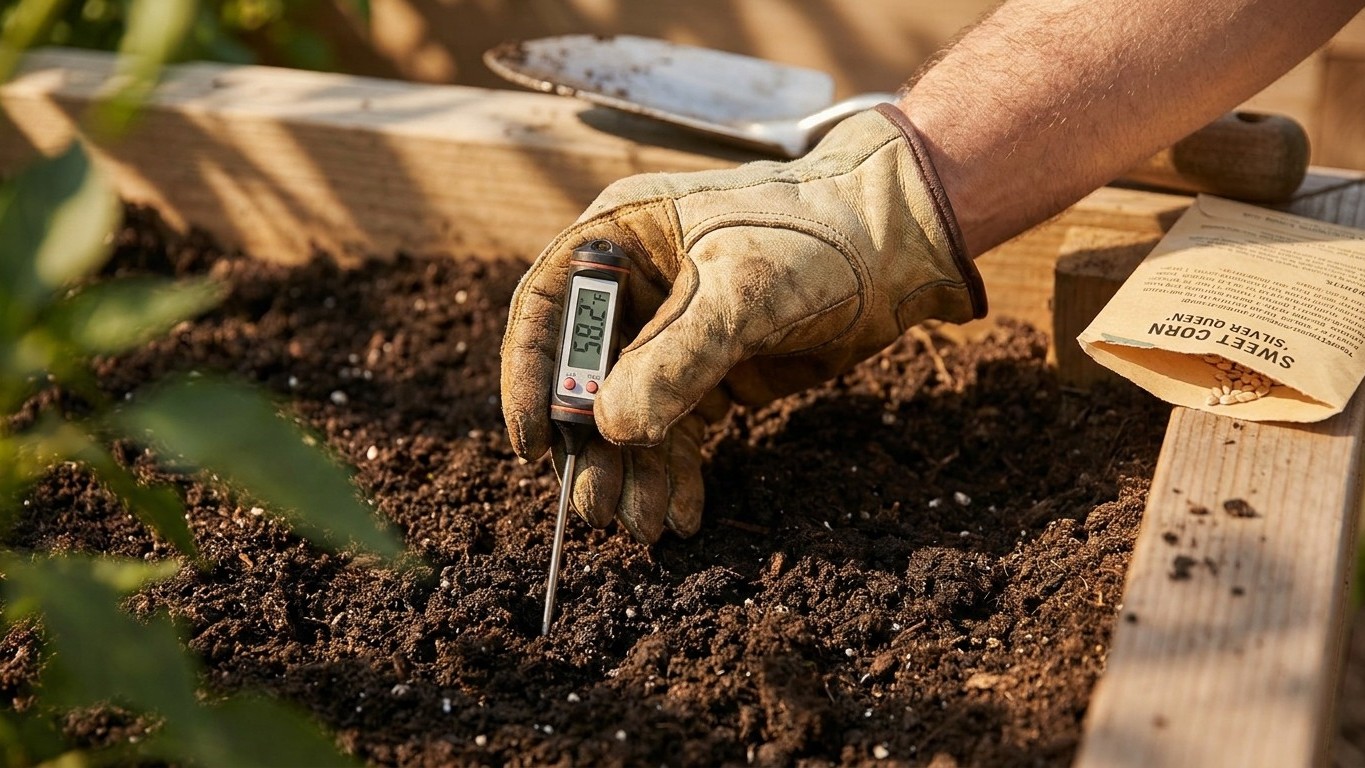

Soil temperature decides the start date, not the calendar. In Oklahoma, sweet corn seed wants soil above 60°F, a mark the ground doesn’t reach until well after the last spring frost passes through the region (March 28 to April 10 at the reference weather station). Once that threshold is crossed, most gardeners have close to 200 frost-free days ahead, more than enough room for the 60 to 90 days sweet corn needs to mature before the first fall frost arrives between October 29 and November 8.
The short answer
Air temperature and soil temperature are two different clocks, and sweet corn only cares about the second one. A calendar can tell you the frost risk has passed, but the ground underneath still holds the cold of winter for weeks afterward, especially in clay-heavy soils or shaded beds. That lag is why so many gardeners who plant “right after the last frost” end up with seed that rots in the ground instead of germinating. The fix isn’t a better calendar. It’s a soil thermometer pushed a few inches into the bed where the seed will actually sit.
At the reference station used for this region’s climate records, the last spring freeze typically falls somewhere between March 28 and April 10. Soil doesn’t reach the 60°F mark sweet corn needs on that same day, or even that same week. It comes later, once the sun has had time to warm the ground itself rather than just the air above it. Waiting for a confirmed soil reading, rather than counting days on a frost calendar, is the more reliable approach here.
The good news is that the math still works comfortably in Oklahoma’s favor. Counting from the latest recorded last frost (April 10) to the earliest recorded first fall frost (October 29) leaves roughly 200 frost-free days on the table. Even after subtracting the extra weeks it takes soil to climb past 60°F, and the sweet corn window runs 60 to 90 days from planting, there’s plenty of season left over. This isn’t a region where gardeners need to race the clock to squeeze in a single crop before frost shuts things down.
That long window comes with a tradeoff, though. This part of the country averages 70.7 days a year at 90°F or hotter, a heat load that shapes how much water the crop demands and how much stress it takes on during pollination. A wide planting window doesn’t mean every date inside it performs the same. Corn that tassels squarely in the hottest stretch of summer can struggle to pollinate well, even if the calendar math says there was plenty of time to mature. Timing inside the window matters as much as fitting inside it at all.
Does a late variety fit here?
Given a frost-free stretch this long, the question isn’t really whether a late variety can mature in time. It’s whether the timing lands it in a stretch of weather it can actually handle. Working through a 60-day and a 90-day maturity side by side makes the tradeoffs clearer.
A 60-day variety
A quick-maturing 60-day type planted once soil clears 60°F, likely sometime in spring after that reference frost window closes, has an easy path. It matures fast enough that many plantings finish before the deepest heat of summer sets in, which lowers the odds of pollination trouble during tasseling. It also leaves enough of the season in reserve that a second, later sowing for a fall harvest is realistic here, something that isn’t possible in shorter-season parts of the country. The main risk with a fast variety is planting it so early that soil hasn’t actually reached 60°F yet, undoing the advantage entirely.
A 90-day variety
A 90-day type fits the season length without issue. With roughly 200 frost-free days available, even the slowest sweet corn maturity has months of margin before the first fall frost in late October or early November. Where it runs into trouble is heat exposure, not calendar length. A 90-day crop planted in late spring often tassels during the peak of summer, right in the stretch where the region averages those 70.7 days above 90°F. That doesn’t rule the variety out. It does mean extra attention to soil moisture and, where possible, timing the planting so tasseling avoids the very hottest weeks rather than landing in the middle of them.
| Maturity class | Typical harvest timing | Heat exposure during tasseling | Fits Oklahoma’s window? |
|---|---|---|---|
| 60-day variety | Earlier in summer | Lower, often ahead of peak heat | Yes, comfortably |
| 90-day variety | Mid to late summer | Higher, often during peak heat | Yes, but watch tasseling timing |
What goes wrong here
- Soil sown too cold. Planting on the frost date instead of the soil reading is the most common mistake in this region, since the two are weeks apart. Cold, wet soil rots seed before it can germinate, leaving thin, patchy rows. The remedy is simple: check soil temperature at planting depth directly and wait for a steady reading above 60°F before dropping seed, regardless of what the frost calendar says.
- A variety too late for the season. The frost-free window here is long enough that maturity length rarely causes an outright failure, but planting a slow variety too late in the season can still push its tasseling into the hottest stretch of summer, when the region’s 70.7 average days above 90°F take a toll on pollination. The fix is planning the planting date around when tasseling will occur, not just around when the seed goes in the ground.
- Sweetness lost to nearby tasseling. This one has nothing to do with weather. Standard (su), sugary enhanced (se), and supersweet (sh2) types cross-pollinate readily, and when two types tassel at the same time, the sweetness of the harvest suffers regardless of how well the season otherwise cooperated. The remedy is timing plantings so different types don’t tassel together, growing only one type in a given season, or keeping plantings arranged in blocks of three or more rows, which also improves pollination overall.
Common questions
Does a raised bed or dark mulch help soil reach 60°F sooner? Raised beds and darker soil surfaces generally warm faster in spring than flat, unmulched ground, since they drain better and absorb more heat. Neither replaces the need to confirm the actual reading with a soil thermometer before planting, since bed depth, moisture, and shade all shift the result.
What happens if I plant before the soil hits 60°F? Seed sitting in cold, damp soil is prone to rot before it germinates, or it emerges slowly and unevenly, leaving a thin stand that never quite catches up to a properly timed planting.
Can I plant a second sweet corn crop later in the same season? The frost-free window here, running from around the last spring frost to the first fall frost between October 29 and November 8, is wide enough to support a succession planting in many years. The key is making sure a second sowing still leaves 60 to 90 days before the first fall frost, and ideally avoiding tasseling during the hottest stretch of summer.
How do I know sweet corn is actually ready to pick? Look for three signs together, not just one: silks that have dried and turned brown, husks that are still moist and green, and milky (not clear or dry) juice from a kernel that’s been punctured. Any single sign on its own can be misleading.