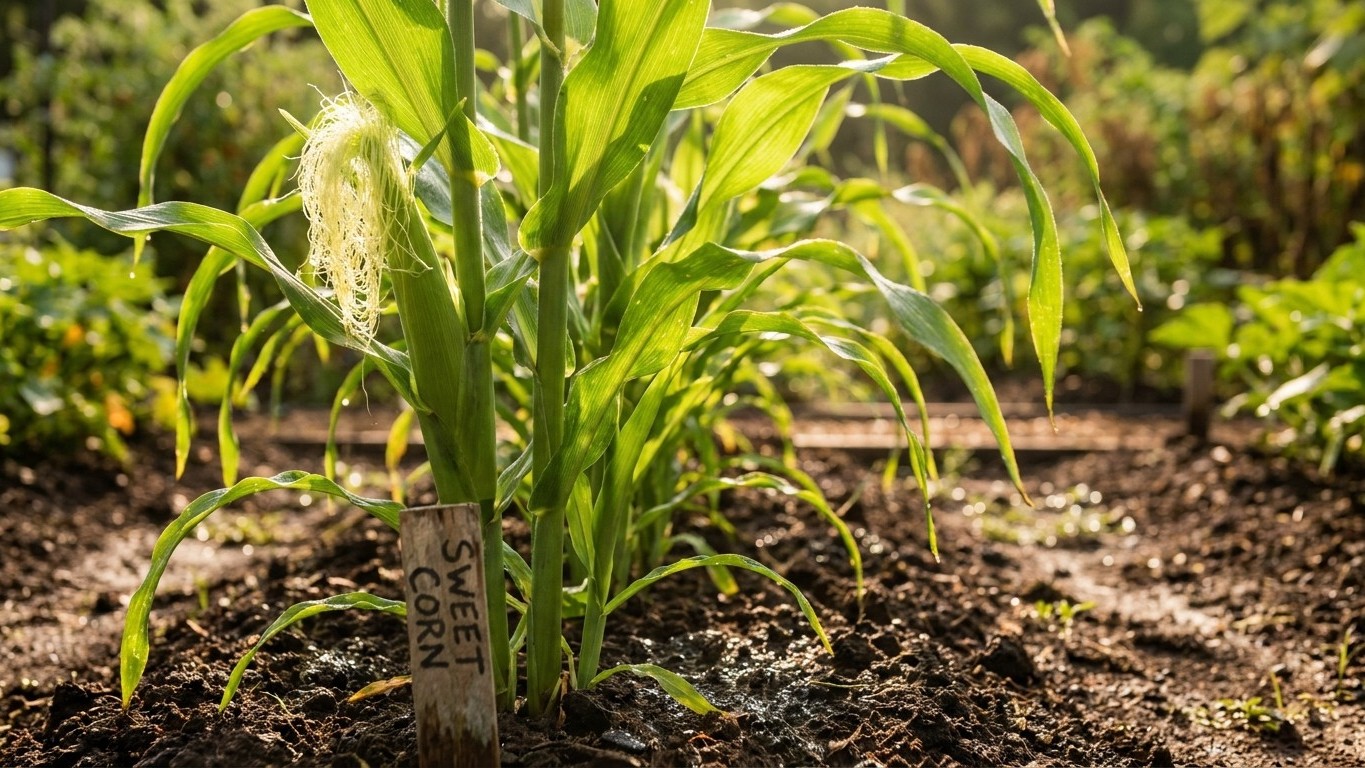

Yes, in western Oregon the growing season is long enough for sweet corn to reach full maturity, provided the seed goes into ground that has actually warmed up rather than ground that merely survived the last frost. In the high desert of central and eastern Oregon, the calculus changes fast, and a variety that ripens easily near Portland can run out of season entirely.
The short answer
Here’s what most gardeners get wrong before they even plant a single kernel: they plant on the last frost date instead of waiting for the soil to actually warm up. Sweet corn needs soil above 60 F to germinate reliably, and that threshold arrives measurably later than the last spring frost, not on the same week. In western Oregon, that last frost falls somewhere between March 6 and March 21, based on NOAA’s 1991-2020 climate normals for the Portland reference station. Soil temperature doesn’t track the air temperature on a one-to-one basis, so a garden bed can sit at 45 F or 50 F for weeks after the frost risk has passed. Pushing seed into cold soil doesn’t just delay germination, it can rot the kernel outright before it ever sprouts.
Once the soil clears that 60 F mark, the countdown that matters is the 60 to 90 days sweet corn needs from planting to maturity. The question then becomes whether that window closes before autumn shuts the door. First fall frost at the Portland reference station lands between November 11 and November 27. Stack that against a last spring frost ending around March 21, and the frost-free stretch runs something like 235 days, well more than double what even a slow, 90-day variety requires. That’s a wide enough margin to absorb a slow soil warm-up in a cool, wet spring and still bring a late-maturing type home before the ground turns cold again.
That comfortable margin belongs to western Oregon, the Willamette Valley and areas with a similar maritime climate. It does not automatically transfer east of the Cascades. Central and eastern Oregon sit in high-desert conditions with a noticeably shorter frost-free season, and the frost dates cited here come from a western Oregon station, so they should not be stretched across the whole state. A gardener in Bend or Burns is working with a tighter window than the one described above, even if the calendar says the same month.
Heat during the growing season matters too, though in a different way than frost does. Portland’s climate normals show an average of 11.9 days a year reaching 90 F or higher. That’s a moderate heat load, enough to push pollination and water demand but not the kind of relentless, weeks-long heat stress that shuts a crop down. Sweet corn tolerates that heat load without much trouble as long as soil moisture keeps pace, which mostly comes down to watering during tasseling, not to variety choice.
Does a late variety fit here?
Not every sweet corn variety asks the same thing of the season. The number attached to a variety, whether it’s marketed as an early or a late type, refers to days from planting to harvest, and that number is what needs to be checked against the frost-free window above, not against the calendar date on a seed packet.
A 60-day variety
A fast, roughly 60-day type is the easiest fit anywhere in western Oregon. Even accounting for a slow spring where the soil doesn’t reach 60 F until well into the season, there’s still comfortable room to mature and harvest with weeks to spare before the earliest fall frost on November 11. This is the safer choice for anyone planting later than planned, gardening in a shadier yard, or simply wanting a buffer against an unusually cool, wet spring, which the Pacific Northwest produces often enough.
A 90-day variety
A slower, roughly 90-day type still fits inside the western Oregon window described above. Even if soil warming pushes planting later than ideal, a 90-day corn maturing in late summer still lands well ahead of the November 11 to 27 fall frost range, leaving real margin rather than a photo finish. In that part of the state, a late variety is a legitimate choice, not a gamble.
That answer flips in central and eastern Oregon. The high-desert growing season there is shorter than the western Oregon frost dates used in this article, and no equivalent frost-date data for that region is included here. Given that shorter season, a 90-day variety plainly does not fit reliably east of the Cascades. Gardeners in that part of the state are better served sticking with a 60-day type and accepting the trade-off in ear size or flavor complexity that sometimes comes with faster maturity.
What goes wrong here
- Soil sown too cold. Planting on the last frost date instead of waiting for 60 F soil is the most common mistake, and it isn’t a minor delay, it can rot seed outright before germination. The remedy is simple: check soil temperature directly with a thermometer instead of relying on the calendar, and hold off until it consistently reads 60 F or above, even if that means planting weeks after the last frost has passed.
- A variety too late for the season. This mainly bites gardeners east of the Cascades, where the high-desert season is shorter than the western Oregon window described above. A 90-day variety planted there can still be immature when the first fall frost arrives. The remedy is choosing a 60-day type in that region, or in western Oregon, planting the 90-day variety as early as soil temperature allows rather than pushing it late into spring.
- Sweetness lost to tasseling together, and it has nothing to do with climate. Su, se, and sh2 sweet corn types cross-pollinate when their tassels shed pollen at the same time, and the result is starchy, disappointing ears no matter how good the season was. The remedy isn’t a distance measurement, because no isolation distance is published for this. It’s timing: stagger plantings so different types don’t tassel in the same window, and keep each type in its own block of three or more rows so pollen from one doesn’t drift onto the silks of another.
Common questions
How do you know when sweet corn is actually ripe?
No single sign is enough on its own. Look for three signs together: silks that have turned dry and brown, husks that are still moist and green, and a puncture test where the kernel releases milky juice rather than clear liquid or a dry, doughy interior.
Can a 90-day sweet corn variety work in eastern Oregon?
It’s a poor bet. The high-desert season east of the Cascades runs shorter than the western Oregon frost window used in this article, and no separate frost-date data for that region is given here. A 60-day type is the safer, more reliable choice for that part of the state.
Does the last frost date tell you when to plant sweet corn?
No. Sweet corn needs soil above 60 F to germinate well, and that threshold arrives measurably later than the last spring frost. Planting on the frost date alone risks putting seed into soil that’s still too cold.
Can you grow two different sweet corn types in the same garden without losing sweetness?
Yes, as long as they don’t tassel at the same time. Stagger the planting dates so the pollen shed windows don’t overlap, and plant each type in a block of three or more rows rather than a single thin row.