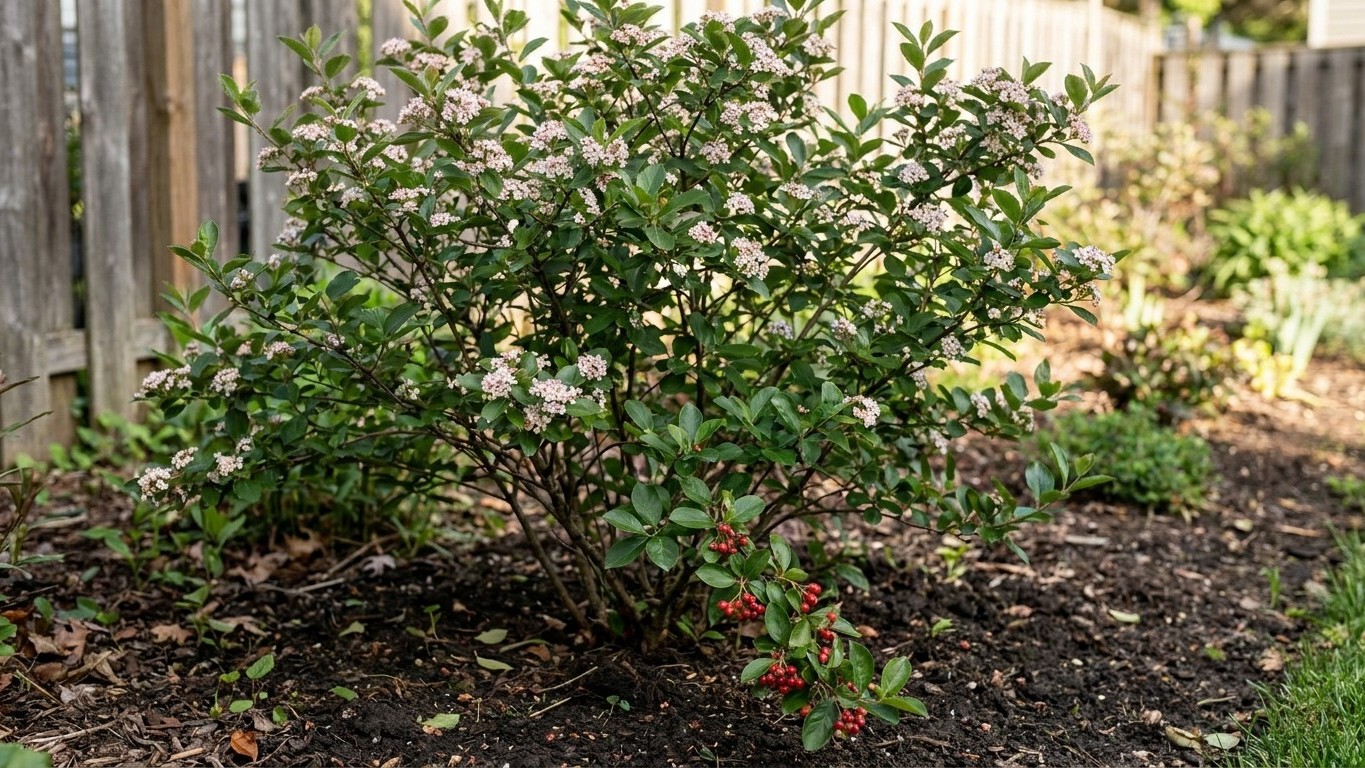

Aronia arbutifolia, commonly sold as chokeberry or red chokeberry, survives across USDA hardiness zones 3a through 9b, tolerates everything from clay to wet, occasionally flooded soil, and blooms in spring on a slow-growing, low-maintenance frame that tops out at 3 to 6 feet wide. Where it goes wrong is almost always spacing and pruning timing, not hardiness.
Where it will and will not survive

The USDA hardiness range for Aronia arbutifolia is 3a-9b, wider than most shrubs sold at a typical garden center. That means the plant can survive winter cold down through zone 3a and summer heat up through zone 9b, not that it thrives equally at both ends. A shrub rated to the coldest edge of its range is surviving there, not thriving there, and the same caution runs at the warm end. Read 9b as “will not simply die from heat” rather than “will look its best.”
Below the bottom of the range, winter temperatures routinely drop past what the root system and dormant wood can take, so planting there is a gamble on a mild year. Above the top, the plant faces a length of heat or lack of chill hours it was never rated for, and decline shows up as reduced vigor rather than outright winterkill.
The range does not tell you which side of that line your yard sits on. Hardiness zones are drawn from decades of minimum winter temperature data, not state borders, and two properties fifty miles apart can land in different zones depending on elevation or water proximity. Guessing your zone from a general sense of the region is the most common mistake made before a shrub goes into the ground.
The fix: look up your own zone rather than assume it, using the hardiness zone guide on this site, which carries data down to the county level. Once you have that number, comparing it to 3a-9b takes five seconds and settles the survival question before you spend money and a season of watering.
The growing-condition detail here comes from the North Carolina Extension Gardener Plant Toolbox. The USDA hardiness range it reports is a national standard, valid wherever you garden. Any regional planting advice that same extension office gives for North Carolina’s coastal plain, piedmont, or mountain regions is specific to that state and should not be carried over elsewhere, even to a spot sharing the same zone number.
Light, soil and where it belongs
The Extension listing gives a set of conditions this shrub tolerates, not one ideal recipe it demands.
| Condition | What it tolerates |
|---|---|
| Light | Full sun (6+ hours direct) or partial shade (2-6 hours direct) |
| Soil texture | Clay, Loam (silt) |
| Soil pH | Acid (below 6.0), Neutral (6.0-8.0), Alkaline (above 8.0) |
| Drainage | Frequent standing water, Good drainage, Moist, Occasionally wet |
That drainage line is worth noting. Most shrubs sold for the home landscape demand good drainage and sulk in a low spot that stays wet after rain. This one tolerates standing water on one end and good drainage on the other, making it a forgiving choice for a low corner of the yard, a rain garden edge, or the area near a downspout.
What it looks like from the window
The habit is described as columnar, erect, multi-stemmed, open, spreading, and vase-shaped: several upright stems from the base rather than one central trunk, opening out with age. Against a fence it reads as an upright screen rather than a solid wall, since the open habit lets light and view pass through even at maturity. Its deciduous foliage means it will read as a bare, multi-stemmed thicket in winter.
Mature spread is given as 3 to 6 feet, implying two different spacing decisions. Planted as a hedge, centers spaced toward the 3-foot end let plants merge into a continuous mass sooner, at the cost of more plants per running foot. Planted as a standalone specimen, giving it the full 6 feet in every direction lets the open, vase-shaped habit show without a neighbor crowding one side. Splitting the difference at 4 to 5 feet is common, but decide on purpose rather than by default.
When it flowers, and what that decides
Bloom time is listed as spring, a season rather than a calendar date, since the actual week shifts with latitude, elevation, and how early or late a given spring runs.
The more useful fact hiding inside “spring bloom” is what it decides about pruning. Flowering shrubs fall into two rough camps. Some set flower buds on the current season’s new growth, so they can be pruned hard in late winter before growth starts without losing a bloom. Others set buds the previous year on old wood, so pruning before bloom cuts off the buds about to open; the correct window for those is right after flowering finishes.
The Extension source does not settle which camp Aronia arbutifolia falls into. Rather than guess, watch it for one season. If a hard late-winter cut noticeably reduces that spring’s flowering, the wood was set the year before, and next time the cut should wait until after bloom. If pre-spring pruning has no effect, the buds form on new wood and that timing is safe going forward. One season of attention settles a question no label answers, at the cost of a look in April or May.
In practice, most gardeners default to a light touch either way. The shrub’s slow growth and low maintenance needs mean it rarely requires the aggressive rejuvenation pruning that forces the old-wood-versus-new-wood question. Removing dead, damaged, or crossing stems can be done at nearly any time; it’s the heavier structural cuts where timing actually matters.
Planting and the first two years
Getting a shrub like this into the ground correctly matters more than any input added afterward.
- Plant in early spring or fall, when temperatures are moderate and the plant is not fighting summer heat while trying to root.
- Dig the hole wider than it is deep, at least twice the width of the root ball, since roots spread outward far more than they grow down at first.
- Set the root flare right at grade or slightly above it; buried too deep, it can rot at the base for years afterward.
- Tease out any circling roots before planting, since left alone they keep circling underground and eventually strangle the plant.
- Backfill with the native soil that came out of the hole rather than amending heavily, so roots spread out instead of staying in a softer pocket.
- Water deeply at planting and on a regular schedule through that first season, soaking the full root zone rather than a quick sprinkle.
- Mulch two to three inches deep in a wide ring, kept back from the stems to avoid rot and rodent damage.
The listed tolerance for wet and dry conditions once established is worth reading carefully. “Drought resistant” describes a plant with two or three seasons of root growth behind it, not one still filling out its first summer. A newly planted shrub can wilt and die in a dry stretch an older specimen would shrug off, so the first two summers need the same attention a less drought-tolerant plant would get.
A common pattern with slow-growing, multi-stemmed shrubs: year one often looks like almost nothing, since the plant is putting energy into roots; year two shows real filling in; year three is closer to the shrub’s true performance. Digging up a shrub that looks stalled in its first summer, assuming it failed, is a common and avoidable mistake.
What it resists, and what it does not
Resistance, wherever claimed for any plant, describes a tendency rather than a guarantee. A shrub listed as deer resistant gets passed over more often than a preferred species, not skipped entirely.
What the source does give clearly is growth habit and care demand:
| Trait | What the source lists | What it means in practice |
|---|---|---|
| Growth rate | Slow | Reaches its mature 3-6 foot spread over several years; less frequent pruning needed |
| Maintenance | Low | Not a shrub that demands seasonal feeding, spraying, or shaping to perform |
| Attracts | Butterflies, Pollinators, Small Mammals, Songbirds | Functions as wildlife habitat; expect visible activity around bloom and fruit periods |
Slow growth paired with low maintenance suits a spot that won’t get regular attention, a property line, a rain garden, the back of a border, since the shrub is unlikely to outgrow its space or demand a maintenance schedule. It also means patience is part of the deal; filling a 6-foot spread is a multi-year project, not a one-season fix.
Common questions
Is Aronia arbutifolia the same plant as “chokeberry” in general?
Not necessarily. “Chokeberry” is used broadly for the genus Aronia, which includes other species such as black chokeberry, so the common name alone does not confirm you have this particular red-fruited species.
Can the berries be eaten?
The extension source describes the raw berries as bitter and tart, and notes the fruit is used to make jams and jellies. It also notes red chokeberry is sweeter than black chokeberry, though that is a comparison between species rather than a claim the raw fruit is sweet.
Does “Native Plant” mean it’s native to my yard?
The source classifying this shrub as native is a North Carolina extension office, and in that context “native” refers to the southeastern United States. It does not confirm native status for every region where the shrub is sold or hardy.
How close can it go to a fence or foundation?
Given its 3 to 6 foot mature spread, keep at least half that distance, roughly 1.5 to 3 feet, between the planting center and a fixed structure, more if planting it as a wide-spreading specimen rather than a tight hedge.