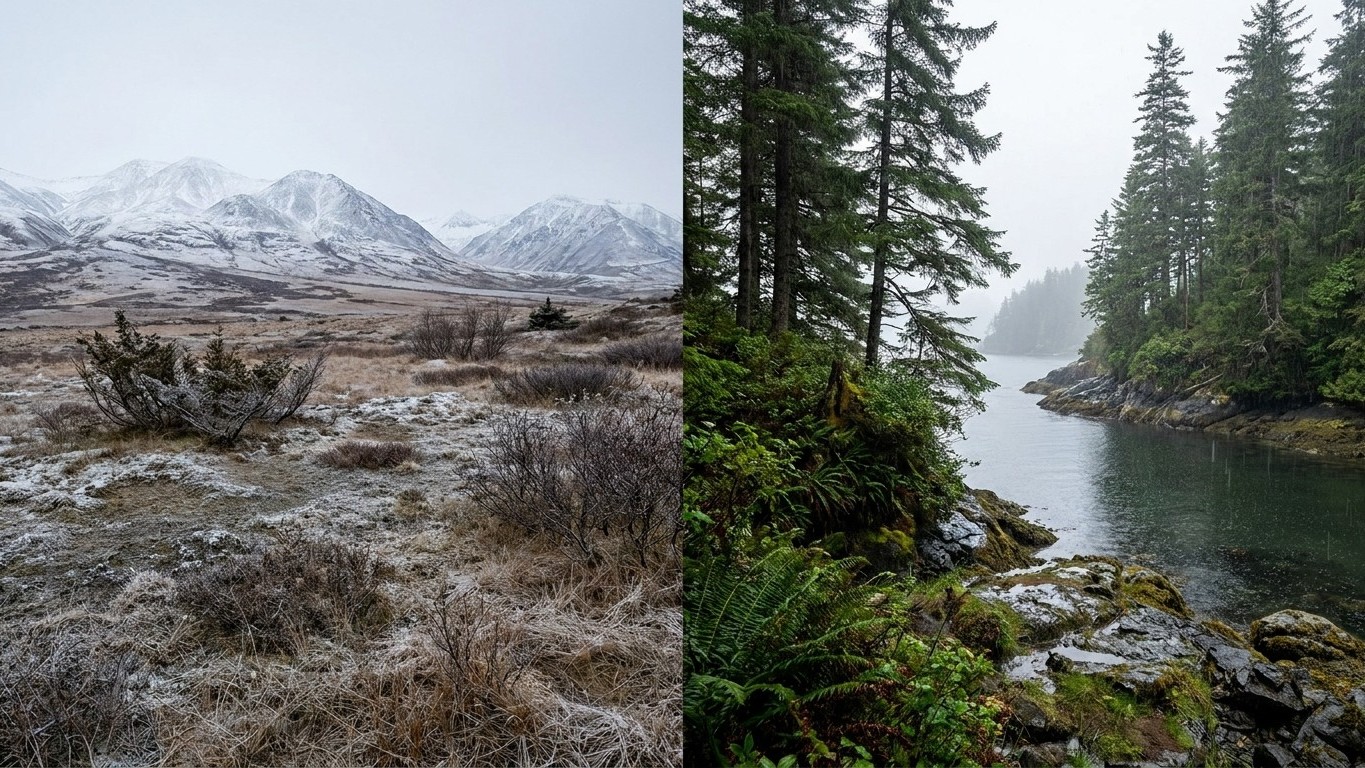

Michigan’s USDA hardiness range runs from 4a to 6b, a spread wide enough that a plant thriving in the Detroit suburbs can freeze solid up near Marquette. Of the 65 landscape plants documented on this site, 50 handle the whole range, 14 survive only part of it, and just 1 fails everywhere in the state.
What will not survive a winter in Michigan

Start with the part of this list nobody wants to read but everybody needs: the plant that cannot make it in any corner of Michigan, from the mildest pocket along Lake Michigan’s shore to the coldest stretch of the Upper Peninsula. Crossing the state’s 4a-6b range against the 65 species this site tracks turns up exactly one such plant.
Ficus carica, the common fig, doesn’t clear the bar anywhere in Michigan. The mismatch runs on the warm side of the ledger, not the cold one: this is a plant built for climates milder than even Michigan’s warmest 6b pocket offers, so the state’s entire hardiness range sits below what it needs to survive outdoors year-round.
| Plant | Where it fails | Type of mismatch |
|---|---|---|
| Ficus carica (common fig) | Statewide, 4a through 6b | Too cold for the plant across the entire range |
Why “hardy” isn’t the same as “happy”
One thing worth saying plainly, because it trips people up constantly: hardiness ratings measure survival, not comfort. A plant rated for Michigan’s zones can still sulk here if the state sits at the warm edge of what it tolerates, since the upper end of a hardiness range is frequently a heat ceiling rather than a cold floor. That distinction matters more in the next section, where the picture stops being a simple yes or no.
The plants that work in part of the state and not the rest
This is where a statewide answer breaks down, because Michigan isn’t one zone, it’s a range of them. Fourteen of the 65 plants this site documents are hardy somewhere in Michigan but not everywhere, and telling every reader the same thing about any of them would be wrong for whoever lives at the cold end.
All 14 fail on the cold side of the state rather than the warm side. Eleven of them drop out only in the coldest two zones, 4a and 4b. Three others fail across a wider cold band, missing 4a, 4b, 5a and 5b as well.
| Plant | Fails in these Michigan zones |
|---|---|
| Asimina triloba (pawpaw) | 4a, 4b |
| Fragaria virginiana (wild strawberry) | 4a, 4b |
| Fragaria x ananassa (garden strawberry) | 4a, 4b |
| Prunus persica (peach) | 4a, 4b |
| Amsonia hubrichtii (bluestar) | 4a, 4b |
| Lavandula angustifolia (English lavender) | 4a, 4b |
| Buxus sempervirens (boxwood) | 4a, 4b |
| Fothergilla gardenii (dwarf fothergilla) | 4a, 4b |
| Itea virginica (Virginia sweetspire) | 4a, 4b |
| Cornus florida (flowering dogwood) | 4a, 4b |
| Liquidambar styraciflua (sweetgum) | 4a, 4b |
| Hydrangea macrophylla (bigleaf hydrangea) | 4a, 4b, 5a, 5b |
| Lagerstroemia indica (crape myrtle) | 4a, 4b, 5a, 5b |
| Magnolia grandiflora (southern magnolia) | 4a, 4b, 5a, 5b |
None of these fail on the warm end. That’s a useful thing to notice: if you garden anywhere in Michigan’s southern tier, every plant on this list is fair game. If you’re up where winters run harder, closer to the state’s colder zones, several of them, bigleaf hydrangea and crape myrtle especially, are off the table.
Finding out which zone applies to your own address takes one lookup. Michigan’s insulation page carries the county-level zone picture for the state, which is the fastest way to pin down whether you’re standing in 4a or 6b before buying anything on this list.
The soil and the summer they will be planted into
Michigan’s official state soil, the Kalkaska series, is a Spodosol, the kind of sandy, strongly acid ground that typically forms under conifer stands. Its surface runs about pH 4.7, made up of 86 percent sand, 5 percent clay and 9 percent silt, with organic matter around 75 percent and drainage described as somewhat excessive.
For a woody plant, that combination cuts two ways. The sand and the excessive drainage mean winter wet, which rots roots faster than winter cold kills them, is rarely the threat here that it is on heavier ground. But that same fast-draining sand also means water and nutrients move through quickly, so plants get less benefit from any given rain than they would on soil that holds moisture longer. The acid pH, meanwhile, tilts the table toward acid-loving shrubs like Ilex glabra, Kalmia latifolia and Clethra alnifolia, all of which appear on the list of plants hardy across the whole state.
None of this describes any one backyard. Kalkaska is the soil that represents Michigan on paper, mapped from hundreds of sampled components, not a promise about what’s under a specific lawn. River bottoms, hill country and any lot a builder has graded will differ, sometimes completely. A soil test is still the only way to know what’s actually there.
What the summer rain adds up to
Michigan sees about 10.0 inches of rain across June, July and August, out of 34.3 inches for the year, with August running driest at 3.26 inches. June and July land close behind, at 3.26 and 3.51 inches.
Ten inches over a summer sounds like a decent cushion, but the number means something different depending on what it’s falling onto. On the sandy Kalkaska profile, that rain drains through within a day or so, leaving less stored moisture for roots to draw on between storms. On a heavier clay soil elsewhere in the state, the same rainfall would sit longer in the root zone. The rainfall figure and the soil type have to be read together, not converted into a fixed watering routine, since neither one alone tells the full story and a rain gauge on the actual property is what settles it.
When to plant, here
Michigan’s last spring frost falls around April 30 in the Detroit area, with most of the Lower Peninsula clearing frost by early to mid May. First fall frost arrives October 6 to October 21 in zone 6a. Those two dates frame the planting calendar, and the logic behind them matters more than the calendar dates themselves.
A newly planted tree or shrub needs to grow roots before it’s forced to support leaves through a hot stretch or hold up against a hard freeze. Spring planting gives roots a full season, spring through fall, to establish before the plant has to survive its first winter. Fall planting works too, since cooler air and still-warm soil favor root growth without the stress of supporting new leaf growth, but it leaves less runway before the ground freezes, and that runway shrinks fast the farther north you go.
| Window | Best suited for | Main risk |
|---|---|---|
| Spring (after last frost, into May) | Most Trees, Shrubs and Perennials; a full growing season to establish roots | A late frost snap catching new growth off guard |
| Fall (before first frost, roughly September into early October) | Root establishment in cooler soil without leaf stress | Not enough time before freeze-up, especially in the coldest zones |
In the coldest slice of Michigan’s range, that October 6 frost date leaves a narrow fall window, so spring planting carries less risk up there. Both frost dates are averages drawn from a reference weather station over a 30-year period, not a guarantee for any specific week, and a new planting needs regular water through its entire first season regardless of what its mature drought rating eventually says. Established-plant ratings describe plants with roots already built out; a first-year planting hasn’t earned that tolerance yet.
Where to read about each one
Fifty of the 65 documented plants clear every zone in Michigan’s 4a-6b range, which covers most of what a Michigan yard is likely to include. Among the trees, that list runs from Acer rubrum and Acer saccharum to Quercus alba, Quercus rubra, Betula nigra, Cercis canadensis, Ginkgo biloba, Nyssa sylvatica, Thuja occidentalis and Tilia americana. On the shrub side, Aronia arbutifolia, Clethra alnifolia, Hydrangea paniculata, Ilex glabra, Ilex verticillata, Kalmia latifolia, Physocarpus opulifolius, Spiraea japonica, Syringa vulgaris, Viburnum dentatum and Weigela florida all hold up statewide. Perennials with the same full-state clearance include Echinacea purpurea, Rudbeckia fulgida, Monarda didyma, Phlox paniculata, Salvia nemorosa, Iris sibirica, Baptisia australis and Achillea millefolium.
The 14 plants covered earlier, boxwood, flowering dogwood, bigleaf hydrangea, crape myrtle and the rest, still belong on a Michigan planting list, just with the zone caveat attached: check where you fall on the 4a-6b spread before committing to them.
Every hardiness figure on this page comes from a university extension plant database, crossed against Michigan’s local USDA zone range as documented on this site. That’s a separate measurement from the apple variety adaptation zones tracked elsewhere on this site; those describe a fruit variety’s performance range, not straight cold-hardiness survival, and the two shouldn’t be read as interchangeable.