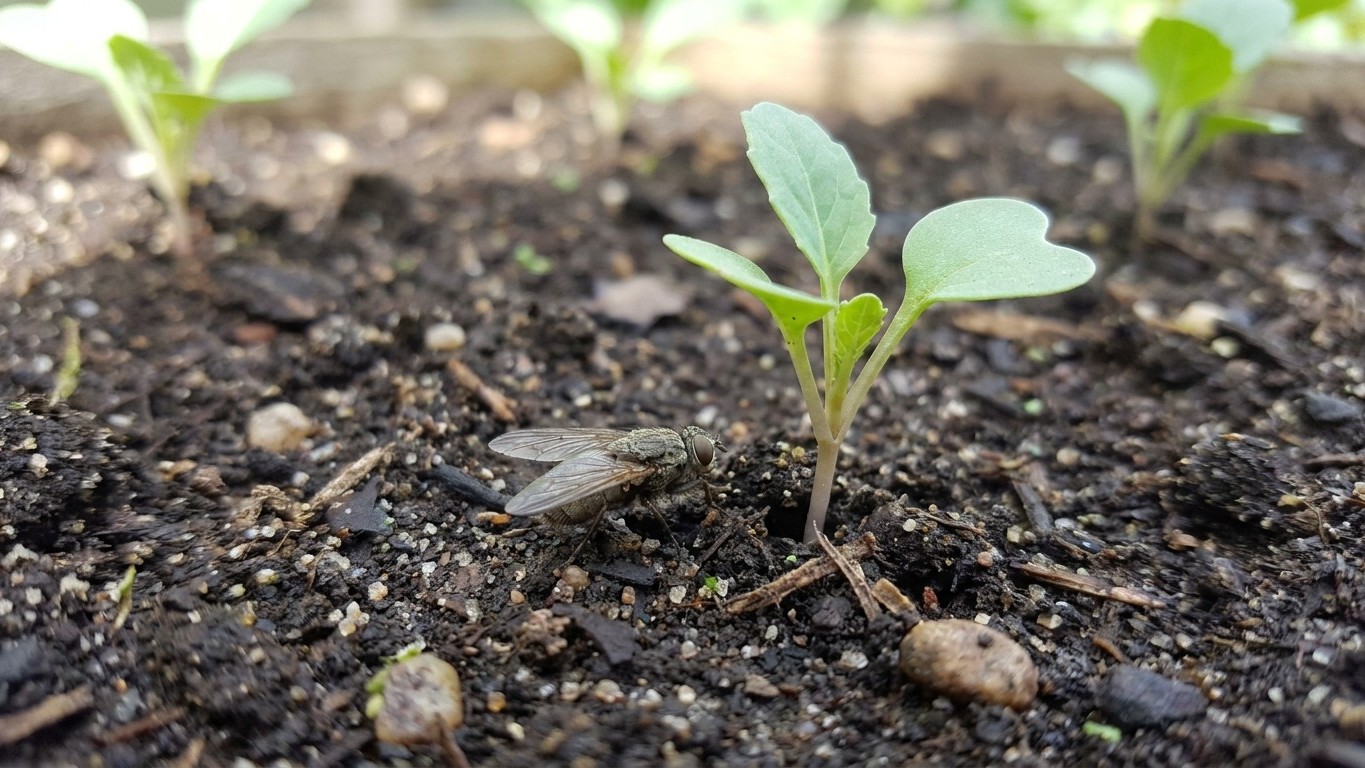

Cabbage root maggot fly shows up in Massachusetts as soil warms in spring, when the first adults emerge to lay eggs at the base of young transplants, and a lighter second flight can follow later in the season as soil cools again in fall. UMass Extension doesn’t set a fixed calendar date for this species, so gardeners track soil temperature and their own last frost date instead of a single day marked on a calendar.
The weeks to watch

The flight of this fly tracks soil temperature, not a printed date. Adults become active once soil hits roughly the mid-40s Fahrenheit and stays there for several days running, which in most of Massachusetts lines up with the stretch when early brassica transplants are going into the ground. UMass Extension‘s home vegetable garden fact sheet gives specific windows for several other pests, winter moth, European corn borer, squash bug, but it doesn’t publish a set flight window for cabbage root maggot fly. That gap matters: it means there’s no official Massachusetts date to circle on the calendar for this particular insect, and the general soil-temperature pattern used across the Northeast is what fills the space.
First flight, spring
The spring flight is the one that does the most damage, because it lands right when cole crop seedlings are smallest and most vulnerable. Females seek out the soft soil around a freshly disturbed Transplant and lay eggs at the stem base, often within days of the plant going into the ground.
Second flight, late summer into fall
A second, usually smaller generation can appear as soil temperatures cool from summer highs, most often affecting fall plantings of radish, turnip, or a second round of brassicas. In a state with Massachusetts’ shorter, cooler growing season, this later flight tends to be less severe than the spring one, but it’s not absent.
Reading the calendar from your last frost

The one date most Massachusetts gardeners already track is the last spring frost, and it’s a reasonable anchor for this pest too, since transplanting timing drives when the flies find their targets. NOAA’s 1991-2020 climate data puts the last spring freeze at the Boston-area reference station between April 1 and April 8. That station sits at Logan, a waterfront spot that runs milder than almost anywhere else in the state, so inland suburbs and the Berkshires should expect their own last frost to land later, sometimes by two or three weeks.
From there, the math is simple enough to redo with a local frost date instead of Boston’s:
- Start from your own last spring frost. If you garden inland or west of Route 128, add one to three weeks to the Logan-area window before you plant.
- Count two to three weeks past transplanting for the first visible wilting or stunting, since that’s roughly how long it takes eggs laid at the stem base to hatch and the larvae to start feeding.
That arithmetic decides when a physical cover needs to be in place. It has to go on at transplanting, before the first flies arrive, and it can generally come off once plants are established enough to shrug off some root feeding, usually once the true leaves are well developed.
What it attacks, and what the damage looks like

A gardener almost always spots the damage before they spot the insect. The first sign is usually a plant that wilts during the heat of the day even though the soil is moist, followed by yellowing outer leaves and stunted growth that doesn’t bounce back overnight. Pull a struggling seedling and the roots often show narrow brown tunnels or a scarred, rotted surface, sometimes with the plant toppling over entirely if the main root has been chewed through.
The crops most at risk all belong to the same family:
- Cabbage
- Broccoli
- Cauliflower
- Brussels sprouts
- Radish
- Turnip and rutabaga
The damage itself comes entirely from the larval stage, the small white maggots that hatch from eggs laid near the stem and then tunnel into roots. The adult fly, a gray insect roughly the size of a housefly, doesn’t feed on the plant at all, it just lays eggs. That distinction matters for treatment: anything aimed at the adult only works before eggs are laid, and once maggots are inside a root, the plant’s fate is largely already decided.
How Massachusetts sits in this pest’s range

This site currently documents cabbage root maggot fly in one territory, Massachusetts, which puts the state at the edge of this site’s coverage of the species rather than in the middle of a well-mapped range. That’s a statement about what’s published here, not a claim about how common or severe the pest is compared with other states, since no broader comparison data exists in this dataset to support that kind of ranking.
Practically, the useful takeaway isn’t about severity, it’s about timing. Cabbage root maggot fly is a widespread pest across the cooler parts of North America, and in places where it’s tracked more closely, the difference between one location and another tends to show up as a shift of a week or two in when the flies emerge, not as a difference in whether they show up at all. Massachusetts gardeners should expect that same pattern: the insect is a normal part of growing cole crops here, and the soil-temperature trigger described earlier is the more reliable guide than any single published date.
What actually works against it

The options run from nearly free to more involved, and the order below reflects that, cheapest and simplest first.
- Delay or stagger transplanting. Setting out seedlings slightly later, after the first heavy spring flight has passed its peak, reduces the window when eggs can be laid at a vulnerable stem base. This works because it’s a timing mismatch, not a barrier, so it only helps before larvae are already present.
- Row covers at transplant. A floating cover sealed at the soil edges keeps adult flies from reaching the stem to lay eggs in the first place. It has to go on the day of transplanting and stay sealed; once a gap opens or the cover comes off too early, flies get in and the cover stops doing anything useful.
- Stem collars. A simple cardboard or paper disk fitted snugly around the base of each transplant blocks flies from reaching the soil surface right at the stem, the exact spot they target. Like row covers, this only works as a barrier before eggs are laid.
- Crop rotation. Moving cole crops to a different bed each year matters because the pupae overwinter in the soil near where the previous crop grew. Planting brassicas somewhere new reduces the odds that flies emerging nearby find a fresh target close at hand.
- Clearing debris and tilling after harvest. Removing old brassica roots and turning the soil exposes overwintering pupae to cold and predators, cutting down the population that emerges the following spring.
- Removing infested plants. Once a plant is clearly wilting from root damage, pulling and destroying it, rather than leaving it in place, keeps developing larvae from completing their cycle and adding to next season’s flies.
None of these measures reach larvae that are already tunneling inside a root. At that stage the plant is either lost or limping along, and the real payoff from covers, collars, and rotation is preventing the next generation, not rescuing the current one.
Common questions
Does cabbage root maggot fly affect fall crops in Massachusetts too?
Yes. A lighter second flight can appear as soil cools in late summer, which is why fall plantings of radish or a second round of brassicas can still show root damage, even though the spring flight is usually the more damaging one.
Can row covers stay on all season?
They can, since brassicas don’t need insect pollination to develop, but many gardeners remove covers once plants are well established and better able to tolerate some root feeding, which also makes weeding and inspection easier.
Is there an official UMass Extension date for this pest in Massachusetts?
No. UMass Extension’s home vegetable garden fact sheet gives dated windows for pests like winter moth and European corn borer but doesn’t publish a specific flight date for cabbage root maggot fly, which is why soil temperature and last frost date are the more reliable guides here.