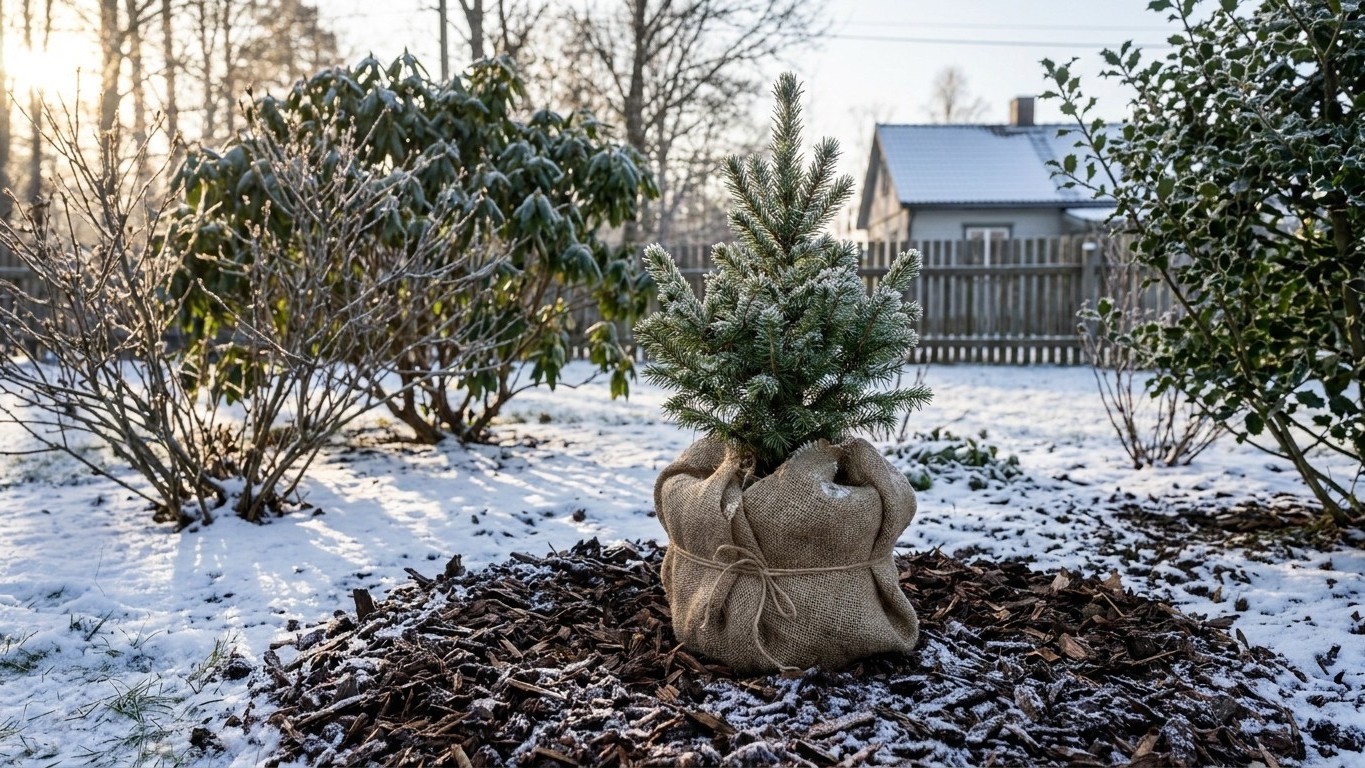

A shrub planted this year doesn’t have the root system to shrug off winter the way an established one does, so “protection” actually covers five separate threats: cold, wind, sun scald, rodents, and salt. Cold is answered before you ever pick up a shovel, by choosing a plant rated for your zone. Everything else is a first-winter job done with your hands, mulch, and where you put things, not with fertilizer or a mummy-wrap of plastic.
What actually does the damage

Cold itself is the one threat already built into the decision you made at planting time. A plant’s hardiness range tells you the lowest winter temperature it’s built to survive, and that number lives on the plant’s own page, along with the zone for your state. If you matched those correctly, straight cold is not what’s going to hurt a first-winter shrub. The other four causes are different: they don’t care what zone you’re in, and they hit young plants harder than mature ones because the roots aren’t established enough to keep up with what the top of the plant needs.
Drying wind is the first of those, and it’s mostly a broadleaf and needle-leaf evergreen problem. Foliage keeps losing water through the winter, wind or no wind, but a stiff wind across an exposed slope or a gap between buildings pulls moisture out of the leaf faster than a still, cold day would. The roots can’t replace it because the ground around them is frozen. The result shows up as browning on whichever side faced the wind, sometimes not until the plant leafs out and the damaged tissue is obvious against new green growth.
Winter sun causes a different kind of injury, and it’s counterintuitive because it happens on the nicer days. A bright, sunny afternoon in January warms bark on the south or southwest side of a young trunk enough to bring the tissue out of dormancy, and then the temperature drops after sunset and that tissue refreezes. The freeze-thaw cycle splits the bark, usually in a long vertical crack. Thin-barked, young trunks are the most vulnerable, which is exactly what a first-winter planting is.
Rodents and salt round out the list, and they’re both problems that show up at ground level, out of sight. Voles and rabbits chew bark at the base of a young shrub under snow cover, and because the bark all the way around the stem carries water and nutrients, a full ring of chewing girdles the plant and kills it, sometimes without any sign until spring. Salt from a treated road or walkway does its damage differently, through the soil and through direct contact with foliage, burning roots and leaf tissue in a way that looks a lot like drought stress. Neither of these is answered by the hardiness range at all. They’re answered by where you planted and how you manage mulch and screening, which is the rest of this page.
Wind and winter sun
These two catch people off guard because they don’t feel like winter weather in the usual sense. Wind damage happens on cold, clear, blustery days that don’t even look severe from a window. Sun scald happens on the mildest, brightest days of the season, the ones that feel like a break from winter. Both are worse on a first-winter planting than on an established one, because the plant hasn’t had a season to acclimate its bark and foliage to your specific site.
The fixes are simple, and none of them involve covering the plant itself in anything airtight:
- Put up a screen, not a wrap. A burlap or fabric barrier staked a short distance upwind of an exposed evergreen blocks drying wind while still letting air move around the foliage, which matters more than it sounds like it should.
- Site away from the worst exposure at planting time. If you’re choosing where a young shrub goes, the corner that catches the prevailing winter wind or the full, low afternoon sun on a south wall is the spot to avoid for anything with thin bark or evergreen leaves.
- Use a light trunk wrap on young, thin bark, but only on the trunk itself, and only for winter. A paper or fabric wrap reflects enough sun to even out the temperature swing that causes splitting.
That last one comes with a firm condition: the wrap comes off in spring. Anything left on a trunk into the growing season traps moisture against the bark and becomes a shelter for insects, which is a worse problem than the one you were trying to prevent. Mark it on a calendar if you have to, but take it off.
One more distinction worth making: a screen protects by standing apart from the plant, while a trunk wrap touches the bark directly. Confusing the two, by wrapping foliage tightly the way you’d wrap a trunk, is one of the mistakes covered later on this page, because it does more harm than the wind or sun ever would.
Rodents and salt
Both of these problems arrive without any warning sign until the damage is done, which is what makes them worth planning for ahead of the first snow rather than reacting to afterward. Voles tunnel under snow cover and gnaw bark at the base of a young trunk, where it’s tender and easy to reach. Rabbits do similar damage above the snowline when snow depth lets them reach higher. De-icing salt from a nearby road, driveway, or walkway travels through splash, runoff, and soil, and it burns roots and foliage on contact.
The protections are straightforward and don’t involve any product, spray, or repellent. There’s no reliable evidence that scent- or taste-based repellents keep rodents off bark through a winter, so the better approach is a physical barrier and good placement rather than something you apply and hope works.
| Problem | Protection | Visual check |
|---|---|---|
| Voles and rabbits chewing bark at the base | A guard placed at the base of the trunk, clear of the bark itself | Bark visible and untouched at ground level, guard not pressing against the trunk |
| Mulch piled against the trunk inviting rodents and rot | Mulch pulled back from the trunk before winter sets in, rather than piled against it | The trunk itself is visible, not buried under the mulch ring |
| Salt spray or runoff from a road or path | Siting away from the salt line, or a screen between the plant and the source | No visible white residue on nearby foliage or soil after a thaw |
The mulch guidance deserves a second look, because it’s the same rule you’d follow in summer, for a different reason. NC State Extension recommends pulling mulch six inches away from the base of plants to prevent bark decay and vole damage. In summer that clearance is mostly about decay and rot from mulch holding moisture against bark. In winter, the same six inches of open ground removes the cover that lets voles reach the trunk unnoticed under snow. Same number, same visual check, different season, different reason it matters.
What not to do
A few well-meant habits cause more damage than the winter weather does on its own, and all three come from good intentions applied at the wrong time.
Wrapping a plant tightly in plastic is the most common one, usually done out of a sense that more coverage means more protection. Plastic traps heat and moisture, and on a sunny winter day it can cook the foliage or bark underneath it the way a car interior heats up in summer sun. If a plant needs a physical barrier at all, it’s a breathable material set up as a screen, not plastic sealed around the stems.
Feeding late in the season is the second habit worth dropping. Fertilizer pushes new, soft growth, and that growth doesn’t have time to harden off before a hard freeze hits it. The timing that matters isn’t a calendar month, because that varies by where you garden. It’s your first frost date, which is listed on your state’s page on this site, and feeding should stop with enough of a buffer before that date for new growth to mature rather than get caught soft.
Pruning in autumn causes the identical problem for the identical reason. A cut stimulates the plant to send out new growth right at the cut site, and that fresh growth is the least cold-hardy tissue on the entire plant. Save structural pruning for dormancy, well after growth has stopped for the season, rather than doing it while the plant is still active.
There’s a fourth habit that belongs here too, even though it’s not about cold at all: leaving a support stake in place too long. NC State Extension is specific about this: remove all staking within one year after planting, because growth may be reduced if it stays on longer, and for shrubs and trees planted in fall, it may be possible to remove the stakes by midspring. A stake that’s still cinched tight going into a second winter is doing the plant no favors, and it’s an easy thing to forget about once the first season’s excitement of a new planting has worn off.
Common questions
Do all new shrubs need winter protection?
Not the same amount. A plant properly rated for your zone doesn’t need help with cold itself, but a first-winter planting in an exposed, windy, or sun-battered spot benefits from a screen or trunk wrap regardless of hardiness rating, because wind and sun scald aren’t cold problems.
When should I stop feeding my shrubs before winter?
There’s no fixed month for this, because it depends on your local frost timing. Check your first frost date on your state’s page and stop feeding with enough time before that date for any new growth to harden off rather than get caught by a freeze while still soft.
How can I tell if browning on my evergreen was wind or something else?
Wind damage shows up on the side of the plant that faced the prevailing wind, often only on the exposed portion, while the sheltered side stays green. Damage spread evenly all over the plant points to a different cause, like root or watering stress rather than wind.
Should I take winter protection off in spring, and when?
Yes, and promptly. Trunk wraps and screens left on into the growing season trap moisture against bark and become a shelter for insects, so remove them as soon as the hard freeze risk has passed for your area, the same way stakes should come off within a year of planting, sooner if fall planting allows it by midspring.