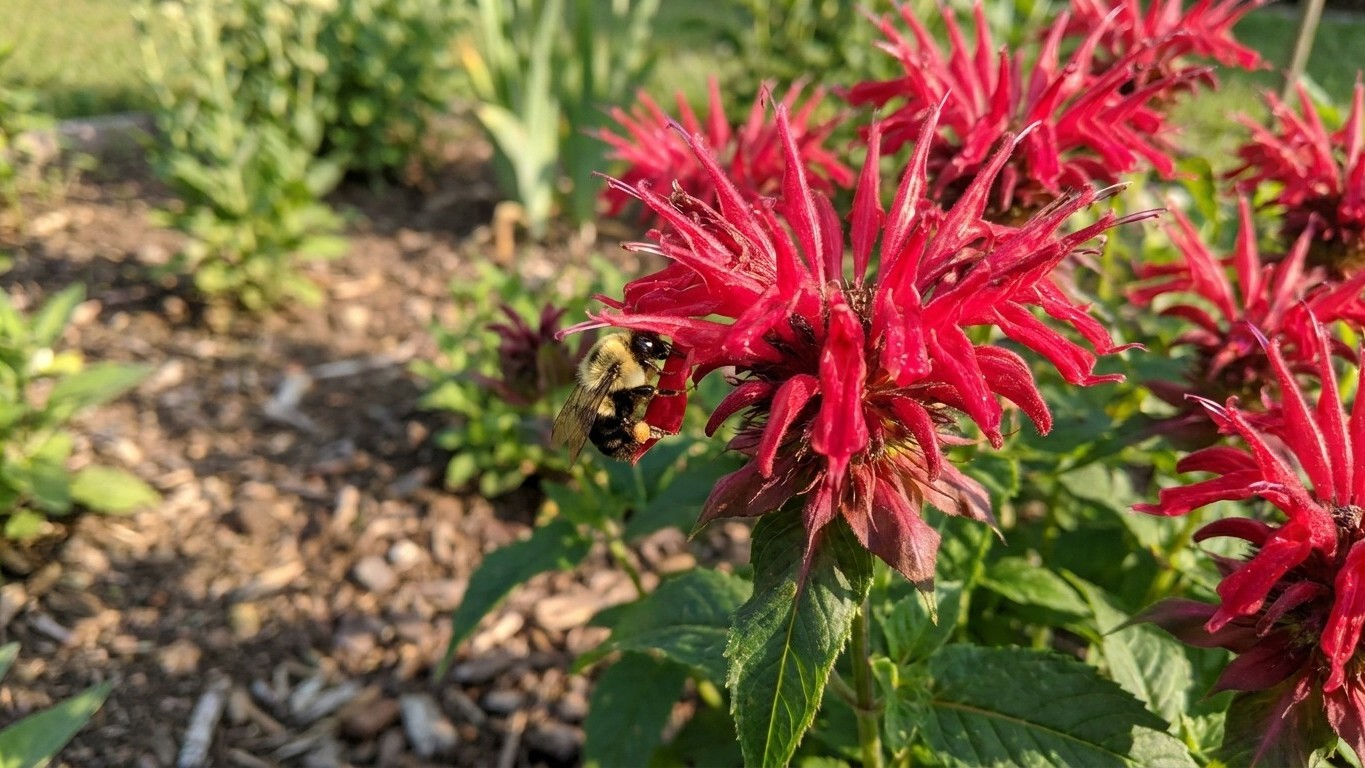

Monarda didyma goes by several names at the nursery and in old garden books: Beebalm, Bee Balm, Bee-balm, Bergamont, Bergamot, Crimson Bee-balm, Horsemint, Oswego Tea, Scarlet Bee Balm. (Bergamot also names an unrelated citrus fruit, so that word alone won’t confirm you’re holding the right plant.) It’s an herbaceous perennial wildflower, native to the southeastern United States, that dies back to the ground each winter and returns from its roots. USDA hardiness zones 4a to 9b mark where it can survive outdoors. What decides whether it actually thrives has less to do with cold and more to do with what happens underground the rest of the year.
Where it will and will not survive

The North Carolina Extension Gardener Plant Toolbox lists Monarda didyma as hardy in USDA zones 4a through 9b. That range is a survival line, not a comfort line. A plant that squeaks by at the cold edge of zone 4a may lose most of its top growth every winter and come back smaller each spring. One planted at the warm edge, zone 9b, may struggle through long, humid summers even though it technically survives there.
Below the bottom of this range, winter cold reaches deep enough into the soil to kill the crown outright, and no amount of mulch reliably changes that. Above the top of it, the plant may live, but it’s working against a climate the species didn’t evolve for, and performance drops off even where it clings on.
The range itself doesn’t tell you which zone you’re standing in. Rather than guessing from a general map, check your own hardiness zone using this site’s zone guide, which breaks the country down than a national range ever could.
One more caution belongs here. The North Carolina source that supplies this plant’s data also offers regional advice for its own state, split into Coastal, Piedmont, and Mountain guidance. That advice is built for North Carolina’s specific microclimates and doesn’t travel. The USDA zone range is the only piece of that source’s information built to be used anywhere in the country, and it’s the piece worth carrying with you.
Light, soil and drainage
The source is specific about growing conditions, and the details matter more than a one-line “full sun, average soil” summary would suggest.
| Condition | What the source lists |
|---|---|
| Light | Full sun (6 or more hours of direct sunlight a day) |
| Soil texture | Clay, high organic matter |
| Soil pH | Acid (below 6.0), Neutral (6.0-8.0) |
| Drainage | Good drainage, moist, occasionally wet |
For most herbaceous perennials, winter drainage decides survival more often than the cold itself does. Roots that sit in saturated, near-frozen ground for weeks tend to rot before spring even arrives, regardless of what the hardiness zone number promises. Monarda didyma is more forgiving of moisture than many perennials, since the source lists occasionally wet soil as tolerable alongside good drainage and moist ground. That’s a wider window than most plants get, but it’s not unlimited. Standing water that never drains, especially through winter, is still a different problem than soil that’s simply moist.
The practical check costs nothing: dig a hole about a foot deep, fill it with water, and see how long it takes to drain. If water is still sitting there after several hours, that spot leans toward the “occasionally wet” end of what this plant tolerates rather than the “good drainage” end, and it’s worth watching how the planting handles its first winter before committing more of the bed to it.
When it flowers and how long
Bloom time for Monarda didyma runs from summer into fall, rather than landing on any single month, since the exact timing shifts with latitude and elevation. A planting in a cooler, higher spot will bloom later in the season than the same variety at lower elevation nearby.
Deadheading spent flower heads can extend the display somewhat, encouraging the plant to keep pushing new blooms rather than setting seed early. Where the display has run its course, cutting the stems back tidies the bed and reduces the tangle of dead stalks left standing through fall.
Out of flower, which is most of the year, this is a clumping perennial with upright, deciduous foliage that dies back to the ground each winter and re-emerges from the crown in spring. That’s worth knowing before planting, since a bed built entirely around Monarda didyma will have a long stretch with no color at all.
The source lists what it attracts while in bloom: butterflies, hummingbirds, moths, pollinators, and specialized bees. That’s a property of the open flower, and it stops when the flowering does. A bed of foliage after bloom isn’t pulling in pollinator traffic the way the flowering plant did.
The source also notes edible uses: the flowers are edible, and the plant has been used in teas, to flavor jellies, and in soups, stews, and fruit salads. Later in the season, ovoid nutlets appear from September into October, described only for their shape and timing, not their flavor.
Planting, and dividing it later
- Plant in spring after the last frost or in early fall, giving the roots time to settle before summer heat or winter cold arrives.
- Space plants roughly 12 inches to 3 feet apart, matching the mature spread the source lists, so the clump has room to fill in without immediately overlapping its neighbors.
- Set the crown at grade, level with the surrounding soil, rather than burying it deeper, which can encourage rot at the base.
- Water regularly through the first season while roots are still establishing, tapering off once the plant is settled in.
- Mulch around the base to hold moisture, keeping the mulch pulled back from the crown itself so it isn’t smothered.
This is a clumping perennial, and clumping perennials eventually need dividing. The signs are straightforward to spot: a bare or woody center with growth only around the outer edge, noticeably fewer flowers than in past seasons, or a clump that’s simply outgrown the space it was given.
- Dig up the entire clump, keeping as much of the root mass intact as possible.
- Split it into smaller sections by hand or with a spade, making sure each section keeps a portion of healthy root and at least one growing point.
- Replant the divisions at the same spacing used originally, setting each crown at grade.
- Water thoroughly right after replanting to help the divisions re-establish.
What it resists, and what it does not
Resistance means a tendency, not immunity. A plant listed as resistant to something can still be damaged by it under the wrong conditions; it just isn’t a preferred target.
| Factor | What the source specifies |
|---|---|
| Deer | Not specified |
| Rabbits | Not specified |
| Wet soil | Not specified |
| Black walnut | Not specified |
| Insect pests | Not specified |
That’s worth sitting with for a moment. Beebalm has a reputation in casual gardening advice as a deer-resistant plant, but the North Carolina source tracks that category and simply doesn’t rate it either way for this species. The same goes for wet soil tolerance as a formal resistance rating, even though the drainage section above shows the plant handling occasional wetness reasonably well in practice. A reader in deer country shouldn’t plant on the assumption of protection this source doesn’t actually promise.
Maintenance is listed as medium, which in practical hours means this isn’t a plant a homeowner ignores after planting day. It calls for deadheading or cutting back after bloom, periodic dividing once the signs above show up, and the usual watering and mulching of any perennial bed. Medium maintenance still beats a plant that demands constant attention, but it’s a real, recurring commitment rather than a one-time task.
Common questions
Is Monarda didyma the same as bee balm sold at garden centers?
Bee Balm and Beebalm are among the common names used for Monarda didyma, along with Bergamot, Oswego Tea, and several others. Since the plant is sold under whichever common name a grower prefers, checking the botanical name on the tag is the only way to be certain which species is actually in the pot.
Will it survive a harsh winter?
That depends on which zone the planting site falls in. USDA zones 4a through 9b cover where the plant can survive winter outdoors; below that range, cold typically kills it outright. Confirming the exact zone for a specific address, rather than assuming one, is the more reliable step.
Does it need full sun?
The source lists full sun, meaning six or more hours of direct sunlight a day, as its light requirement. It’s also listed as tolerating clay soil, moist ground, and occasionally wet conditions, which makes light exposure the more fixed requirement of the two.
How do I know when to divide it?
Look for a bare or woody center, a drop in flowering compared to previous years, or a clump that has grown past its allotted space. Those signs matter more than counting years since planting, since growth rate varies by site.