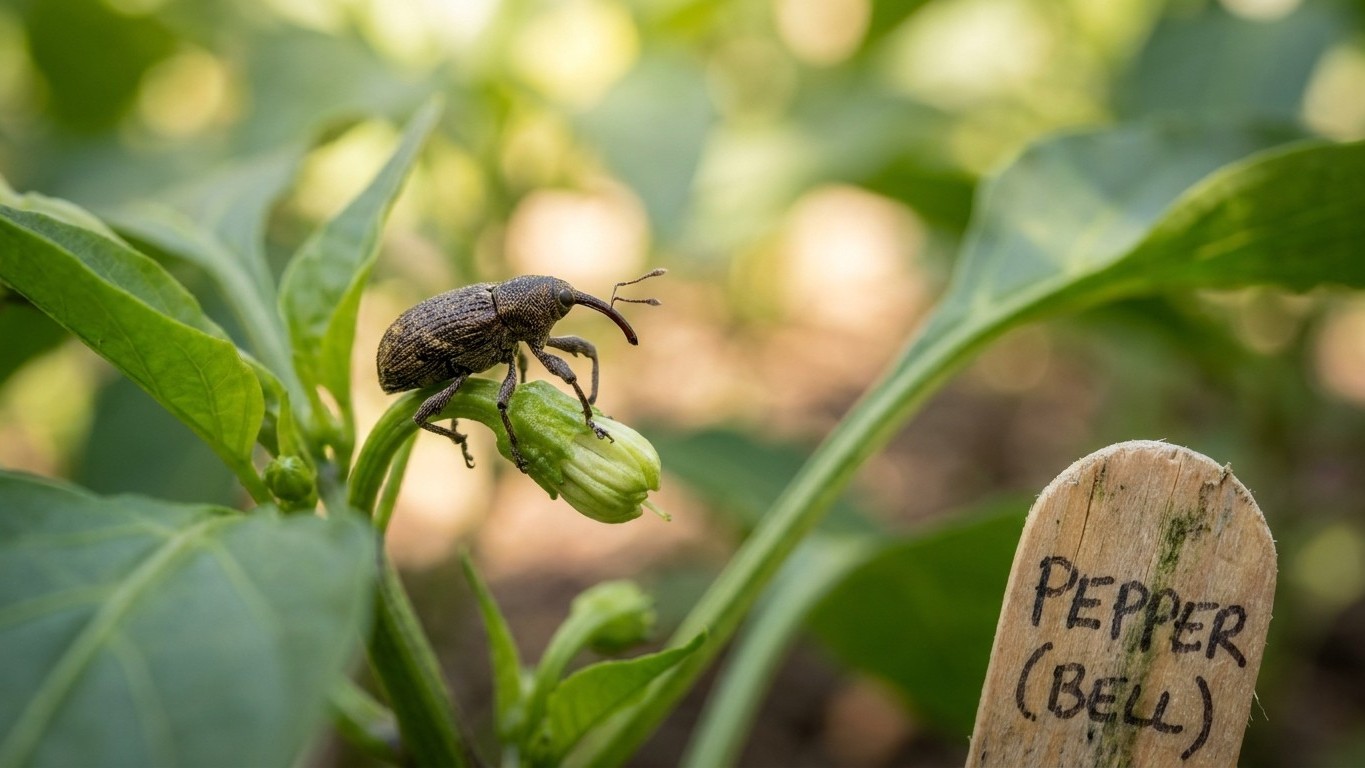

Pepper weevil shows up wherever peppers are growing in Louisiana, and thanks to the state’s long growing season, that can mean almost any month. LSU AgCenter doesn’t publish a narrow flight window for this insect specifically, but the mechanism is straightforward: warm soil and standing pepper plants keep it active far longer than in colder states.
The weeks to watch

LSU AgCenter’s vegetable insect guides don’t name a specific calendar window for pepper weevil the way they do for some other garden pests. What they do say is broader and just as useful: Louisiana’s long growing seasons make year-round gardening possible, and those same conditions let insects reproduce and thrive year round. For a pest that needs pepper plants (or their solanaceous relatives) to complete its life cycle, that means the real limiting factor isn’t a date on a calendar. It’s whether host plants are standing.
Spring plantings
Once peppers are transplanted and begin flowering, they become a target. Buds and small fruit are exactly what the insect needs to lay eggs, so pressure builds as soon as plants start setting fruit, not necessarily right after transplant.
Fall plantings
Louisiana gardeners who push a second pepper crop into late summer or early fall extend the window further. LSU notes that several related pests, like leaf-footed bugs on tomatoes and peppers, actually peak in late summer and early fall rather than spring. Pepper weevil isn’t named in that specific note, but the same logic applies: as long as pepper plants are in the ground and fruiting, the pest has an opportunity.
Reading the calendar from your last frost

The one date most Louisiana gardeners actually plan around is the last spring frost, and NOAA’s 30-year climate normals put that at January 18 to February 8 for this region, based on a station where a 32°F freeze occurs in only about 87 percent of years. That means roughly one year in seven sees no real freeze at all, and south Louisiana’s limiting factor for planting is summer heat, not frost risk. Insects don’t read a frost date. They respond to soil warmth, so an unusually early or late spring shifts when peppers can safely go in the ground, and that shift moves the pest’s opportunity window with it.
- Start with your local last-frost range (January 18 to February 8 as a normal, not a guarantee), and wait until soil has warmed enough to set out transplants without a setback.
- Watch from the first flower buds onward, since that’s the stage the insect targets. LSU AgCenter doesn’t publish an exact number of weeks between transplant and first damage for this species, so treat bud and early fruit set, not a fixed date, as your signal to start checking plants closely.
What it attacks, and what the damage looks like

Most gardeners notice the problem before they ever see the insect: buds drop off the plant for no obvious reason, small green fruit falls early, or mature peppers show a dark, water-soaked scar near the stem end. Cut one of those fruit open and you’ll often find a small, legless grub tunneling through the interior, sometimes with visible frass. That larva is doing the damage, not the adult weevil, which is why treatments aimed at adults on the plant surface can miss the real problem once eggs are already laid inside a bud or fruit.
Host plants in a Louisiana garden include:
- Bell peppers
- Hot pepper varieties
- Eggplant
- Related nightshade weeds growing near the garden
Because eggs and larvae develop hidden inside plant tissue, the fruit drop and the scarring are usually the first clue, well before anyone spots an adult weevil crawling on a leaf.
How Louisiana sits in this pest’s range
This site currently documents pepper weevil in one territory, Louisiana, so there’s no cross-state comparison available here yet to say whether pressure runs heavier or lighter elsewhere. What can be said is narrower and grounded in what LSU AgCenter actually publishes: Louisiana’s extended growing season, which supports pepper crops in both spring and fall plantings, gives this pest more calendar time to work with than it would have in a state where cold weather shuts down pepper growing for half the year. That’s a statement about opportunity, not about rank or severity, since no comparative figures exist yet on this site to support a stronger claim.
Gardeners moving to Louisiana from a shorter-season state should expect the practical difference to show up as duration rather than intensity: a longer window when peppers are vulnerable, not necessarily a worse infestation in any single planting.
What actually works against it

Cheapest and most effective measures come first, because once larvae are established inside fruit, most home remedies can’t reach them.
- Clear crop debris promptly after harvest. Pepper weevils can overwinter in fallen fruit and plant material left in the garden, especially given Louisiana’s mild winters. Removing that debris removes their shelter before the next planting.
- Rotate away from peppers and eggplant for a season in beds where damage showed up, so any remaining pupae in the soil or nearby debris have fewer host plants waiting for them.
- Pull and destroy fallen buds and dropped fruit as soon as you notice them, rather than leaving them on the ground. This removes larvae before they can complete development and emerge as adults.
- Use row covers before flowering begins. The mechanism is simple: a physical barrier keeps adult weevils from reaching buds to lay eggs in the first place. Covers have to come off once plants flower and need pollinator access, which means timing matters. A cover installed after adults are already present, or after buds are already infested, does nothing for that generation.
- Check fruit and buds weekly once plants start setting fruit, cutting open a sample if you see early drop or scarring, so you catch a developing problem before it spreads through the planting.
Once larvae are feeding inside a bud or fruit, the plant tissue itself shields them. At that stage, the only real recourse is removing and destroying the infested fruit, since nothing applied to the plant’s exterior reaches a larva already inside.
Common questions
Does pepper weevil survive Louisiana winters?
LSU AgCenter’s guidance doesn’t give an exact survival rate for this species, but the state’s mild winters, with freezes occurring in only about 87 percent of years at typical stations, mean overwintering in crop debris is plausible in a way it wouldn’t be farther north.
Can I grow peppers in Louisiana without ever seeing pepper weevil?
There’s no guarantee either way, but gardeners who clear debris promptly, rotate beds, and remove dropped fruit early reduce the odds significantly compared to leaving old plant material in place season after season.
Is pepper weevil the same insect damaging my tomatoes?
Not necessarily. LSU AgCenter’s home garden guides note that leaf-footed bugs are a separate, common pest of tomatoes and peppers in late summer and early fall, so scarring or damage on tomato fruit specifically points toward a different insect rather than pepper weevil.