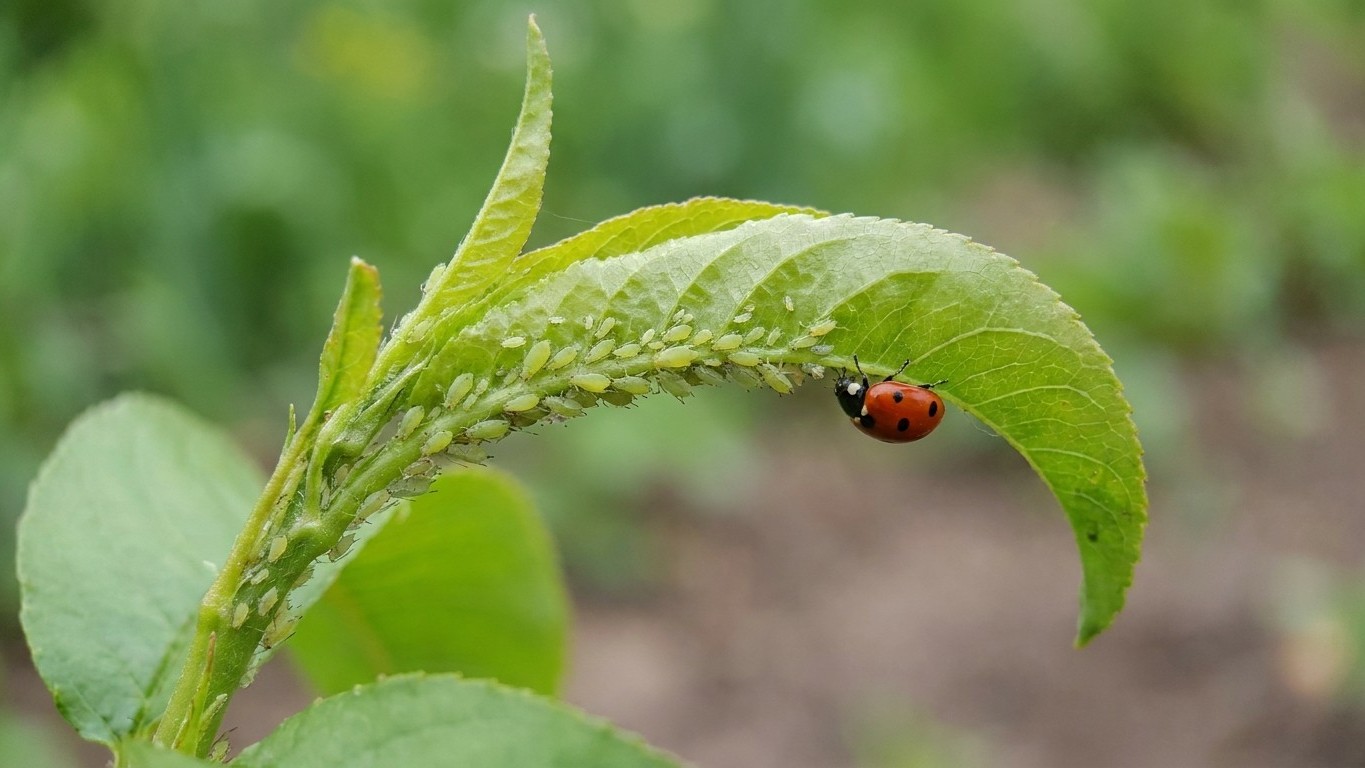

Green peach aphid shows up in Oklahoma gardens as soon as tender new growth appears in spring, and it stays active until a hard freeze finally shuts things down in fall. There’s no single hatch date to circle on a calendar, because the insect reproduces continuously in warm weather, adding a new generation every week or two. What stops it: excluding winged newcomers with row covers before they land, knocking colonies off with water, and giving natural predators like ladybugs and lacewings time to catch up.
The weeks to watch

Aphids can turn up on Oklahoma vegetable and ornamental plantings anytime from the first mild week of spring through the first hard freeze of fall, with no true dormant stretch in between once daytime temperatures hold above the 50s. Oklahoma State University Extension’s home garden insect fact sheet doesn’t publish a green peach aphid-specific window; its seasonal notes cover corn earworm, squash bug and thrips instead. That still tells us something useful: the sheet frames insect pressure around plant growth stage rather than fixed calendar dates, noting that thrips build up heavily on cotyledons and first true leaves while other pests are scarcer on early plantings. Green peach aphid follows the same general logic, tracking tender growth rather than a specific week.
Spring buildup
Once temperatures warm, wingless females start reproducing without mating, giving birth to live young directly on the undersides of new leaves. In good conditions, colony size can double in a matter of days. This is when the first curled or yellowing leaves usually appear on early transplants.
Fall increase
A second surge often follows as nights cool. Crowding and shortening days trigger more winged forms, which disperse to fresh host plants and to sites where the species can carry through winter. This fall wave can be just as damaging as the spring one, especially on late-season greens and brassicas.
Reading the calendar from your last frost

The one date most Oklahoma gardeners already plan around is the last spring frost, which NOAA’s 1991-2020 climate normals put between March 28 and April 10 for the reference weather station used in this data. That’s a range, not a promise, and it comes from an airport station; a rural or suburban garden nearby often sees its own last frost a week or two later, so it’s worth checking county-level records before setting a planting date.
Green peach aphid answers to soil and air warmth, not to the date on a seed packet, so an early, mild spring pulls its arrival forward and a cold, wet one pushes it back. That’s the piece a frost-date calculation can’t fix: it tells you when it’s safe to plant, not when the aphids will find your transplants.
- Start from the local last-frost window (March 28 to April 10 at the reference station, later in most home gardens).
- Add roughly two to three weeks after transplanting, which is when many gardeners first notice curled leaf tips or a sticky film on new growth.
That arithmetic gives a window, not a single day, which matches how the insect actually behaves. It also sets a practical deadline: row covers need to go on at transplanting, before that first colony has a chance to establish, and they need to come off before flowering on any crop that depends on pollinators.
What it attacks, and what the damage looks like

Most gardeners spot the symptom long before they spot the insect. Leaves curl, pucker, or turn a dull yellow, especially on new growth. A sticky residue called honeydew coats the leaf surface, and a black sooty mold sometimes grows on top of it. On heavily infested plants, growth slows and stems can look stunted compared to unaffected neighbors just a few feet away. On some crops, the bigger concern isn’t the direct feeding damage at all but the plant viruses this species can carry from one host to the next.
Both the wingless nymphs and the adults do the actual feeding, piercing plant tissue with needle-like mouthparts and drawing out sap. Winged adults are the ones responsible for spreading virus between plants, since they’re the stage that moves. That distinction matters for treatment: a spray that kills feeding nymphs on one plant does nothing to stop a winged adult that already passed a virus to the plant next door before it died.
Crops most commonly affected in home gardens include:
- Potatoes
- Peppers and tomatoes
- Lettuce and other leafy greens
- Cabbage-family crops like broccoli and kale
- Cucumbers and squash
- Ornamentals such as roses
How Oklahoma sits in this pest’s range

On this site, Oklahoma is currently the only territory with a dedicated page documenting this pest, so there’s no neighboring state’s data to compare timing against yet. That narrow coverage says nothing about how common or severe the insect actually is here; it just means the comparison isn’t available on this site for now. What can be said with confidence, based on the local Oklahoma State University Extension material used to build this page, is that the insect’s behavior in the state follows the same growth-stage-driven pattern described in that fact sheet for other early-season pests, rather than a fixed statewide flight schedule.
Gardeners in other climates sometimes describe a hard winter that knocks populations back to near zero, followed by a slow spring rebuild. Oklahoma’s shorter, milder cold season means that reset may be less complete some years, which is one more reason the arrival date shifts with the weather instead of holding to a set week. None of this changes what to watch for, only how early it might show up.
What actually works against it

- Time the planting. Waiting a week or two past the earliest safe date, once the last frost window has passed, can mean transplants go in past the first flush of hungry winged aphids looking for new hosts. Costs nothing but patience.
- Knock colonies off with water. A firm spray from a garden hose dislodges nymphs and adults physically. It works well while populations are light; once a colony is dense and coated in honeydew, or once ants are actively farming the aphids for that honeydew and defending them, a single spray does less.
- Try reflective mulch around the base of plants. Aluminum-colored mulch has been studied for its effect on winged aphids landing on plants, since the reflected light appears to disrupt their approach. The effect is strongest early in the season and fades once the plant’s own canopy shades the mulch out.
- Use floating row covers. Covers exclude winged migrants before they ever land, so they need to go on at transplanting, not after damage appears. They have to come off before flowering on any crop that needs pollinator access, and they do nothing once aphids are already established underneath.
- Encourage natural predators. Ladybugs, lacewings, and parasitic wasps all feed on aphids and can bring a colony down over a few weeks. This isn’t an instant fix, and it works best when broad insecticide use hasn’t already wiped out the predators along with the pest.
- Pinch and remove heavily infested shoot tips by hand. Useful for a small, spot infestation on a few plants; not practical once an entire bed is affected.
Homemade dish-soap sprays are a common home remedy for aphids, and plenty of gardeners swear by them. Trials comparing them to a simple water spray are mixed, so it’s fair to say the soap spray is popular rather than proven to outperform the cheaper option.
Common questions
Does green peach aphid overwinter in Oklahoma?
The species can persist through mild winters in a mix of life stages depending on temperature, rather than following one fixed overwintering pattern everywhere it’s found. In a state with Oklahoma’s shorter, milder cold season, that means populations may not drop to zero every winter, which is part of why arrival timing in spring varies from year to year.
Can green peach aphid spread plant disease?
Yes. Winged adults can pick up plant viruses while feeding on an infected plant and carry them to the next host as they move. This is often a bigger practical concern for gardeners than the direct feeding damage, since a plant can end up infected with a virus long before the aphid colony itself looks severe.
What does green peach aphid damage look like on tomatoes and peppers?
Look for curled, puckered new leaves, a yellowish cast to affected foliage, and a sticky honeydew coating that sometimes grows a black sooty mold on top. Growth on heavily infested plants often lags behind neighboring plants of the same age and variety, even before the colony itself is easy to spot on the underside of the leaves.